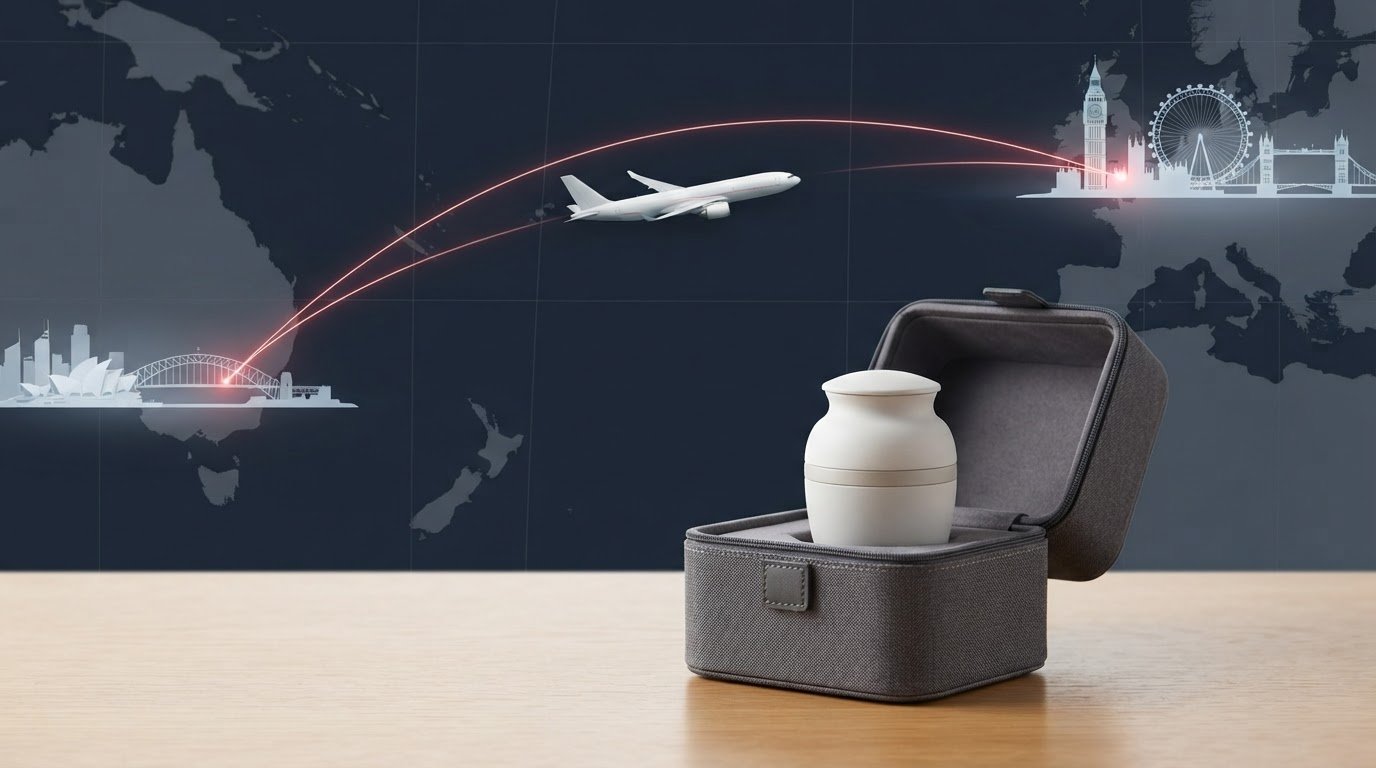
Air freight and hand-courier travel offer different ways to move ashes between Australia and the UK. An Australia to UK ashes courier can arrange this journey, with cremated remains imported into the UK from Australia handled by application. The practical choice depends on whether airport collection suits your plans or you need the remains accompanied during travel.
It’s understandable to want a clear plan, especially when documents and transport arrangements are involved. Cross-border shipments generally require a death certificate and cremation certificate, or local equivalents. This guide outlines the import and export considerations, commonly needed paperwork, and differences between air freight and accompanied transport, helping you choose an approach that suits your circumstances.
Key Takeaways
- Understand which documents commonly support the international movement of ashes and why destination requirements matter.
- Learn how container choice and airline or cargo arrangements can affect the journey.
- Compare air freight with a hand courier to see which option better suits collection and delivery needs.
- Find out how specialist repatriation support can help coordinate customs and onward delivery.
Country-specific import and export requirements
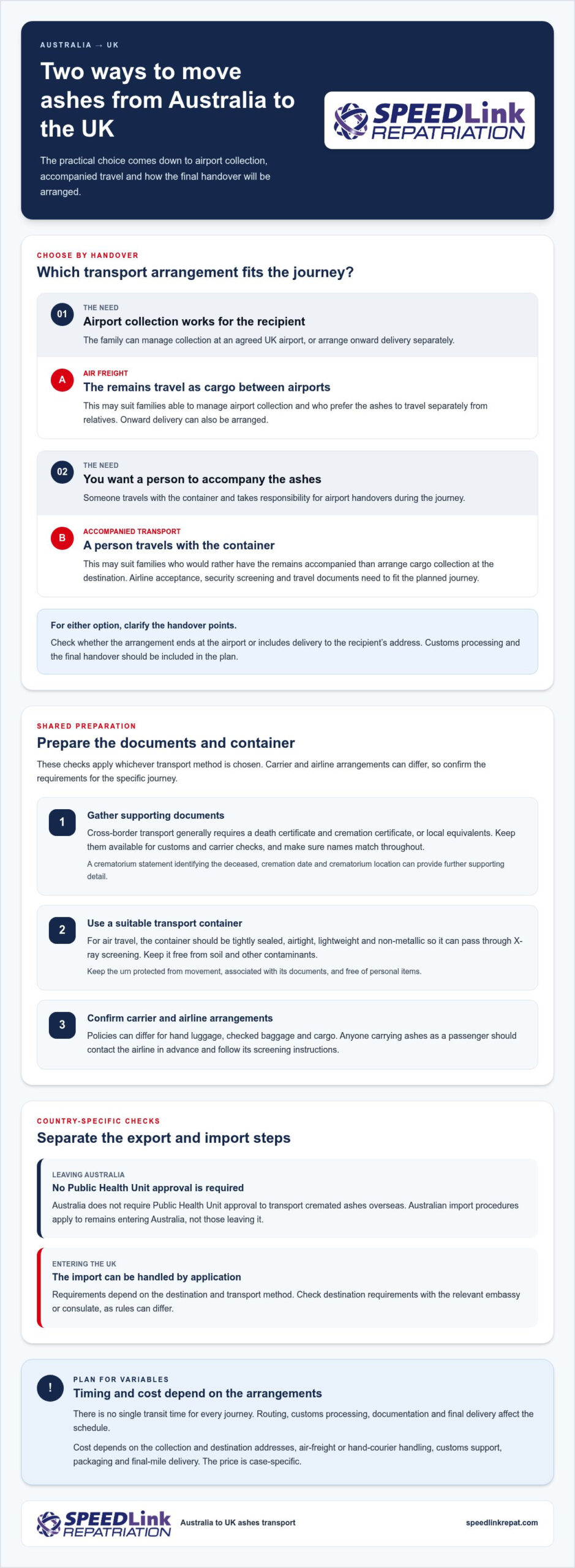
Rules depend on whether ashes are entering or leaving a country and on the transport method. For an Australia to UK shipment, consider Australia’s export steps separately from the UK import process.
Export Requirements in the Country of Origin
Export requirements depend on where the cremation took place. Australia does not require Public Health Unit approval to transport cremated ashes overseas. For a UK-bound shipment, cremated remains imported from Australia can be handled on application. Contact the destination country’s embassy or consulate about its requirements, as rules differ by destination. Australian import procedures apply to remains entering Australia, not those leaving it.
Container Requirements and Airline Policies
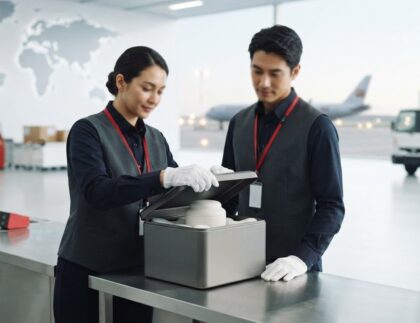
A transport container keeps the ashes secure and must suit the journey. For air travel, use a tightly sealed, airtight container made from lightweight, non-metallic material that can pass through X-ray screening. Keep it free from soil and other contaminants. Airline policies can differ for hand luggage, checked baggage and cargo, so establish the relevant arrangements before departure. Anyone carrying ashes as a passenger should contact the airline in advance and follow its screening instructions.
Death and Cremation Certificates
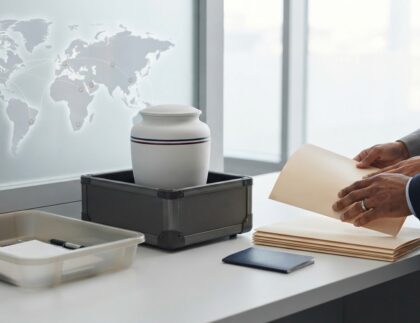
These certificates document the death and confirm that cremation took place. Cross-border transport generally requires a death certificate and cremation certificate, or local equivalents. Keep the documents available for customs and carrier checks, and ensure names match throughout. A crematorium statement identifying the deceased, cremation date and crematorium location can provide further supporting detail. Rules for ashes arriving in Australia are separate: human ashes arriving as cargo can be cleared without a written declaration, while containers should be free from contaminants such as soil.
How can I bring my loved one’s ashes overseas?
International transport involves arranging collection in Australia and delivery in the UK. A funeral director can help organise supporting paperwork and prepare the ashes for handover.
Door-to-Door Ashes Transport
Door-to-door transport collects human ashes at an Australian address and delivers them to a UK destination. Depending on the service, arrangements may include collection, air transport, customs processing and final delivery. Provide accurate collection and recipient details, and prepare the death and cremation certificates for the shipment. If collection or delivery is at an airport, clarify who will receive the container and arrange onward transport.
Preparing Ashes and Urns for Transport
Before collection, secure the ashes and assemble the paperwork. Ask the funeral director or crematorium for the certificates and any supporting declaration required for the chosen transport method. Keep the urn sealed, protected from movement and clearly associated with its documents. Don’t place personal items inside the container. For hand luggage, airline screening and acceptance rules apply, so arrange this option in advance.
Estimated International Transport Costs
Transport cost is the charge shaped by the route and delivery arrangements. It depends on collection and destination addresses, air-freight or hand-courier handling, customs support, packaging and final-mile delivery. The price depends on the case and is given after a quote request. For a tailored estimate, request a transport quote.
Risks, Insurance and Alternatives to Couriering
Potential difficulties include delays, handling issues and incomplete paperwork. If considering insurance, review the policy’s coverage, exclusions and evidence required for a claim. Alternatives include carrying ashes as luggage, subject to airline rules, or arranging support through a funeral director. Scattering is a separate option, not a transport method, and permissions depend on the location.
International air freight and hand-courier services
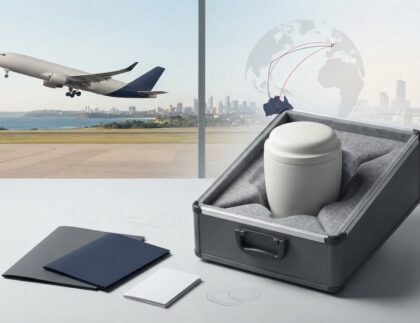
Air freight transports cremated remains as cargo between airports; with accompanied transport, a person travels with them. An Australia to UK ashes courier can help arrange the appropriate method, depending on airport collection and whether accompanied travel suits the family.
Can ashes be sent by Australia Post or another postal service to the UK? Check Australia Post’s requirements before mailing, as postal policies may differ from courier and airline rules. Don’t assume a standard parcel service accepts cremated remains.
How long does delivery from Australia to the UK take? There is no single transit time for every journey. Routing, customs processing, documentation and final delivery arrangements all affect the schedule.
With air freight, the remains travel as cargo from an Australian airport to an agreed UK airport. The recipient may collect them there, or onward delivery can be arranged. This option may suit families able to manage airport collection who prefer the ashes to travel separately from relatives.
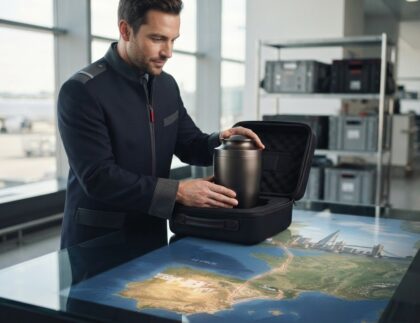
With accompanied transport, a person travels with the container and manages airport handovers. This may suit families who want someone to accompany the remains rather than arrange cargo collection at the destination. Airline acceptance requirements, security screening and travel documents must align with the planned journey.
Compare the handover points before choosing. Establish whether the service ends at the airport or includes delivery to the recipient’s address. For an Australia to UK ashes courier journey, customs processing is a separate step, so the plan should account for clearance and final handover.
SpeedLink Repatriation: International Ashes Repatriation
SpeedLink Repatriation provides International Ashes Repatriation for families arranging the overseas movement of cremated remains. Its support can include packaging, customs assistance and transport planning, helping bring paperwork and handover arrangements into a clear process.
This service may suit families who need help coordinating international transport rather than carrying the ashes themselves. SpeedLink also offers a UK Domestic Ashes Delivery Service for onward transport within the UK. The arrangement depends on the route, destination requirements and chosen transport method.
For support with international ashes transport, please contact SpeedLink Repatriation.
Take the next step with care
Choosing an Australia to UK ashes courier is one part of a wider family arrangement. Decide who will receive the ashes, where the handover should happen and who will keep the documents together. Having these details ready can make the next conversation more focused.
SpeedLink Repatriation offers International Ashes Repatriation, UK Domestic Ashes Delivery Service and Bereavement Logistics for families managing related arrangements. Its team can help you consider how international transport connects with delivery within the UK, so the arrangements reflect your family’s needs.
Take the process one step at a time. A clear plan can help you make considered arrangements for your loved one.
Frequently Asked Questions
How Does It Work?
First, arrange collection and identify the recipient in the UK. The transport plan should set out the route, airport handovers and whether delivery continues to the recipient’s address. Keep the recipient’s details consistent across the paperwork. For example, if relatives live at a different address from the named recipient, clarify who can accept delivery before dispatch.
Why engage a specialist courier?
A specialist can coordinate the practical steps involved in international cremated remains transport. This can help when relatives are not travelling, cannot manage airport collection, or need customs and onward delivery coordinated. SpeedLink Repatriation’s Bereavement Logistics service supports families with these arrangements. Specialist transport is different from sending ashes through ordinary postal or parcel services.
Can human ashes be sent from Australia to the UK by courier?
Yes, cremated remains can be transported from Australia to the UK through an appropriate international transport arrangement. Choose a service that handles cremated remains and establish the UK handover point before collection. This can be especially helpful when the recipient cannot travel to meet the shipment at an airport.
What are Australia’s export requirements for shipping cremated ashes overseas?
Australia does not require Public Health Unit approval to transport cremated ashes overseas. Export arrangements must still account for the destination’s import rules, which may require additional paperwork or approvals. For a UK-bound shipment, keep the destination and recipient details clear, and ensure the transport documents identify the contents as cremated remains.
What are the UK customs and import rules for receiving ashes from Australia?
Cremated remains imported into the UK from Australia can be handled on application. The recipient should know who will manage the import process and where the ashes will be handed over after arrival. Customs clearance and delivery are separate steps, so ensure the shipment plan covers airport processing and any onward journey to the recipient.

Article by
David McMillen
I started my career in logistics over 30 years ago which has spanned 2 continents and several different types of courier and logistics operations. I lost my dear Mum back in 2016 and it was in the aftermath of her passing that SpeedLink Repatriation was born. We have endeavoured to bring the same care and attention to all of our clients as my mum received and to date we have helped repatriate hundreds of individuals across the globe.
Disclaimer
International requirements for cremated remains vary by origin, destination, carrier and method of transport and may change without notice.
Content is provided as general guidance and should not be treated as legal advice.
Where necessary, current requirements should be confirmed with the relevant government authority, customs authority, embassy, consulate, postal operator, airline or carrier.
SpeedLink can advise on the requirements applicable to a specific shipment.