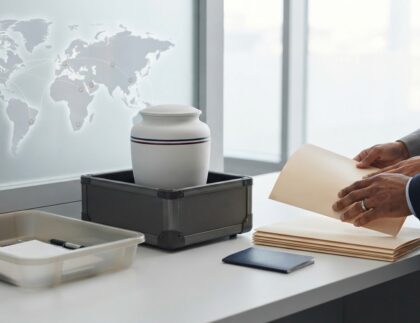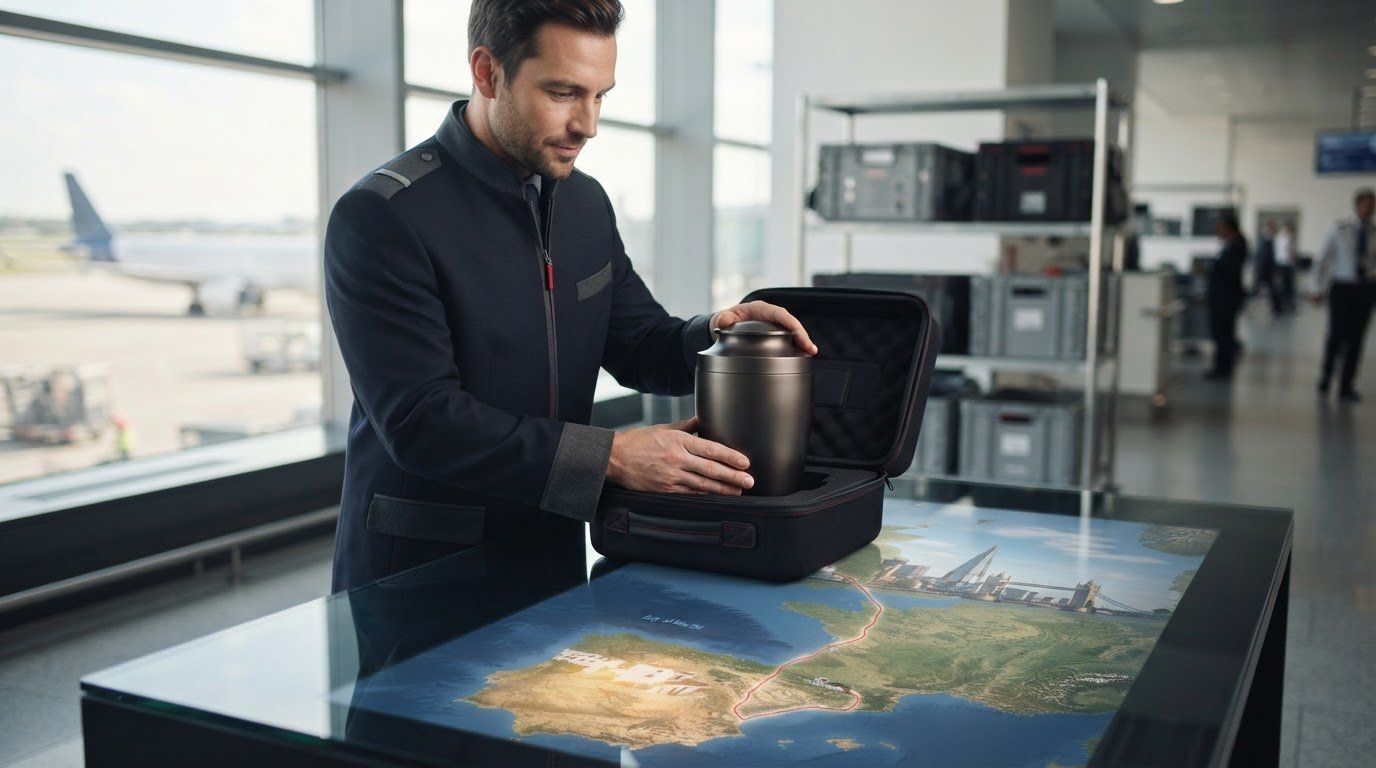
A courier may collect ashes on a family member’s behalf if the organisation holding them approves the arrangement. Confirm its authorisation and identification requirements before planning collection.
For families arranging transport from Spain to the UK, the key practical questions are who can release the remains, which documents may be needed and how the recipient will take delivery. This article outlines those considerations and explains how dedicated courier handling differs from other transport methods.
Key Takeaways
- Learn how to arrange collection on a family member’s behalf, including the approval and authorisation details to establish with the organisation holding the ashes.
- See which documents may need to accompany cremated remains on an international journey.
- Understand how dedicated courier handling differs from using a parcel network.
- Follow the key stages of transport from collection in Spain to delivery in the UK, including secure handling along the way.
How are cremated remains transported safely?
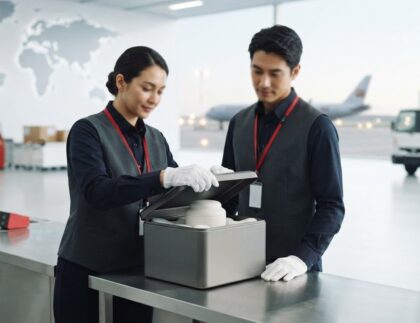
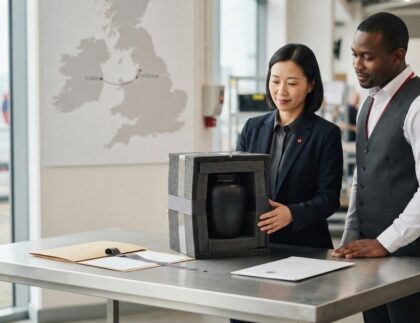
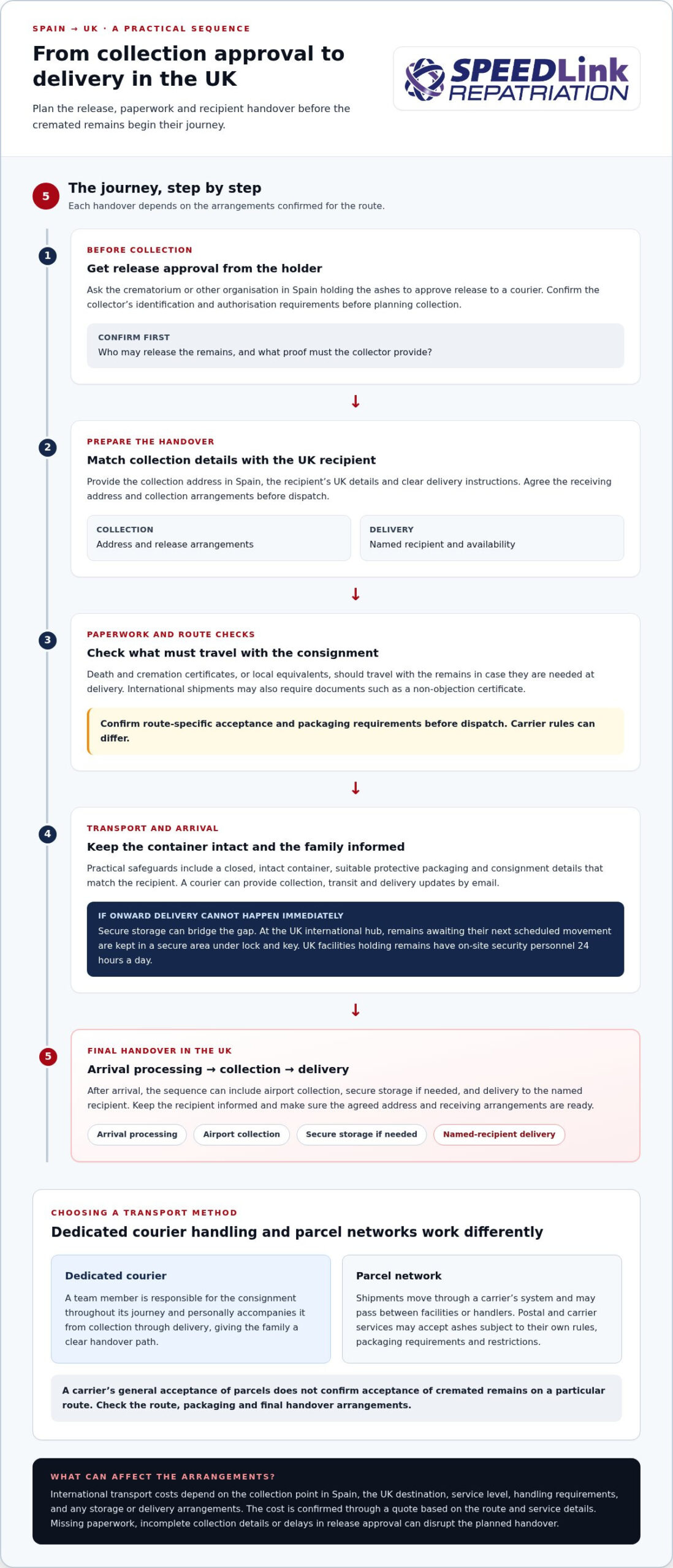
After arrival in the UK, the process can follow a clear sequence: arrival processing, collection from the airport, secure storage if needed, then delivery to the named recipient. Agree on the receiving address and collection arrangements before dispatch, so the final stage is planned in advance. If the recipient cannot take delivery immediately, secure storage can bridge the gap.
At the UK international hub, cremated remains awaiting their next scheduled movement are kept in a secure area under lock and key. UK facilities holding remains have on-site security personnel 24 hours a day. These measures address the period between arrival and onward handling, when families may need time to coordinate collection or confirm who will receive the ashes.
Practical safeguards include keeping the container closed and intact, using suitable protective packaging and matching consignment details to the recipient. The courier can provide collection, transit and delivery updates by email, helping relatives follow the shipment’s progress. For example, a UK family member can prepare to receive the remains once delivery is arranged.
International transport costs depend on the collection point in Spain, the UK destination, service level, handling requirements and any storage or delivery arrangements. The cost is confirmed through a quote based on the route and service details. A collection in a remote area may involve different logistics from one near a main transport gateway. When arranging transport, provide accurate addresses and explain any timing needs, as these details help shape the journey and delivery arrangements.
Dedicated courier handling versus parcel networks
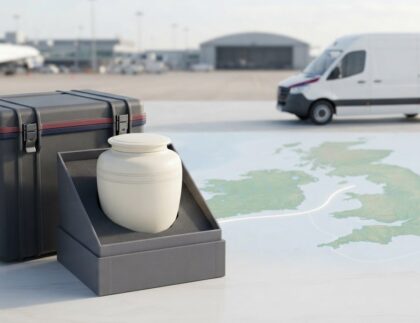
With a dedicated courier, a team member is responsible for the consignment throughout its journey and personally accompanies it from collection through delivery. This gives the family a clear handover path, from the collection point in Spain to the recipient in the UK. If an address or delivery arrangement changes, the family has a direct way to share the update with the person handling the journey.
Parcel networks work differently: shipments move through a carrier’s system and may pass between facilities or handlers. Postal and carrier services may accept ashes, subject to their own rules, packaging requirements and restrictions. That distinction matters when arranging international transport. A carrier’s general acceptance of parcels does not establish that it accepts cremated remains on a particular route.
Before choosing a method, establish who is authorised to release the ashes, what packaging the route requires and how delivery will be completed. For example, if a crematorium in Spain holds the container, arrange its approval and confirm collection details first. Then make sure the recipient’s UK address and availability fit the planned delivery. These steps help avoid a mismatch between collection, paperwork and final handover.
Dedicated handling may suit families who value personal continuity across borders, while a parcel network may be an option where its rules permit the consignment. Neither description replaces checking the carrier’s requirements for cremated remains. For a Spain-to-UK journey, compare the handover process, route-specific acceptance and delivery arrangements, not simply the label “courier” or “post”. Families planning collection can discuss dedicated courier arrangements as a practical next step.
International transport and repatriation of cremated remains
Cross-border transport involves more than the journey itself: collection, documents and UK delivery all need to align. Planning these steps helps families organise a Spain-to-UK transfer clearly.
Courier options for ashes transport
Specialist couriers can arrange international transport, while postal and other carrier services may accept ashes under their own rules. For a Spain-to-UK journey, establish whether the service covers collection from the organisation holding the ashes, onward transport and delivery to the recipient. A courier can collect for a family member if the holding organisation approves. Confirm its identification and authorisation requirements before booking.
Flight rules for carrying ashes
Yes. Requirements can differ between airlines and airports, so there is no single set of flight-handling instructions for every journey. Before travelling, ask the airline about its cabin and checked-baggage policies for cremated remains, and confirm which container and documents it accepts. For example, anyone travelling with an urn should clarify the arrangements before going to the airport, rather than assuming another airline’s policy applies.
Collection and delivery arrangements
First, ask the crematorium or other holder in Spain to approve release to a courier. Confirm the collector’s identity or authorisation requirements, then provide the collection address, recipient’s UK details and delivery instructions. Death and cremation certificates, or local equivalents, should travel with the consignment in case they are needed at delivery. International shipments may also require documents such as a non-objection certificate.
Risks and delays during shipping
Missing paperwork, incomplete collection details or delays in obtaining release approval can disrupt the planned handover. Carrier acceptance and packaging requirements can also affect the route, so confirm them before dispatch. Urgent arrangements depend on the collection location, destination and courier availability. For example, a remote collection point in Spain may require a different collection plan from one near a transport gateway. Keep the recipient informed about delivery arrangements.
SpeedLink Repatriation: International Ashes Repatriation
SpeedLink Repatriation provides International Ashes Repatriation for families arranging overseas transport of cremated remains. Its Bereavement Logistics service can help organise the practical arrangements for a shipment.
For ashes already in the UK, the UK Domestic Ashes Delivery Service offers a separate option for arranging domestic delivery. The right service depends on where the remains are held and the journey required.
When you enquire, share the collection location, intended destination and relevant details about the family’s arrangements. This information provides a clear starting point for discussing the transport required.
Contact SpeedLink Repatriation to discuss your family’s arrangements.
Take the next step at your own pace
When arranging a Spain to UK ashes courier, choose a family member to coordinate decisions and keep everyone informed. Agreeing who will manage communication can prevent relatives from working with conflicting details or arranging things separately. It also gives the person handling the arrangements a clear point of contact.
SpeedLink Repatriation can discuss the arrangements with you and help identify a practical way forward for your family. Start with the details you know and explain what support would make the process easier. You do not need to have every detail resolved before beginning the conversation.
A considered next step can bring clarity to a difficult task. Take the process one decision at a time, guided by your family’s wishes.
Frequently Asked Questions
Can a courier collect ashes on behalf of a family member?
Yes, if the crematorium or other organisation holding the ashes approves their release to a courier. The family member arranging collection can ask which authorisation and identification the organisation requires, then provide those details before collection. For example, a relative in the UK can coordinate arrangements with the holder in Spain without travelling there personally.
Can you transport human ashes by courier?
Yes. Specialist services transport cremated remains by courier, subject to the arrangements for the particular journey. This allows a family to organise collection and delivery without carrying the urn themselves. For a Spain to UK ashes courier journey, clarify who will arrange collection and who will receive the remains, so the consignment details reflect the family’s plans.
Do you provide urgent or same day ashes transport?
Urgent arrangements depend on the collection location, destination and courier availability. Do not assume same-day transport for an international journey, as collection, travel and delivery all need to fit the available arrangements. If timing matters, share the required delivery date and both addresses at the outset. This helps establish which options suit the journey without relying on an assumed schedule.
Can cremated ashes be legally transported from Spain to the UK?
This article does not determine the legal requirements for a specific shipment. Legal requirements and a courier’s or airline’s acceptance rules are separate matters, so acceptance by a transport service alone should not be treated as proof of legality. Before relying on a particular transport method, establish which requirements apply to your circumstances.
What documents are required to send ashes from Spain to the UK?
Prepare the death and cremation certificates, or their local equivalents, for the consignment. An international shipment may also require a non-objection certificate. Keep copies accessible to the recipient and ensure names and details are consistent across the paperwork. The organisation holding the remains may also require release authorisation before a courier collects on a relative’s behalf.

Article by
David McMillen
I started my career in logistics over 30 years ago which has spanned 2 continents and several different types of courier and logistics operations. I lost my dear Mum back in 2016 and it was in the aftermath of her passing that SpeedLink Repatriation was born. We have endeavoured to bring the same care and attention to all of our clients as my mum received and to date we have helped repatriate hundreds of individuals across the globe.
Disclaimer
International requirements for cremated remains vary by origin, destination, carrier and method of transport and may change without notice.
Content is provided as general guidance and should not be treated as legal advice.
Where necessary, current requirements should be confirmed with the relevant government authority, customs authority, embassy, consulate, postal operator, airline or carrier.
SpeedLink can advise on the requirements applicable to a specific shipment.