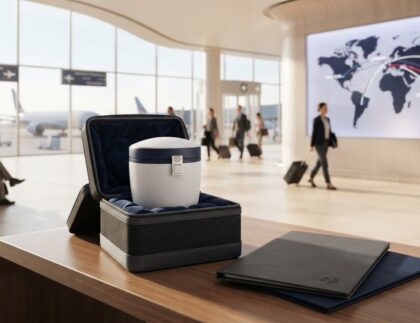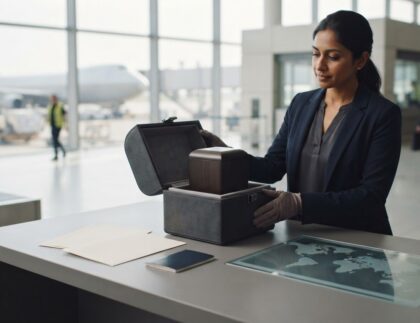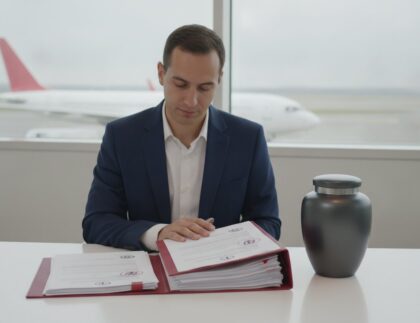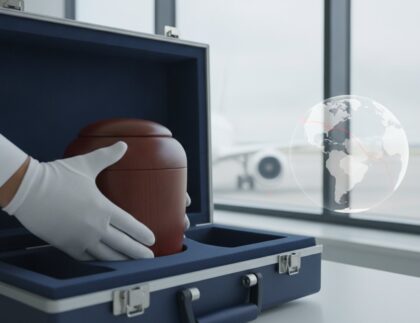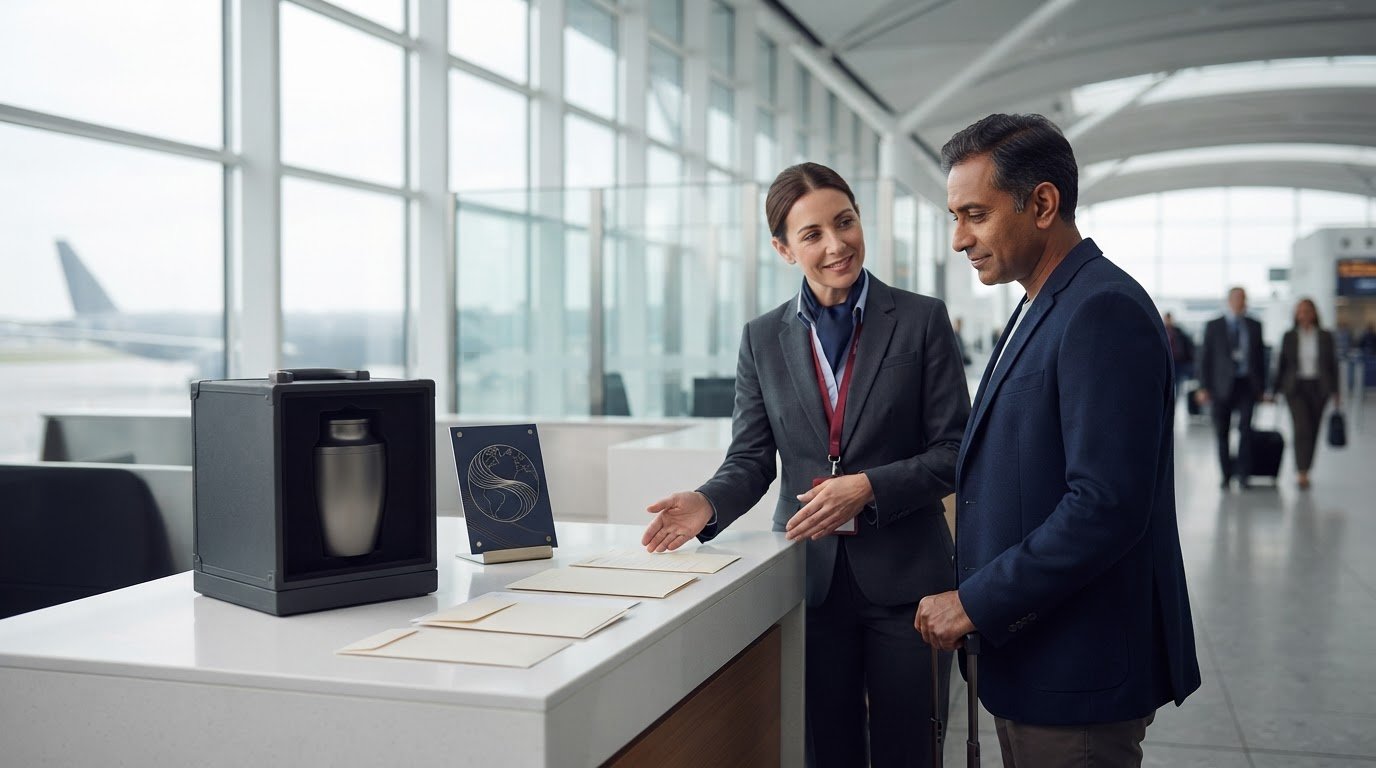
An airline’s approval is only one part of the journey. If you’re checking the taking ashes on a plane UK rules, you’ll also need to confirm what the destination authorities require. Policies can vary by airline and route, so assumptions about baggage, containers or paperwork could leave you facing questions at check-in or security.
It’s understandable to want clear answers before you travel. The practical first step is to ask the airline operating each flight for its requirements, then check any entry conditions with the relevant destination authorities. This article explains what to ask about, including baggage, containers and documents. It also distinguishes passenger travel from specialist transport: with SpeedLink Repatriation, a team member hand-carries the remains in the aircraft cabin, rather than placing them in the hold. These are separate processes, so check which applies to your plans.
Key Takeaways
- Taking ashes on a plane UK rules can depend on the airline, airport process and destination. Check the requirements for each part of your route.
- Contact the operating airline with your route and ask for its written requirements for baggage, containers and paperwork.
- Confirm destination requirements with the relevant authorities. Airline approval does not confirm that the ashes meet entry requirements.
- If arranging passenger travel is difficult, specialist transport is a separate option. SpeedLink handles the process in-house, with a team member hand-carrying the remains in the aircraft cabin.
Taking ashes on a plane from the UK: which rules apply?
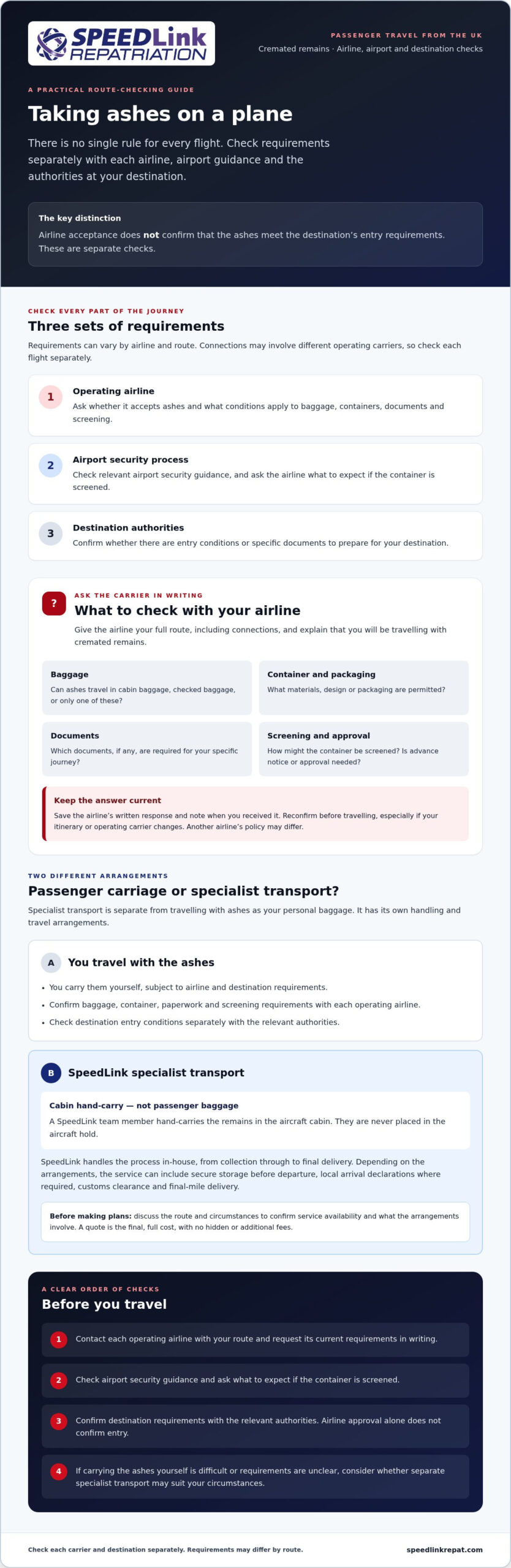
There isn’t one rule that covers every airline, flight and destination. The taking ashes on a plane UK rules for your journey depend on the requirements at each stage. Check them separately rather than relying on general advice.
- Airline acceptance: Ask the airline operating the flight whether it accepts ashes and what conditions apply.
- Airport processes: Check relevant security guidance and ask the airline what to expect if the container is screened.
- Destination requirements: Contact the relevant authorities to confirm whether there are entry conditions or specific documents to prepare.
These checks cover different things. An airline’s acceptance does not confirm that the destination will allow entry, and general airport guidance does not replace the airline’s own policy. If your itinerary includes connecting flights, check with each operating carrier, as their requirements may differ.
Does UK law alone decide whether ashes can travel?
No single summary can confirm the airline policy and destination requirements for every journey. Contact the operating airline and destination authorities directly for current guidance. You can also check airport security guidance separately, especially for information about screening.
Passenger carriage means you travel with the ashes yourself, subject to the airline’s and destination’s requirements. Specialist transport is a separate arrangement. SpeedLink handles the process in-house, with a team member hand-carrying the remains in the aircraft cabin. This is not the same as carrying ashes as your personal baggage.
For general background on cremation, see this overview of the cremation process. It doesn’t set out travel rules, so check with the airline and destination authorities to confirm what applies to your journey.
What to check with your airline before flying with ashes
For the taking ashes on a plane UK rules that apply to your trip, contact the airline operating each flight. Give it your route, including any connections, and explain that you’ll be travelling with cremated remains. Ask for its current requirements in writing. Don’t assume another carrier’s policy or a general answer covers your itinerary.
Which questions should you ask before booking or check-in?
Ask the airline to confirm:
- Whether ashes are accepted in cabin baggage, checked baggage or only one of these.
- What container materials, design or packaging it permits.
- Which documents, if any, it requires for your specific journey.
- How the container may be screened, and whether you need to give advance notice or obtain approval.
Requirements can be carrier-specific. For example, the British Airways policy shows how one airline sets out its own conditions. Use it as guidance for British Airways only, not as a rule for other carriers.
Save the airline’s written response and note when you received it. Reconfirm the details before travelling, particularly if your itinerary or operating carrier changes. Then check destination requirements separately with the relevant authorities. Airline acceptance does not confirm that the ashes meet any entry conditions.
If you can’t confirm or manage the passenger requirements, you could ask about a separate specialist transport arrangement. Discuss specialist ashes transport with SpeedLink to find out whether it may suit your circumstances.
If passenger travel is uncertain: consider specialist ashes transport
If the airline’s requirements are unclear, or carrying the ashes yourself feels difficult, specialist transport may be an alternative to explore. It is separate from passenger travel and has its own handling and travel arrangements. Before making plans, discuss your route and circumstances to confirm what the service involves.
How SpeedLink’s air transport differs from passenger carriage
With SpeedLink, a team member hand-carries the remains in the aircraft cabin. They are never placed in the aircraft hold. SpeedLink handles the process in-house, from collection through to final delivery. The service can include secure storage before departure, local arrival declarations where required and customs clearance, as well as final-mile delivery. This is distinct from a passenger carrying ashes as personal baggage, and it does not determine what an airline will accept from passengers.
If you’re comparing options after checking the taking ashes on a plane UK rules for your own journey, ask about route availability and the arrangements that would apply. SpeedLink can explain the service and provide a quote. The quoted price is the final, full cost, with no hidden or additional fees.
For a calm discussion about whether specialist transport may suit your needs, contact SpeedLink on +44 (0) 1252 786 015 or email [email protected]. Sharing your route and any requirements you’ve already received will help the team discuss the relevant arrangements with you.
Make your travel plans with greater confidence
The taking ashes on a plane UK rules depend on the operating airline and your destination, so confirm both before travelling. Ask the airline for written details about baggage acceptance, container requirements and paperwork. Then check entry requirements with the relevant destination authorities.
If passenger travel is difficult to arrange or the requirements remain uncertain, specialist transport is a separate option to discuss. SpeedLink handles the process in-house from collection through final delivery. A SpeedLink team member hand-carries the remains in the aircraft cabin; they are never placed in the aircraft hold. The arrangements will depend on your circumstances and route.
Confirming the details can help you decide which approach feels manageable. If you would like to explore specialist transport, contact SpeedLink to discuss your route and requirements.
Frequently Asked Questions
Can I take ashes on a plane from the UK?
It may be possible, but you’ll need to meet the operating airline’s requirements and check the destination’s rules. There isn’t one policy for every route. Before travelling, confirm acceptance, screening arrangements and any entry conditions directly with the airline and relevant destination authorities. The phrase taking ashes on a plane UK rules covers several separate checks, not one universal rule.
Do airlines allow ashes in hand luggage or checked baggage?
Airline policies differ. Some may accept ashes in cabin baggage, checked baggage or only one option, so don’t assume another carrier’s policy applies to your flight. Ask the operating airline which baggage option it permits for your itinerary and request its container and packaging requirements in writing. If your journey has connecting flights, check with each operating carrier.
What documents do I need to take ashes on a plane?
The required documents can depend on the airline and destination, so there isn’t a single list that applies to every trip. Ask the airline what paperwork it requires, then check separately with the destination authorities about any entry documents. Confirm whether originals, certified copies or translations are needed before travelling rather than relying on general advice.
What can I do if my airline will not confirm it can carry ashes?
Don’t assume you’ll be able to board with the ashes if the airline can’t confirm its requirements. You could contact the airline again for written guidance or explore specialist transport as a separate option. SpeedLink handles the process in-house, and a team member hand-carries the remains in the aircraft cabin. Discuss your circumstances on +44 (0) 1252 786 015 or at [email protected].

Article by
David McMillen
I started my career in logistics over 30 years ago which has spanned 2 continents and several different types of courier and logistics operations. I lost my dear Mum back in 2016 and it was in the aftermath of her passing that SpeedLink Repatriation was born. We have endeavoured to bring the same care and attention to all of our clients as my mum received and to date we have helped repatriate hundreds of individuals across the globe.
Disclaimer
International requirements for cremated remains vary by origin, destination, carrier and method of transport and may change without notice.
Content is provided as general guidance and should not be treated as legal advice.
Where necessary, current requirements should be confirmed with the relevant government authority, customs authority, embassy, consulate, postal operator, airline or carrier.
SpeedLink can advise on the requirements applicable to a specific shipment.