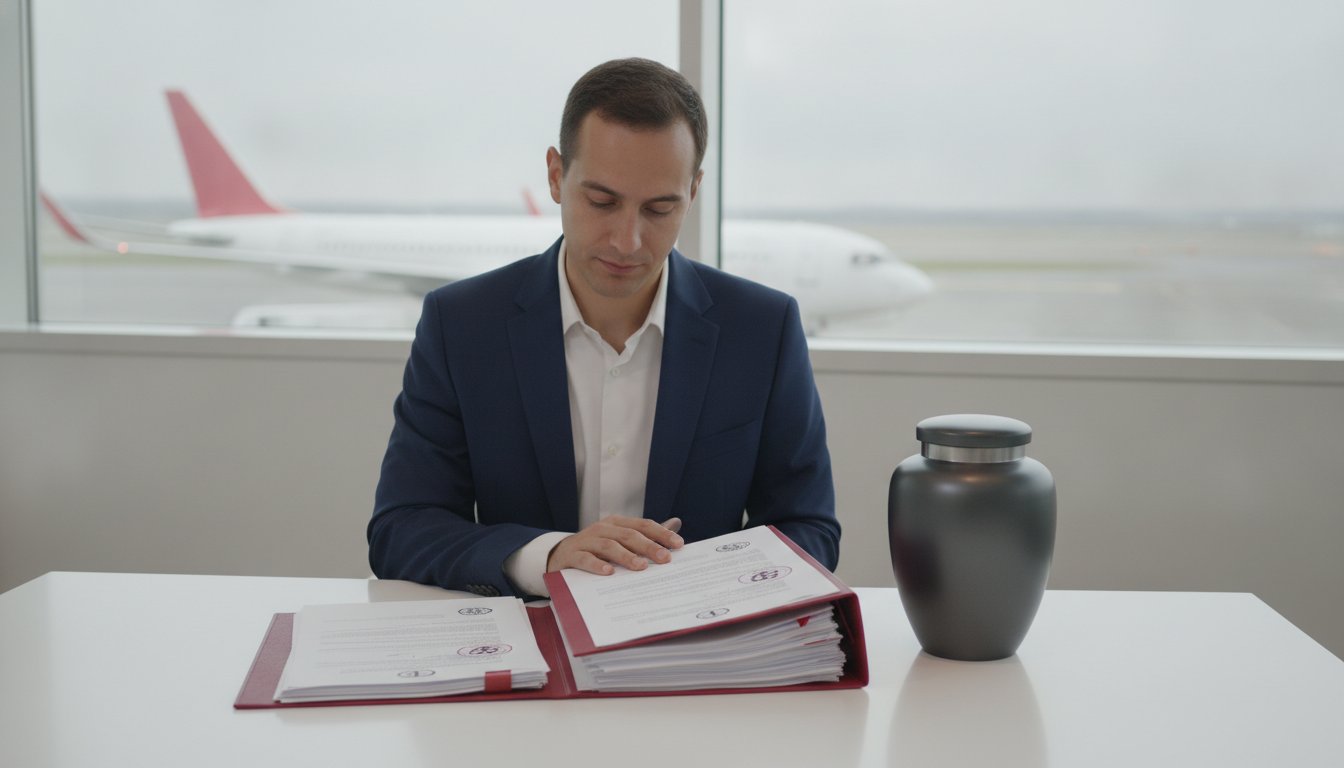
Imagine the distress of arriving at an international border, only to find that your loved one’s journey is halted because a death certificate isn’t in the local language. Losing someone is exhausting enough without the added burden of complex international logistics and paperwork. You naturally want the process to be as respectful and quiet as possible, whilst avoiding the fear of remains being held at customs due to avoidable clerical errors.
This guide explains exactly why a certified translation for ashes repatriation is a legal necessity rather than a mere formality, ensuring that every document meets strict customs standards. By understanding these requirements, you can prevent delays and maintain the dignity of the repatriation. We’ll outline which certificates require professional translation, the difference between standard and certified versions, and how a dedicated courier can manage these details for you to provide a single point of contact during this difficult time.
Key Takeaways
- Identify the specific legal documents, such as the death and cremation certificates, that must be professionally translated to clear international customs.
- Understand the difference between standard and certified translation for ashes repatriation to ensure your paperwork meets the exact standards of foreign embassies and border officials.
- Ensure compliance by obtaining documents accompanied by a signed statement of accuracy from a qualified linguist, preventing distressing delays at the border.
- Learn how a dedicated hand-carry service keeps your loved one’s remains in the aircraft cabin rather than the hold, providing security and peace of mind throughout the journey.
Understanding Certified Translation Requirements for International Repatriation
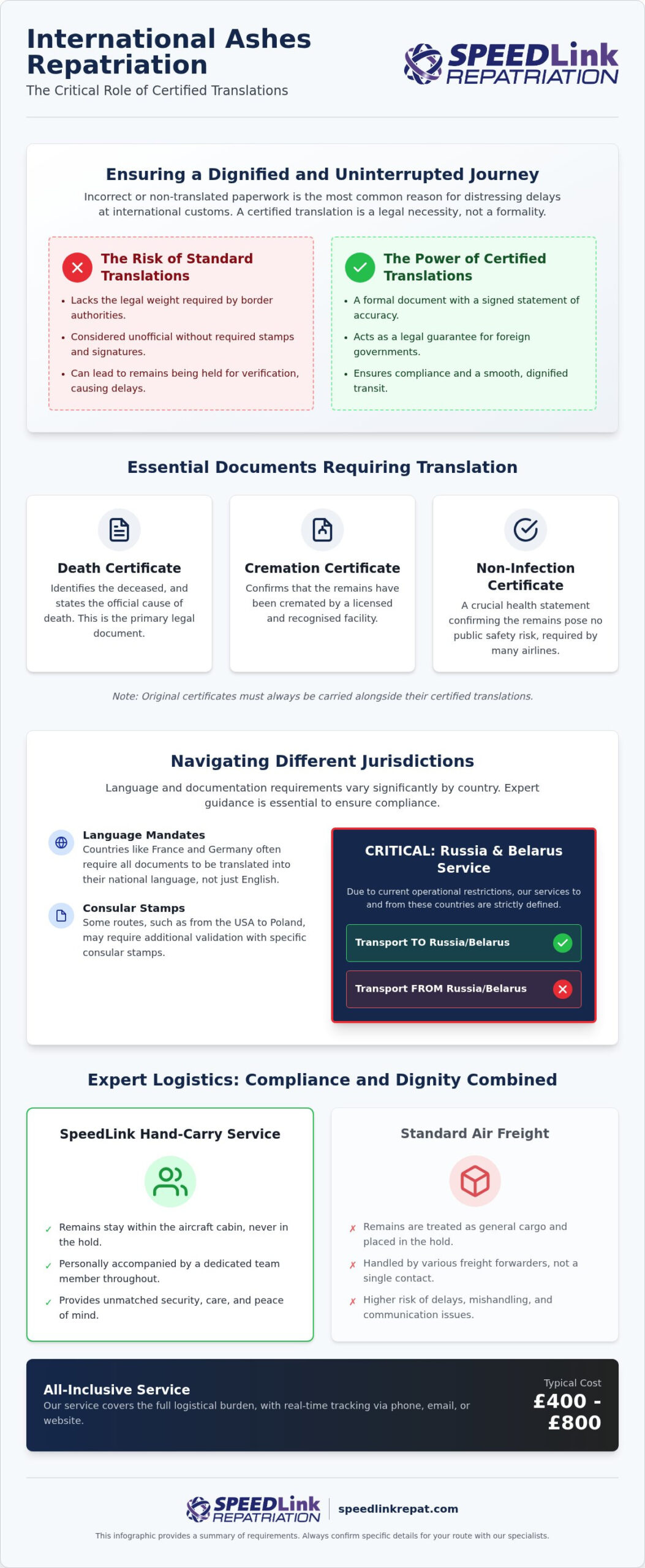
A certified translation for ashes repatriation is far more than a simple language conversion. It is a formal document accompanied by a signed statement from a professional linguist or translation agency, attesting that the content is a true and accurate reflection of the original. During the process of Repatriation, this certification serves as a legal guarantee for foreign governments. It’s vital to remember that these translated copies must always be carried alongside the original certificates throughout the entire journey. Without both, the chain of custody and legal identity of the remains can be questioned by overseas officials.
SpeedLink Repatriation understands the weight of these requirements. We manage all arrival declarations and customs clearance in-house, ensuring that every piece of paperwork is meticulously organised before transit begins. This people-first approach removes the burden of administrative complexity from grieving families. By handling these technical details, we provide a sense of security and ensure that the transition across borders is handled with the highest level of professional composure.
Why Standard Translations Are Not Accepted by Customs
Standard translations lack the legal weight required by border authorities. Customs officials require a formal assurance that the translation is a verbatim representation of the original death or cremation certificate. Without official stamps and signatures, documents are often viewed as unofficial. This can lead to remains being held at the border for verification, a situation that causes unnecessary emotional exhaustion. These official markers of accuracy prevent distressing delays and ensure the journey remains dignified. Using a certified translation for ashes repatriation provides the clarity and control that international officials demand for legal compliance.
Essential Documents Requiring Translation for Global Transit
Successful transit depends on three core documents. The Death Certificate identifies the deceased and the cause of death, whilst the Cremation Certificate proves the remains were handled by a licensed facility. A third, often overlooked document is the “Freedom from Infection” or “Non-Infection” Certificate. This health statement confirms that the remains pose no risk to public safety, a requirement that many airlines and border agencies enforce strictly. For those following international shipping guidance for funeral directors, ensuring these papers are part of your certified translation for ashes repatriation is essential for a dignified process.
Requirements can change significantly based on the destination. For example, transporting ashes from the USA to Poland often involves specific consular stamps that aren’t required for other European nations. If you’re unsure which papers apply to your situation, you can speak with our bereavement specialists for personalised guidance. We ensure every document is ready before the journey begins.
Navigating Language Requirements Across Different Jurisdictions
Jurisdictions vary in their openness to English-language paperwork. Whilst English is common, countries like France and Germany often mandate translations into their respective national languages. SpeedLink provides expert advice on transporting remains from Canada to Europe to help you meet these local standards. We also manage complex routes, such as sending ashes to Russia. Please note that whilst we facilitate transport to Russia, we don’t currently offer services for remains leaving the country. Every step of your certified translation for ashes repatriation is handled with professional composure to ensure legal compliance.
Ensuring Compliance and Dignity Through Expert Repatriation Logistics
Choosing the right logistical partner is as vital as securing the correct paperwork. Unlike traditional air freight where remains are often treated as cargo, SpeedLink prioritises a hand-carry approach. Your loved one’s remains are never placed in the aircraft hold. Instead, they stay within the aircraft cabin, personally accompanied by a dedicated team member from the moment of collection until final delivery. This method provides an unmatched standard of care, ensuring the journey is handled with the profound empathy and professional composure it deserves.
Managing international transit shouldn’t add financial uncertainty to an already stressful period. Our all-inclusive service typically falls within a quoted cost of £400-£800, which covers the full logistical burden and removes the need for third-party freight forwarders. Families find reassurance through real-time tracking, which is accessible via phone, email, or our website. This transparency ensures you stay informed of every movement, providing a sense of security when it’s needed most. By integrating the certified translation for ashes repatriation into our broader logistics plan, we ensure that no paperwork error disrupts the journey.
Professional Coordination from Collection to Final Delivery
SpeedLink serves as your central point of contact, taking over the complex task of liaising with local authorities and funeral directors. We verify that all documentation, including the required certified translation for ashes repatriation, meets the specific standards of the destination country. This stewardship allows you to focus on your own well-being whilst we navigate the legal requirements. To begin the process, you can contact SpeedLink for a bespoke quote and to confirm upcoming departure dates for your specific route.
Securing a Dignified Path Forward
Navigating international borders requires more than just logistical planning; it demands a commitment to legal precision and personal care. Ensuring you have a certified translation for ashes repatriation is the final step in guaranteeing that your loved one’s journey remains uninterrupted and respectful. By centralising documentation and choosing a hand-carry service, you remove the risk of remains being held or delayed by customs officials.
SpeedLink brings over a decade of specialist experience to every repatriation, treating each journey with integrity. We are here to carry the burden of paperwork and transport so you don’t have to. Our team is available 24/7/365 to provide the steady hand and compassionate guidance needed during this sensitive time.
You can reach our specialists directly on +44 (0) 1252 786 015 to discuss your specific requirements and find peace of mind.
Frequently Asked Questions
Is it legal to transport cremated remains without a certified translation?
It is generally illegal to enter a foreign country with documents that the local authorities cannot verify. Most jurisdictions require a certified translation for ashes repatriation to confirm the cause of death and the legitimacy of the remains. Failing to provide these can lead to the remains being seized or refused entry at the border; this causes significant distress for the family.
How long does it take to obtain a certified translation for repatriation?
Most professional linguists provide certified translations within 24 to 48 hours for standard documents like death certificates. For rarer languages, this timeframe may extend to several days. SpeedLink coordinates with these timelines to ensure all paperwork is finalised before our team member begins the hand-carried journey; this keeps the entire process on schedule for a dignified arrival.
What happens if my documents are not in the correct language at customs?
If your documents don’t meet language requirements, customs officials will likely refuse clearance. This often results in the remains being held at the airport, which can be deeply upsetting for grieving families. These delays often incur additional storage fees and require emergency translation services to resolve. SpeedLink avoids these issues by verifying all documentation and handling arrival declarations in-house.
Can SpeedLink help me organise the necessary translations?
SpeedLink provides comprehensive support by acting as your central point of contact for all logistics and documentation. We ensure that every certified translation for ashes repatriation is in place and meets the specific standards of the destination country. By managing these details as part of our in-house service, we remove the burden of complex paperwork from your shoulders during this difficult time.

Article by
David McMillen
I started my career in logistics over 30 years ago which has spanned 2 continents and several different types of courier and logistics operations. I lost my dear Mum back in 2016 and it was in the aftermath of her passing that SpeedLink Repatriation was born. We have endeavoured to bring the same care and attention to all of our clients as my mum received and to date we have helped repatriate hundreds of individuals across the globe.
Disclaimer
International requirements for cremated remains vary by origin, destination, carrier and method of transport and may change without notice.
Content is provided as general guidance and should not be treated as legal advice.
Where necessary, current requirements should be confirmed with the relevant government authority, customs authority, embassy, consulate, postal operator, airline or carrier.
SpeedLink can advise on the requirements applicable to a specific shipment.