Most people assume that sending a loved one’s remains overseas is as simple as booking a standard courier, but the reality is that major providers like DHL and FedEx strictly prohibit the transport of ashes. It’s natural to feel anxious whilst navigating these complex rules during a time of grief. If you are searching for how to send ashes abroad, you need a process that prioritises dignity and security over basic logistics. We understand the fear of remains being mishandled or delayed by bureaucratic complications at international borders.
This article clarifies the essential documentation and legal requirements needed for safe international repatriation. You’ll learn about secure transit methods that ensure remains are personally looked after rather than placed in an aircraft hold. We preview the necessary paperwork and scannable container rules to help you find a reliable, door-to-door solution that offers total peace of mind throughout the journey.
Key Takeaways
- Identify the mandatory legal documentation, such as certified cremation certificates, required to navigate international customs without stressful delays.
- Understand how to send ashes abroad securely by opting for specialist hand-carry services that keep remains in the cabin rather than the aircraft hold.
- Learn the specific packaging protocols and scannable container requirements necessary to ensure a respectful passage through airport security checks.
- Discover how to organise a dignified door-to-door transfer by verifying route availability and securing advance clearance from destination authorities.
Understanding the Legal Requirements and Essential Documentation
Navigating international borders with a loved one’s remains is a process defined by strict, independent regulations. Each nation maintains its own legal framework for the import of human remains, meaning there isn’t a single global standard. If you’re researching how to send ashes abroad, you’ll find that what works for one country might lead to a refusal at another’s border. It’s vital to treat these rules as absolute requirements rather than mere suggestions.
Understanding how to send ashes abroad involves more than just transit logistics; it’s about legal integrity. Failing to secure the correct paperwork can result in heartbreaking delays or the remains being held by customs officials. A specialist repatriation service ensures full compliance with local authorities before the journey even begins, acting as a steady hand through the legal maze. This proactive approach removes the burden of navigating foreign bureaucracy during an already difficult time, ensuring the remains are treated with stewardship and respect.
Statutory Paperwork Required for International Customs Clearance
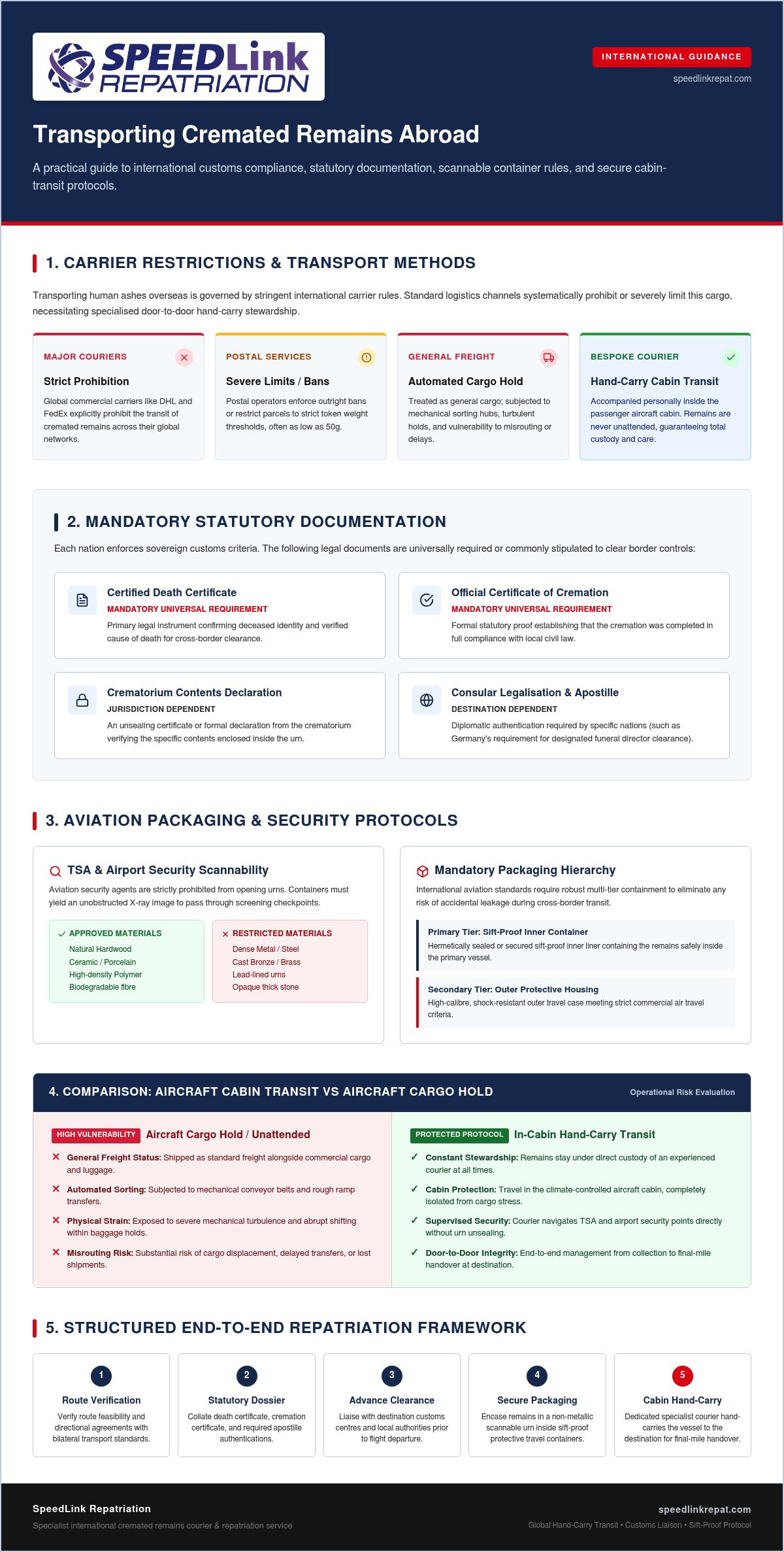
To begin the journey, certain documents are universally mandatory. You’ll need a certified copy of the Death Certificate and the official Certificate of Cremation, which verifies the Cremation process has been completed legally. These documents act as the primary proof of identity and cause of death for border agents. Amongst certain jurisdictions, you might also need an unsealing certificate or a formal declaration from the crematorium confirming the contents of the urn. Consular legalisation or an apostille is often necessary for specific destination countries to verify the authenticity of these documents internationally. For those arranging a USA to Germany ashes courier service, for instance, specific German regulations regarding funeral directors must be satisfied before transit.
Evaluating Transport Methods and Packaging Protocols
When exploring how to send ashes abroad, families often look to national postal services first. However, these providers usually enforce strict weight limits, often as low as 50g, or outright bans on human remains. Standard freight forwarders are another common choice, but they frequently treat remains as general cargo. This exposes the urn to automated sorting centres and impersonal handling amongst thousands of other parcels. Bespoke transport offers a necessary alternative, ensuring a dignified journey where your loved one is never left unattended.
Why Cabin Transit Protects Remains from Cargo Hold Risks
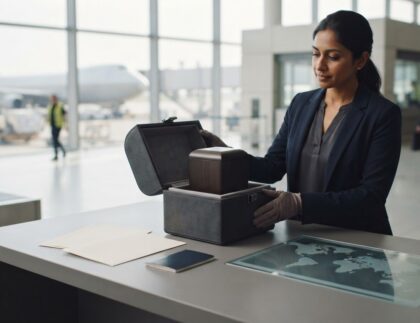
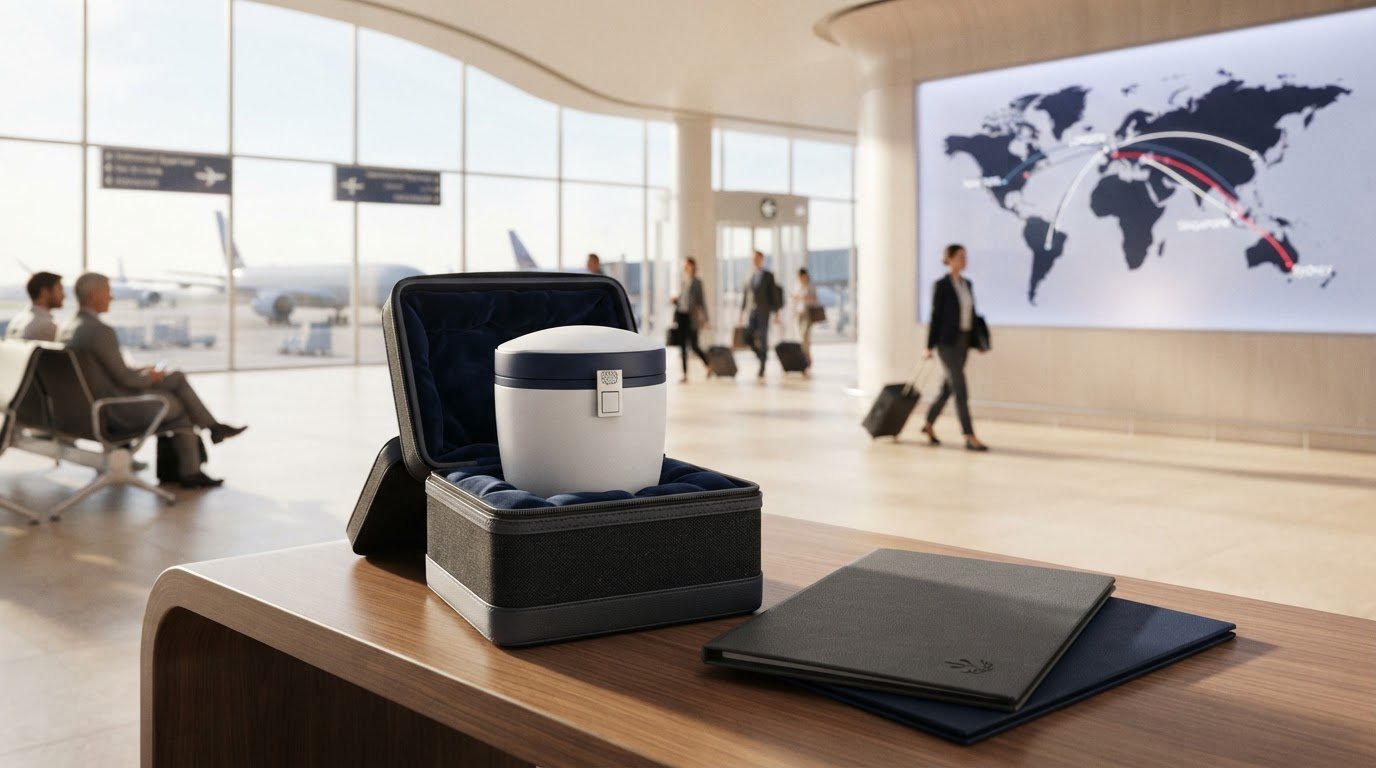
Remains should ideally be hand-carried within the aircraft cabin by a professional rather than placed in the hold. Checked luggage is subject to mechanical turbulence and the risk of loss or misrouting. To pass security smoothly, you must adhere to TSA guidelines for flying with ashes, which require non-metallic urns. Containers made of wood, ceramic, or polymer allow for clear X-ray scanning without the need for security staff to open the vessel.
Professional packaging must be robust, protective, and specifically designed to meet international aviation standards. Using a sift-proof inner container within a strong outer box prevents accidental leakage. If you are arranging a USA to Ireland cremated remains courier service, for example, these packaging protocols are vital for cross-border transit. Understanding how to send ashes abroad safely means choosing a method that guarantees constant stewardship. For specific advice on your route, you can speak with a repatriation expert to ensure every detail is handled with care.
Steps to Organise Secure International Repatriation
Organising the final journey for a loved one requires meticulous planning to avoid bureaucratic friction. When considering how to send ashes abroad, the first step is verifying that the specific route and direction of travel are fully supported by international agreements. Some regions have specific operational restrictions, so confirming availability early prevents disappointment. Liaising with local authorities and customs officials at the destination centre is essential for securing advance clearance. This proactive communication ensures that all entry requirements are met before the remains ever leave their point of origin.
Instructing a specialist repatriation service takes the logistical burden entirely off your shoulders. Instead of managing multiple agencies, you work with a partner that understands the nuances of global transit. It’s a structured approach that replaces confusion with a predictable process. By handling the complex coordination with airlines and border agencies, specialists allow bereaved families to focus on their personal grieving process rather than administrative hurdles.
Arranging Bespoke Transport Through Specialist Providers
A dedicated team member manages the entire process in-house, from the initial collection to final-mile delivery. This ensures a single, personal point of contact who acts as an ethical guardian for the remains throughout the journey. Utilising secure pre-departure storage provides families with the time needed to finalise memorial arrangements without added pressure. This level of care and professional composure is standard across specialised options, such as a cremated remains courier from USA to Germany or a cremated remains courier from USA to Ireland. Every step is handled with technical mastery and profound empathy, ensuring the remains are personally looked after until they reach their destination.
Securing a Dignified Final Journey
Arranging international repatriation requires a precise balance of legal compliance and secure transit. Understanding how to send ashes abroad safely means moving away from standard postal options and choosing a method that guarantees constant, personal oversight. Securing the correct customs paperwork and selecting a scannable, non-metallic urn are the essential steps that prevent stressful delays at the border.
SpeedLink Repatriation provides families with over a decade of specialist repatriation experience. Every shipment is managed entirely in-house, ensuring a central, personal point of contact for every family. By utilizing hand-carried cabin transit, a dedicated team member looks after the remains throughout the entire flight, ensuring they are never placed in the aircraft hold. You can trust that your loved one will be treated with the utmost professional composure and respect from collection to final delivery.
Frequently Asked Questions
Can I send human ashes abroad through the standard post?
Standard postal services are generally unsuitable for transporting a full set of remains. Royal Mail restricts shipments of cremated remains to a maximum of 50g, whilst major commercial couriers like FedEx and DHL strictly prohibit their transport entirely. Attempting to use these networks for full remains risks loss or refusal. A specialist repatriation service ensures the remains are handled with the necessary dignity and security.
What documents are required to ship cremated remains internationally?
You must provide a certified copy of the Death Certificate and an official Certificate of Cremation as these are universally mandatory. Depending on the destination, you might also need an unsealing certificate or consular legalisation to satisfy local authorities. When researching how to send ashes abroad, verifying these documents in advance is the most effective way to prevent stressful delays at international borders.
Are ashes allowed to be carried in the aircraft cabin?
Yes, carrying ashes in the aircraft cabin is the most secure method available. Specialist repatriation services ensure remains are hand-carried by a dedicated team member, ensuring they are never placed in the aircraft hold. To comply with aviation security protocols, the urn must be made of scannable materials like wood or polymer, allowing for clear X-ray screening without disturbing the contents.
Is it possible to send cremated remains to countries like Russia or Belarus?
Transporting cremated remains to Russia or Belarus is possible from supported countries. It’s important to note that whilst outbound transit to these destinations is currently supported, services are not offered for transporting remains from Russia or Belarus to other countries. If you need to know how to send ashes abroad to these specific regions, a specialist can guide you through the current operational requirements.

Article by
David McMillen
I started my career in logistics over 30 years ago which has spanned 2 continents and several different types of courier and logistics operations. I lost my dear Mum back in 2016 and it was in the aftermath of her passing that SpeedLink Repatriation was born. We have endeavoured to bring the same care and attention to all of our clients as my mum received and to date we have helped repatriate hundreds of individuals across the globe.
Disclaimer
International requirements for cremated remains vary by origin, destination, carrier and method of transport and may change without notice.
Content is provided as general guidance and should not be treated as legal advice.
Where necessary, current requirements should be confirmed with the relevant government authority, customs authority, embassy, consulate, postal operator, airline or carrier.
SpeedLink can advise on the requirements applicable to a specific shipment.