The scattering itself may not be the largest part of the cost. Other arrangements can make a substantial difference to the overall budget.
It’s understandable to want a clear figure before deciding how to honour someone’s wishes, but ashes scattering costs vary depending on the location and arrangement. This article explains what can affect the price, how scattering compares with other options, and what to consider if ashes need to be shipped or received. It also outlines practical differences between scattering on land, at sea or by air, helping you weigh the choices with greater clarity.
Key Takeaways
- Compare scattering options by location, ceremony and service type to see what is likely to shape the overall cost.
- Weigh scattering against alternatives such as a cemetery garden or keeping ashes in an urn.
- Understand the practical rules that can affect scattering in the United States, particularly at sea or on public land.
- Find out what to consider when ashes need to cross borders, and when specialist repatriation or domestic delivery may help.
Scattering ashes and other alternatives
In the United States, ashes scattering costs depend on the setting, while burial and memorial options involve different expenses. Permits and location rules also matter, particularly for a release at sea.
Permits and Legal Rules
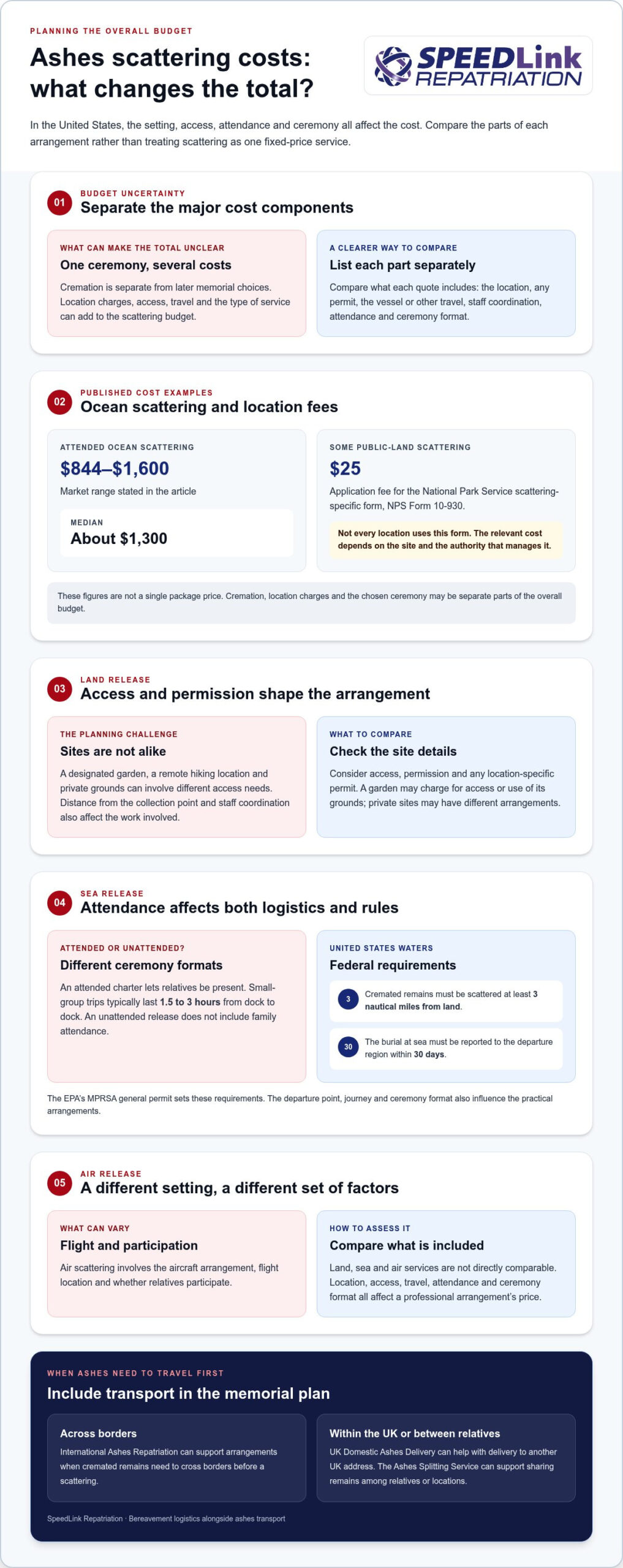
For scattering ashes at sea, the MPRSA general permit sets federal requirements. According to the U.S. Environmental Protection Agency, cremated remains must be scattered at least three nautical miles from land in United States waters. The EPA also requires reporting the burial at sea to the departure region within 30 days. These rules affect where an attended scattering service can release ashes and what follows the ceremony. On land, access and permission depend on the location, such as a private ground or public site.
United States Scattering Costs
Costs vary by arrangement, and cremation is a separate expense from later memorial choices. Families can choose a container suited to a ceremony or future burial. A funeral home may coordinate arrangements, but its role and any charges depend on the services selected.
This may suit families who want a marked memorial and a place to visit, rather than a release over water or on land. Cremation can also leave the timing flexible: families may arrange a burial later, once immediate funeral decisions are made. Compare the overall arrangement, including the urn and memorial choices, rather than treating scattering as the only cost.
How much does it cost to scatter ashes in the United States?
In the United States, the total depends on cremation, the location and the type of arrangement. For attended ocean scattering, the market range is typically $844 to $1,600, with a median of about $1,300. Treat these as separate parts of a budget, not one fixed package price.
Location-related charges can add to the total. The National Park Service’s scattering-specific form, NPS Form 10-930, has a $25 application fee. Not every location uses this form, so the relevant cost depends on where the release is planned and which authority manages the site.
A scattering garden, private land and a boat arrangement each have different cost factors. A garden may charge for access or use of its grounds, while a sea ceremony can involve a vessel and attended arrangements. For scattering on land, consider permission and access; for a boat service, the trip and ceremony shape the budget. Compare what each quote includes before setting a total.
Treat cremation and scattering as separate decisions. Families considering an attended ocean release should compare the arrangement’s cost and any applicable location permit. Those planning a release on public land should factor in permit requirements, while private sites may have different access arrangements. Listing each cost separately makes alternatives easier to compare without assuming every family needs the same ceremony.
If ashes must also travel across borders before a planned scattering, discuss the transport arrangements as part of the overall planning.
How much do professional ash scattering services cost by land, sea, or air?
Professional arrangements vary by setting and level of attendance. A land release may take place in a designated garden, at a location reached by hiking, or on private grounds. Access, distance from the collection point and whether staff coordinate a ceremony all affect the work involved. An accessible site and a remote location require different planning, even when the family’s wishes are similar.
At sea, families can choose an attended ceremony or an unattended release. An attended charter gives relatives a chance to be present; small-group trips typically last 1.5 to 3 hours from dock to dock. An unattended service does not include family attendance, so the arrangement and timing differ. The departure point, journey length and ceremony format shape the logistics.
Air scattering brings different practical considerations, including the aircraft arrangement, flight location and whether relatives participate. Land, sea and air services are not directly comparable: each has distinct access, travel and attendance requirements. Families weighing a quiet release against a shared ceremony can start by deciding whether being present matters most.
The cost of a professional scattering arrangement depends on the circumstances and is provided after a quote request. Location, access, travel, attendance and ceremony format all affect the price. These factors explain why one figure cannot represent every land, sea or air arrangement. Compare the services included, not just the setting.
SpeedLink Repatriation: International Ashes Repatriation
SpeedLink Repatriation provides International Ashes Repatriation when cremated remains need to cross borders, including when family members are planning a scattering in another country. Its UK Domestic Ashes Delivery Service can help when ashes need to reach another address within the UK.
For families wishing to share remains among relatives or locations, the Ashes Splitting Service can support that arrangement. Bereavement Logistics can also help with practical arrangements for moving ashes, so transport can be considered alongside memorial plans.
If ashes need to be shipped or received before a scattering, contact SpeedLink Repatriation to discuss the arrangements or visit speedlinkrepat.com.
Make a plan that feels right for your family
Ashes scattering cost is one part of a wider decision. Consider where the remains need to go, who wishes to be present and what kind of memorial feels appropriate. If ashes must travel before a scattering or be delivered to relatives, arranging transport early can help connect the practical details with your plans. SpeedLink Repatriation provides Bereavement Logistics alongside ashes transport services, supporting families with movement and coordination.
To take the next step, outline the origin, destination and intended arrangement. This gives the conversation a clear starting point, even if every detail is not settled. Whether you are planning a local delivery or an international journey, you can discuss the circumstances and practical requirements at your own pace.
A thoughtful plan can make space for the farewell that matters to you.
Frequently Asked Questions
What is the average cost of a cremation ash scattering service?
There’s no single average that applies across the United States. An attended release involves a different arrangement from an unattended one, and the setting also affects what is included. Keep cremation, the scattering arrangement and optional extras as separate budget items. This makes it easier to understand ashes scattering costs without treating every ceremony as the same service.
What is the cost of scattering ashes at a cemetery or memorial garden?
The amount depends on the cemetery or garden and the arrangement chosen. A site may charge for use of its grounds, while a memorial marker or gathering may be a separate expense. Consider whether you want a permanent place to visit, a formal ceremony or simply a quiet release. These choices shape the overall budget beyond the scattering itself.
Can you scatter ashes for free, and what options are available?
Yes. A family can arrange a simple release on land they own without paying for a professional scattering service. If the land belongs to someone else, the owner’s permission matters. Even without a service fee, the family may still have travel or container expenses. A small private gathering is another way to mark the occasion without arranging a boat or aircraft.
What affects the cost of ash scattering, such as location, travel, or ceremony?
The arrangement can vary with the number of people attending, the journey involved and optional features such as video documentation. A release requiring a boat or aircraft also has different practical needs from one on accessible land. Decide whether family attendance, a shared journey or a record of the moment matters to you. These preferences help define the arrangement.
How much does it cost to scatter ashes at a national park or other public land?
Costs for scattering on public land can include a site permit, travel and arrangements for reaching the release location. National Park Service rules and application processes are separate from the fee for a professional scattering service. The site’s management authority determines the relevant permit arrangements, so account for these separately from travel and ceremony costs when planning a visit.

Article by
David McMillen
I started my career in logistics over 30 years ago which has spanned 2 continents and several different types of courier and logistics operations. I lost my dear Mum back in 2016 and it was in the aftermath of her passing that SpeedLink Repatriation was born. We have endeavoured to bring the same care and attention to all of our clients as my mum received and to date we have helped repatriate hundreds of individuals across the globe.
Disclaimer
International requirements for cremated remains vary by origin, destination, carrier and method of transport and may change without notice.
Content is provided as general guidance and should not be treated as legal advice.
Where necessary, current requirements should be confirmed with the relevant government authority, customs authority, embassy, consulate, postal operator, airline or carrier.
SpeedLink can advise on the requirements applicable to a specific shipment.