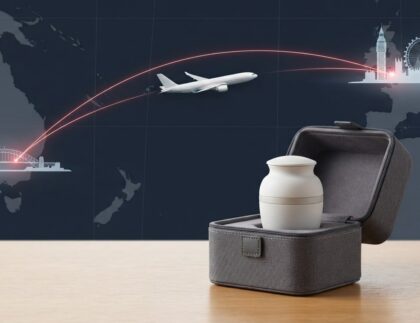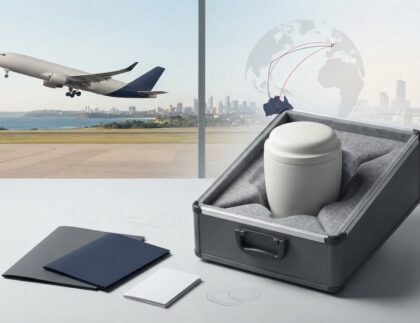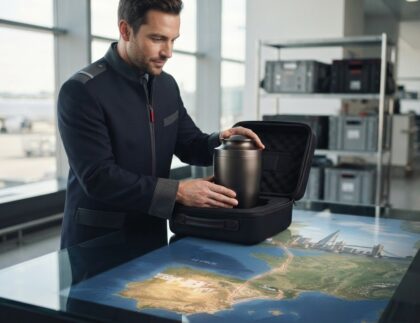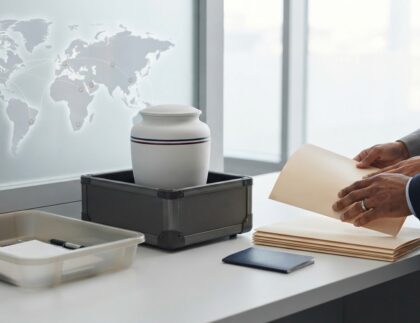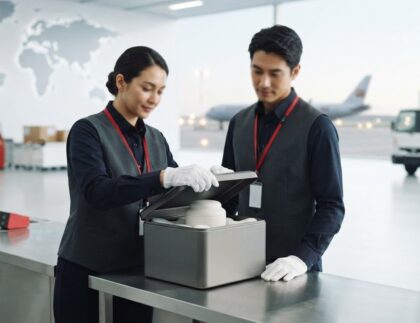
Yes, you can carry cremated remains on a plane in the United States, but they must pass screening, and the TSA officer makes the final decision. Rules for taking ashes into another country vary, so the anxiety of travelling on an aeroplane with a loved one’s ashes can involve more than the flight itself.
It’s understandable to want clear answers before setting off. This article explains how to check airline restrictions, prepare for airport screening and find out which documents or permissions may apply to your journey. It also offers practical ways to make the experience more manageable, from choosing a suitable container to preparing for questions at security.
Key Takeaways
- Contact your airline before travelling, and confirm whether ashes may be carried in the cabin or checked baggage.
- According to the Transportation Security Administration (TSA), containers must pass X-ray screening, and TSA officers will not open them.
- Prepare the required documents for your route and check destination-country rules, including any translation or customs requirements.
- If managing the arrangements feels difficult, SpeedLink Repatriation’s international ashes repatriation service can help with transporting cremated remains between countries.
Airline restrictions on checked cremated remains
Airline rules differ, so confirm the requirements for your route before packing an urn. For domestic flights, carry a cremation certificate. An airline or the Transportation Security Administration (TSA) may also request a death certificate.
-
Check airline policies
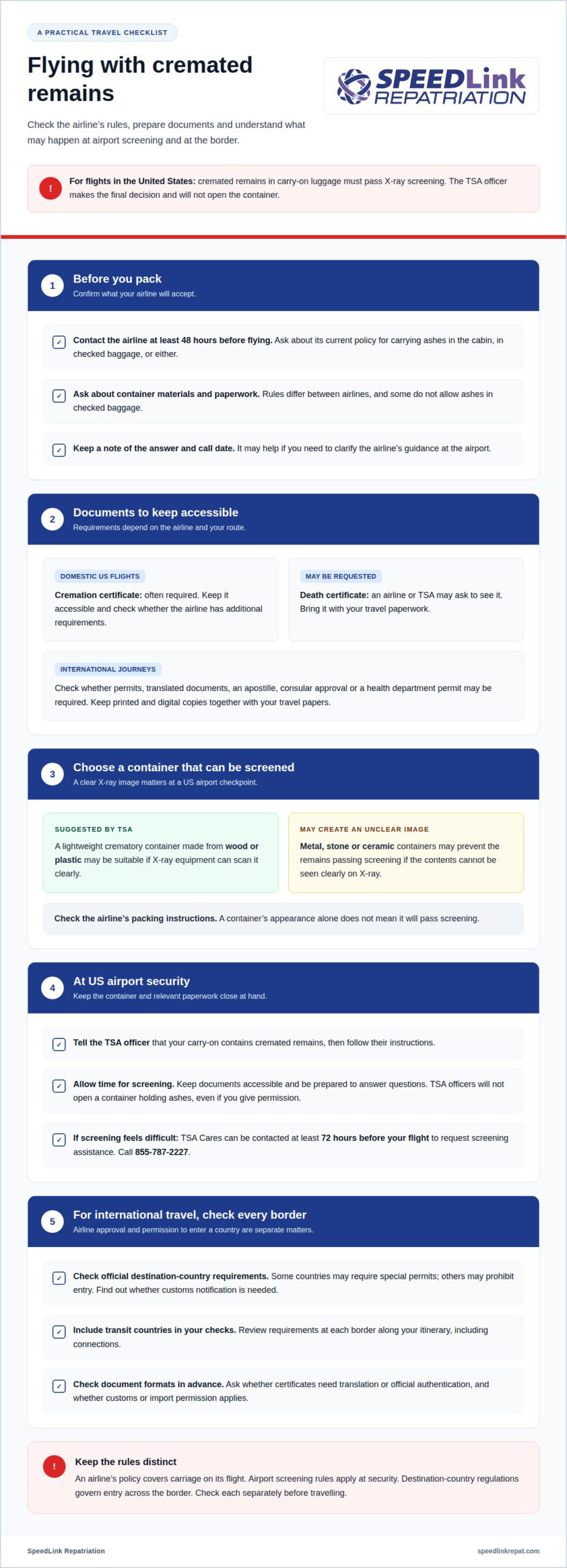
Contact the airline at least 48 hours before flying, and ask about its current ashes policy. Confirm whether cremated remains can travel in the cabin, checked baggage, or either. Ask about container materials and any paperwork required for your destination. Record the answer and the date of your call, so you can refer to it at the airport if staff need clarification.
-
Review domestic airline rules
For a domestic flight in the United States, check the airline’s rules before deciding where to pack the remains. Cremated remains may be carried in checked baggage, but some airlines don’t allow this. A cremation certificate is often required for domestic flights. Keep it accessible, and check whether the airline has additional requirements for the container or its handling.
-
Check which documents are needed
Carry the cremation certificate and bring a death certificate, as the airline or TSA may request one. For international travel, check whether your destination requires additional permits or translated documents. Keep printed and digital copies with your travel papers. This preparation makes it easier to respond if airline staff or airport officials ask about the container.
-
Confirm checked-ashes restrictions
Ask the airline directly whether it accepts ashes in checked baggage, even if its general baggage rules seem to allow them. Choose a container made of material that airport X-ray equipment can scan clearly. An unclear image may prevent it passing screening. Plastic may be suitable if it allows clear screening. Follow the airline’s packing instructions, and don’t assume every carrier has the same rules.
Anxiety and stress at airport security
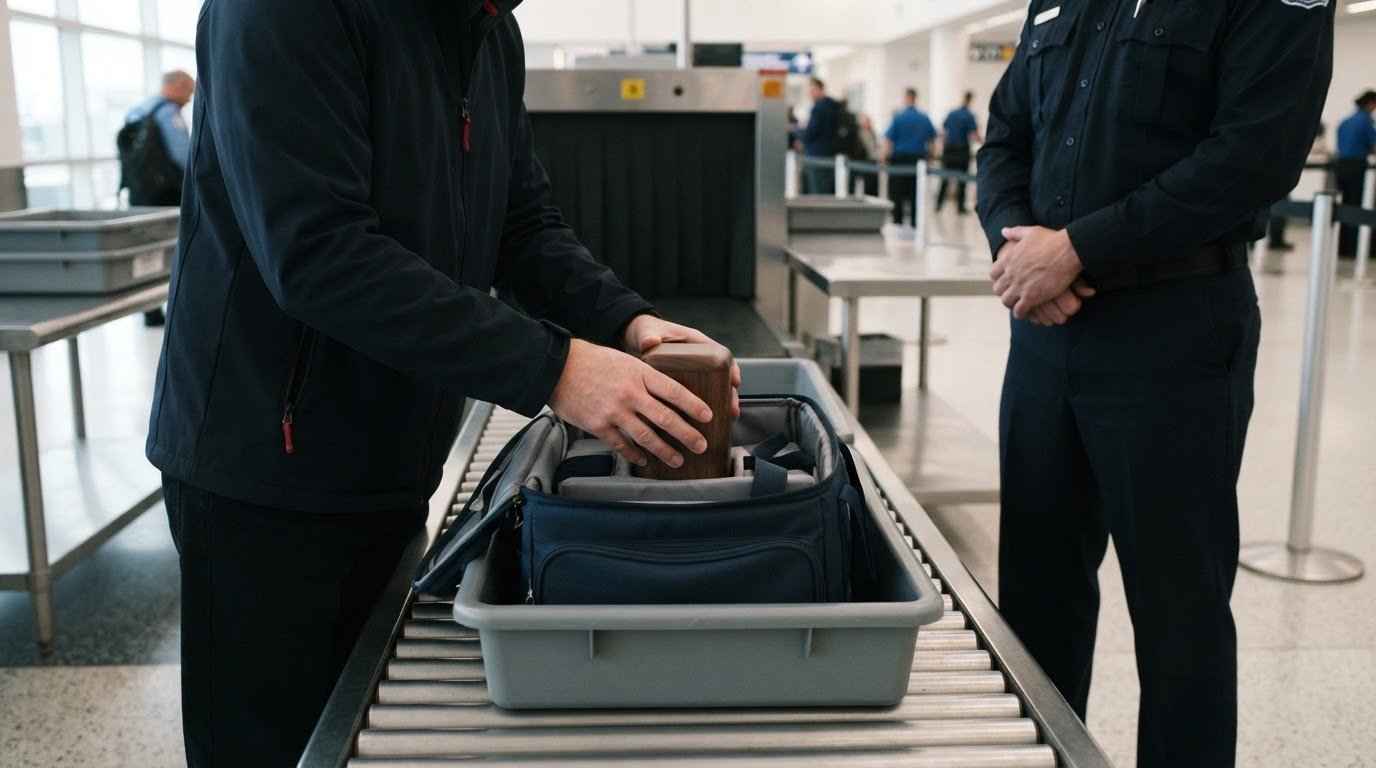
In the United States, TSA requires cremated remains in carry-on luggage to pass through X-ray screening, and the officer makes the final decision. According to the Transportation Security Administration (TSA), officers will not open a container holding ashes, even if you give permission. The anxiety of travelling on an aeroplane with a loved one’s ashes can make this step feel especially personal.
-
Prepare emotionally for airport security
Before leaving for the airport, gather your paperwork and plan a brief explanation if staff ask about the container. You might say, “These are my loved one’s cremated remains.” Allow time for questions or queues, and keep documents accessible rather than in checked luggage. If you feel distressed about screening, TSA Cares can be contacted at least 72 hours before your flight. Call 855-787-2227 to request screening assistance.
-
Use a non-metallic urn for X-rays
Choose a container made of material that X-ray equipment can scan clearly. TSA suggests a lightweight crematory container, such as one made from wood or plastic. Metal, stone or ceramic may create an unclear image, which can prevent the remains passing through screening. Make sure the container is secure and suitable for transport, but don’t assume its appearance alone means it can be screened.
-
Manage the security screening
At the checkpoint, tell the TSA officer that your carry-on contains cremated remains, then follow their instructions. Keep the container and relevant paperwork together so you can respond without searching through your bags. If a queue delays you, ask airport staff what to do next and contact your airline if your boarding plans are affected. Allow time for screening before boarding.
Legality of travelling with cremated ashes
Carrying cremated ashes is allowed in most cases, but international restrictions depend on the destination. Checking legal requirements in advance can ease the anxiety of travelling on an aeroplane with a loved one’s ashes. Airline approval doesn’t automatically mean a country will allow the remains to enter.
- Check the destination country’s official requirements before booking. Some countries require special permits for cremated remains, while others may prohibit entry. Find out whether customs notification is needed, and include any transit country in your checks. Note the requirements that apply at each border on your journey.
- Prepare the death certificate and cremation certificate. These documents help identify the remains and explain why you’re carrying them. Keep them with your travel paperwork rather than packing them separately. Check the airline’s document rules as well as the destination authorities’ requirements.
- Ask whether certificates need translation or official authentication. Some destinations may require translated documents, an apostille, consular approval or a health department permit. Requirements depend on the country and which documents it recognises. Arrange any required steps in advance to reduce uncertainty close to departure.
- Keep customs rules separate from airline and airport screening rules. Airline approval concerns carriage under its policy; destination regulations govern entry across the border. An urn accepted for a flight may still require import permission or customs notification. Check your full itinerary, including connections, before travelling.
SpeedLink Repatriation: International Ashes Repatriation
SpeedLink Repatriation’s International Ashes Repatriation service helps families arrange cremated remains transport across borders. It can be a practical option when airline rules, customs paperwork or the journey itself make carrying ashes difficult.
The service supports international transport arrangements, including professional packaging and customs documentation assistance. For a domestic journey within the UK, SpeedLink’s UK Domestic Ashes Delivery Service may be more suitable. SpeedLink also offers Bereavement Logistics and an Ashes Splitting Service for families with related arrangements.
Share your departure country, destination and travel circumstances when arranging transport. These details help establish the route and documentation needs. If you’re considering another way to manage the journey, discuss the options that suit your circumstances.
Contact SpeedLink Repatriation to discuss your arrangements.
Choose the next step that feels manageable
A travel plan that respects both practical requirements and your feelings can help you approach the journey at your own pace. If the anxiety of travelling by aeroplane with a loved one’s ashes feels difficult to manage, you could arrange transport instead of carrying the urn yourself.
SpeedLink Repatriation offers International Ashes Repatriation for cross-border journeys, a UK Domestic Ashes Delivery Service for travel within the UK, and Bereavement Logistics for related arrangements. These services may suit families who would prefer support with transporting the ashes.
You don’t need to settle every detail at once. A conversation about the journey and your priorities can help you decide what to do next.
Take the next step when you feel ready, with a plan that honours your loved one and works for you.
Frequently Asked Questions
Can you carry ashes on a plane?
Yes, you can carry ashes on a plane if they meet screening requirements and the airline permits them. If your journey includes a connection, check each carrier’s policy, not just the airline operating your first flight. International travellers should also consider whether transit or destination-country rules affect carrying the remains across a border.
Is it legal to travel with ashes?
In most cases, people can travel with cremated ashes, but destination rules differ. Some countries may require permits or restrict entry, so check the official requirements for your destination and any country where you change planes. A death certificate and cremation certificate can help explain the remains if officials request documentation.
Can you bring cremated ashes on a plane in the United States?
Yes, the Transportation Security Administration (TSA) permits cremated remains in carry-on baggage, subject to X-ray screening and the officer’s final decision. If you want help preparing for screening, TSA Cares can be contacted at least 72 hours before departure. You can call 855-787-2227 to request assistance with the process.
What container is best for carrying cremated remains on a flight?
Choose a container made of material that airport X-ray equipment can scan clearly. TSA suggests a lightweight crematory container, such as one made from wood or plastic. Don’t assume a decorative urn will be suitable: if screening cannot produce a clear image, the remains may not pass security. Keep the container closed and protected inside your bag.
Can cremated remains go in checked luggage or must they be carry-on?
In the United States, cremated remains may go in checked luggage, but some airlines prohibit this. Carry-on is often recommended to reduce the risk of loss or damage. If you take the urn into the cabin, keep it under the seat in front of you rather than placing it in an overhead bin.

Article by
David McMillen
I started my career in logistics over 30 years ago which has spanned 2 continents and several different types of courier and logistics operations. I lost my dear Mum back in 2016 and it was in the aftermath of her passing that SpeedLink Repatriation was born. We have endeavoured to bring the same care and attention to all of our clients as my mum received and to date we have helped repatriate hundreds of individuals across the globe.
Disclaimer
International requirements for cremated remains vary by origin, destination, carrier and method of transport and may change without notice.
Content is provided as general guidance and should not be treated as legal advice.
Where necessary, current requirements should be confirmed with the relevant government authority, customs authority, embassy, consulate, postal operator, airline or carrier.
SpeedLink can advise on the requirements applicable to a specific shipment.