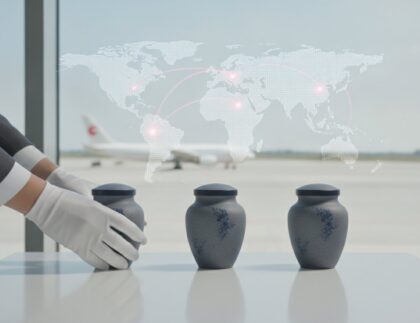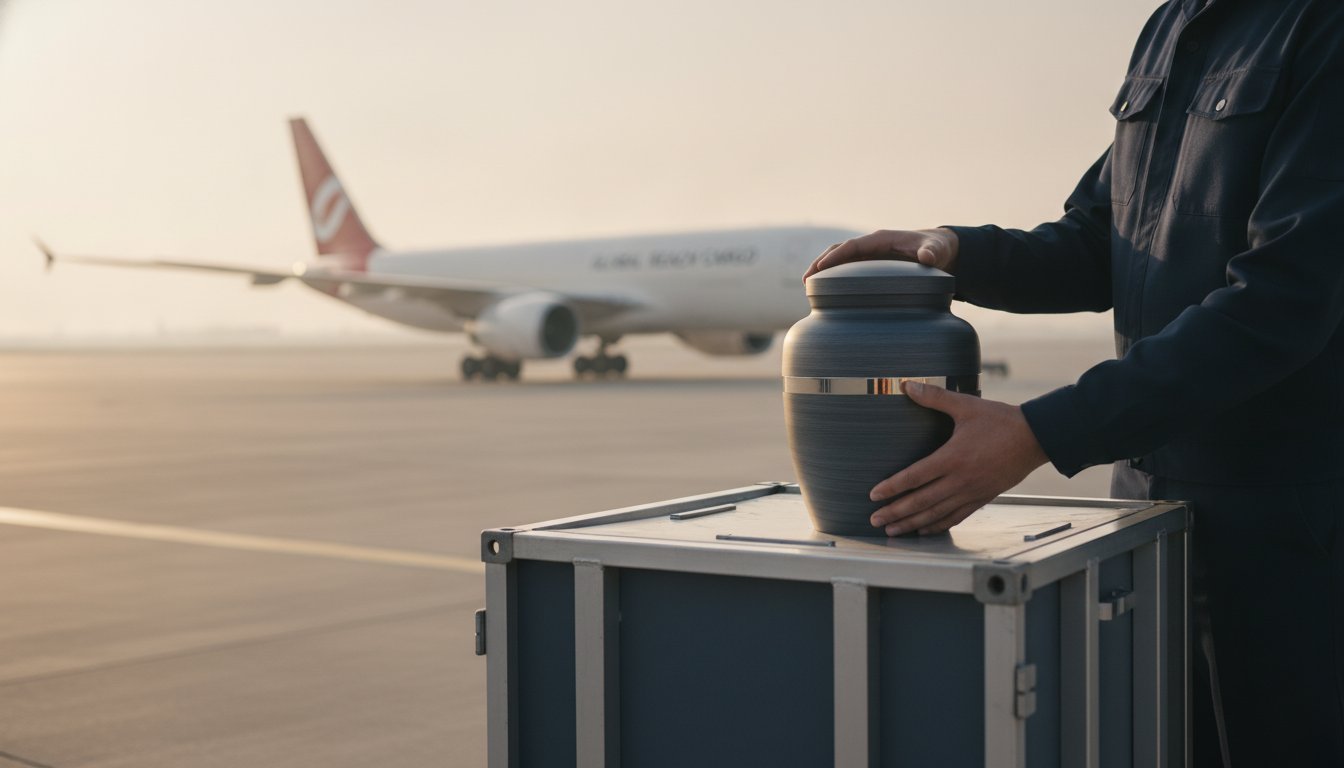
The assumption that a standard global delivery firm can safely transport your loved one’s remains is a misconception that frequently leads to distressing complications at international borders. You might naturally expect a well-known parcel service to handle such a delicate task, yet major providers like DHL and FedEx explicitly prohibit the shipment of cremated remains in their terms of service. This is why engaging a specialist ashes courier is an essential step, as it provides a dedicated and dignified alternative to the impersonal environment of a generic sorting centre. We recognise that the fear of a loved one being lost in transit is a heavy burden to carry, especially whilst you are managing the emotional exhaustion of grief.
It’s entirely understandable to feel overwhelmed by the intricate web of international customs paperwork and the varying regulations of different nations. You deserve the reassurance that comes from knowing every legal detail is being managed with professional composure and technical mastery. In this article, you’ll discover why specialised transport is essential for the dignified movement of ashes and learn the truth behind common repatriation misconceptions. We will guide you through the logistical barriers of door to door ashes delivery and show you how expert stewardship can provide the security and clarity you need during this sensitive time.
Key Takeaways
- Understand why major delivery firms often classify cremated remains as prohibited items and the physical risks posed by high-volume sorting centres.
- Learn about the complex documentation required for international repatriation, from consular stamps to the importance of accurate customs categorisation.
- Identify the hidden emotional and logistical stresses of carrying remains as hand luggage, including potential complications with airport security and urn materials.
- Discover how a specialist ashes courier ensures a dignified journey through transit-specific packaging and expert management of global regulatory requirements.
- Gain clarity on the ‘invisible barriers’ of international transport and how professional stewardship can reduce the personal burden of logistics during grief.
Myth 1: ‘Any Standard Courier Can Transport Cremated Remains’
It is a common belief that established global logistics firms can transport almost any item. However, the reality of ‘prohibited items’ lists tells a different story. Updated terms and conditions from FedEx in July 2025 and DHL in August 2025 explicitly state that human remains, including ashes, are not accepted for carriage. Royal Mail maintains a similarly strict stance, permitting only a ‘token’ amount of up to 50g within the UK. Attempting to bypass these rules puts the remains at risk of being seized, returned, or even destroyed at border checkpoints when discovered during routine scans.
A specialist ashes courier is a provider with dedicated, hand-carry protocols that bypass automated hubs. This distinction is vital because the journey of a standard parcel is often physically demanding. Whilst the process of Cremation provides a dignified end to a life, the subsequent transport shouldn’t involve industrial conveyor belts. Standard networks are designed for volume, not the delicate stewardship required for bereavement logistics.
The Dangers of Automated Sorting Centres
Standard parcel networks are built for speed and efficiency. Your loved one’s remains are processed amongst heavy industrial goods, car parts, and sharp-edged boxes. In these environments, packages are subject to high-velocity sorting belts and significant drops. The emotional trauma of receiving a ‘lost in transit’ or ‘damaged’ notification is devastating. Standard networks are simply not equipped to handle fragile urns that cannot be replaced.
Why Dedicated Custody Matters
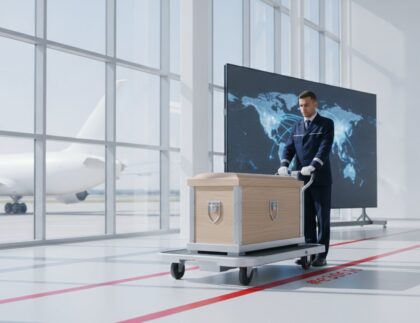
Specialists operate on a ‘Chain of Custody’ protocol. This means the remains never enter a generic warehouse or an automated sorting hub. Instead, they remain in the personal care of a trained professional from the moment of collection to the point of delivery. This person-to-person approach ensures that the dignity of the deceased is maintained at all times. You receive peace of mind through real-time tracking, knowing exactly whose hands are holding the urn at every stage of the journey, whether it is a domestic transfer or a complex Australia to Europe repatriation.
Myth 2: ‘International Repatriation Is Just About the Death Certificate’
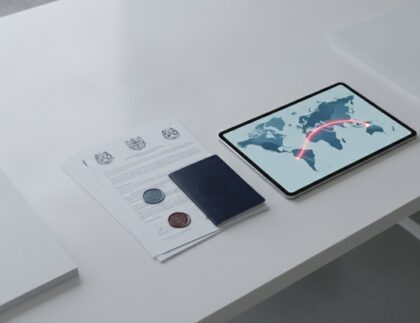
Many families assume that a certified death certificate is the only document required to move remains across borders. Whilst this is a vital starting point, international customs authorities usually demand a much broader suite of paperwork. This often includes a Certificate of Cremation, a ‘Freedom from Infection’ certificate, and occasionally, specific consular stamps from the destination country’s embassy. Relying on a single document can lead to heartbreaking delays at the border, where remains may be held in storage facilities that lack the dignity your loved one deserves.
A significant pitfall is the ‘HS Code’ trap. Every item crossing an international border requires a Harmonised System code for tax and regulatory purposes. If remains are incorrectly categorised as ‘personal effects’ or ‘merchandise’ rather than the specific code for cremated remains, customs officials may flag the shipment for inspection or seizure. Navigating these technicalities is a core responsibility of a specialist ashes courier, who ensures that all declarations are accurate before the journey begins. To better understand the technical terminology used in international logistics, resources from Delgate can be an excellent starting point for demystifying complex shipping jargon. If you are feeling overwhelmed by these requirements, you may wish to speak with a specialist for guidance on your specific situation.
Transatlantic Complexities: USA to UK Regulations
For those utilising USA to UK ashes courier services, the regulatory environment is particularly stringent. As of 2026, the UK Border Force requires specific declarations regarding the ‘Consignee’, which is the person authorised to receive the remains. A specialist must often manage a ‘Power of Attorney’ to act as your legal representative, ensuring that the USPS shipping requirements and British import laws are harmonised. This professional oversight prevents the remains from being caught in a bureaucratic deadlock.
Documentation: The ‘Invisible’ Barrier
Certain European destinations require ‘Apostille’ stamps, which are international certifications that verify the authenticity of a signature on a public document. These are ‘invisible’ barriers that many DIY travellers don’t discover until they are at the airport or a border crossing. By pre-clearing all documents with the relevant consulates, a dedicated courier removes the risk of unexpected seizures. This methodical preparation ensures a seamless, door-to-door transition that respects both the law and your emotional well-being.
Myth 3: ‘It Is Easier and Cheaper to Carry Ashes as Hand Luggage’
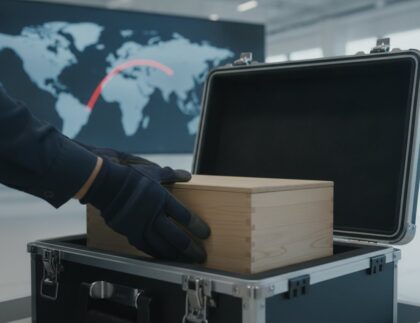
Choosing to transport a loved one’s remains in your hand luggage might appear to be a cost-effective and personal choice. Current regulations from carriers like British Airways (as of May 2026) and easyJet (as of November 2025) confirm that remains are permitted in cabin bags, yet ground staff still maintain strict control over boarding. The perceived financial saving often comes at a significant emotional cost. If your paperwork is deemed insufficient or the container doesn’t meet specific security criteria, you may be denied entry to the aircraft. This uncertainty creates immense pressure during an already sensitive time.
A specialist ashes courier removes this risk by handling the entire logistical chain independently of your travel arrangements. They ensure that all regulatory requirements are met long before the journey begins. If you find the prospect of managing these rules daunting, you can reach out to our team for a confidential discussion about our secure transport options.
The X-Ray Challenge and Urn Selection
Airport security protocols at the UK Border and international hubs are rigid and non-negotiable. According to the TSA guidelines for transporting ashes, containers must be made of scannable materials such as wood, ceramic, or biodegradable polymers. If an urn is lined with lead or made of dense steel, the X-ray machine cannot ‘see’ the contents. Security officers are strictly prohibited from opening the container, even at your request. If the contents cannot be verified through the scan, the remains will not be permitted past the security checkpoint, leaving you with an impossible decision at the departure gate.
The Emotional Toll of DIY Transport
Managing the remains of a loved one whilst navigating crowded terminals and high-pressure security queues is an exhausting experience. It requires you to be both a grieving relative and a logistics manager in a public, often impersonal environment. Transitioning this responsibility to a professional service is a vital form of self-care. It allows you to focus on your own journey and well-being, whilst a dedicated professional ensures the ashes are moved with the stewardship and respect they deserve. This door to door ashes delivery approach eliminates the ‘invisible’ barriers of airport bureaucracy and provides a sense of calm that DIY transport simply cannot offer.
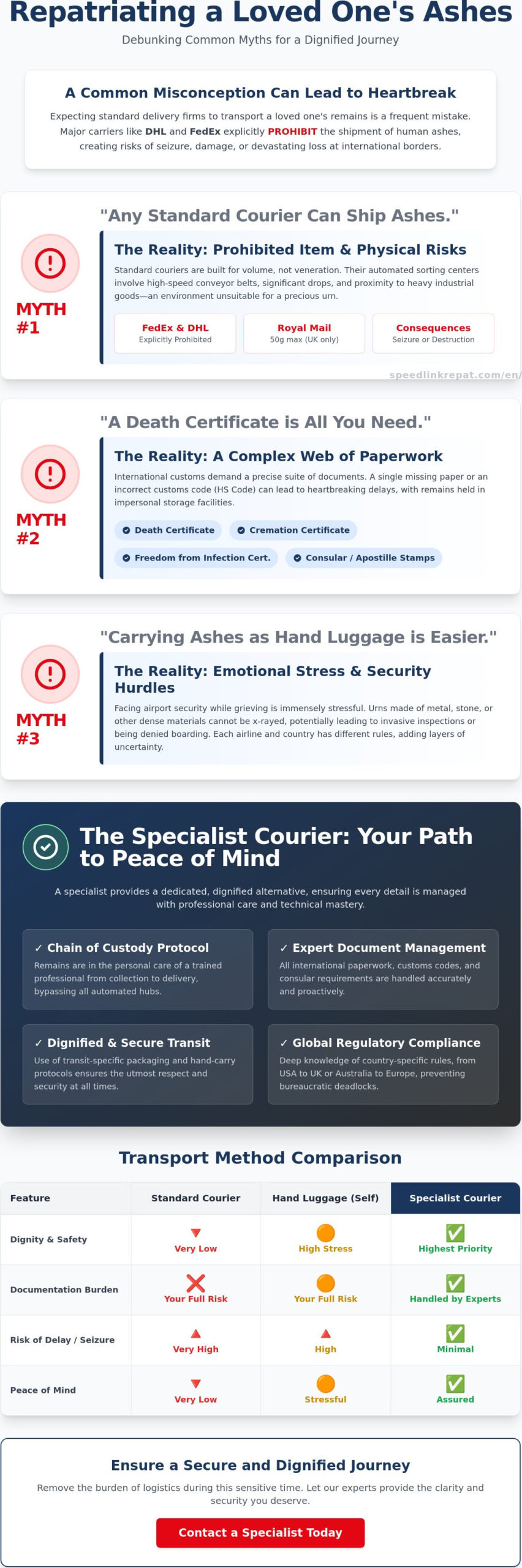
The Reality: Why a Specialist Ashes Courier is a Necessity
Professional stewardship isn’t just about transport; it’s about navigating the legal and physical ‘invisible barriers’ that generic couriers and DIY travellers cannot. When you choose a specialist ashes courier, you are opting for a service that prioritises dignity over volume. This is particularly vital for long-haul routes, such as Australia to Europe, where multiple jurisdictions and handling points increase the complexity of the journey. SpeedLink Repatriation acts as a steady hand, providing a human-centric approach that respects the personal nature of the task whilst maintaining technical mastery over global logistics.
Beyond specialized repatriation, general shipping and global trade often rely on the comprehensive insurance solutions offered by Cargo Insure Online to manage logistical risks.
Our role extends beyond simple movement. We offer comprehensive bereavement logistics, including ashes splitting services and secure storage solutions. These options provide families with the flexibility they need when plans aren’t yet finalised or when remains need to be shared amongst relatives in different parts of the world. By managing these intricate details, we reduce your personal burden, allowing you to focus on the emotional aspects of your loss and the memorialisation of your loved one.
Professional Packaging and Secure Storage
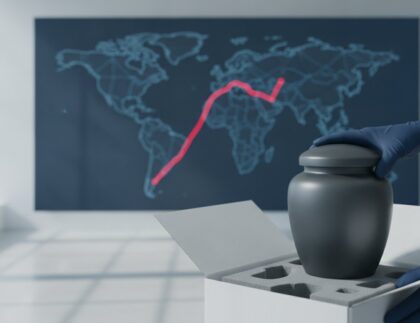
The physical safety of the remains is paramount. We utilise transit-specific packaging that exceeds standard commercial requirements. This involves a multi-layered approach: a robust outer container, protective inner linings, and specialised cushioning to absorb any vibrations during travel. If the final resting place or memorial service isn’t ready upon arrival, we provide secure storage facilities. This ensures your loved one remains in a dignified, controlled environment until you are ready to proceed with the final arrangements.
Next Steps: Arranging a Dignified Journey
Initiating a secure transfer is a straightforward process designed to provide immediate clarity. When you request a bespoke quote for international or domestic transit, we provide a transparent breakdown of the required steps and documentation. Within the first 24 hours of engagement, we begin the process of pre-clearing paperwork and coordinating with relevant authorities. For a deeper understanding of the process, you can consult our international ashes repatriation guide. We are here to guide you with both expertise and empathy, ensuring every detail is handled with the precision it deserves.
Securing a Respectful Path Forward
Navigating the movement of cremated remains requires more than just a standard delivery service. As we’ve discussed, the risks of automated sorting centres and the complexities of international customs demand a level of stewardship that generic carriers cannot provide. By engaging a specialist ashes courier, you secure a dedicated door-to-door chain of custody that prioritises dignity at every stage. We manage the intricate details of USA, UK, and Australian customs, ensuring that your loved one is handled with the professional composure they deserve.
SpeedLink Repatriation is a specialised division of SpeedLink Transport Limited, which was established in 2003. We bring over two decades of technical mastery and emotional intelligence to every journey. Our team is here to lift the weight of logistics from your shoulders, providing a transparent and reassuring service whilst you navigate your grief. We invite you to Request a Dignified Quote from SpeedLink Repatriation to begin this important process. You don’t have to manage these complexities alone; we are ready to guide you with integrity and care.
Frequently Asked Questions
Is it legal to send human ashes through the post in the UK?
Yes, but only in very limited ‘token’ quantities. Royal Mail currently permits a maximum of 50g of cremated remains to be sent within the UK, provided they are securely packaged and clearly labelled. For a full urn, you cannot use standard postal services or mainstream couriers, as they classify human remains as prohibited items. Using a specialist ashes courier is the only legal and secure way to transport the full remains of a loved one domestically or abroad.
What documents do I need for a specialist ashes courier to ship overseas?
You will universally require a certified copy of the death certificate and the official certificate of cremation. Depending on the destination country’s specific regulations, you may also need a ‘Freedom from Infection’ certificate or documents authorised by a local consulate. We take responsibility for verifying these requirements in advance, ensuring that all paperwork is accurate and complete to prevent any distressing delays at international borders.
Can a specialist ashes courier help with ashes splitting and multiple deliveries?
Yes, we provide a professional ashes splitting service for families who wish to share remains amongst different relatives or locations. This is an integral part of our bereavement logistics, where we carefully divide the remains into smaller portions and organise separate, secure deliveries. Each portion is handled with the same level of dignity and person-to-person custody, ensuring every family member receives their loved one safely.
How much does a specialist ashes courier cost compared to standard freight?
Specialist transport is a premium service that prioritises security and dignity over the low-cost, high-volume model of standard freight. Whilst generic freight options might seem less expensive, they don’t include dedicated stewardship, customs expertise, or a guaranteed chain of custody. The investment reflects the specialised training and personal attention required to ensure remains never enter an automated hub or face the risk of being seized as prohibited cargo.
What happens if the ashes are stopped at customs?
If remains are stopped at a border, it is typically because of missing documentation or an incorrect customs declaration code. Our specialists prevent these issues through meticulous pre-clearance and by acting as your authorised representative to manage border force enquiries. If an unexpected check occurs, we intervene directly with customs officials to resolve the matter, providing the technical mastery needed to ensure the journey continues without unnecessary interference.

Article by
David McMillen
I started my career in logistics over 30 years ago which has spanned 2 continents and several different types of courier and logistics operations. I lost my dear Mum back in 2016 and it was in the aftermath of her passing that SpeedLink Repatriation was born. We have endeavoured to bring the same care and attention to all of our clients as my mum received and to date we have helped repatriate hundreds of individuals across the globe.
Disclaimer
International requirements for cremated remains vary by origin, destination, carrier and method of transport and may change without notice.
Content is provided as general guidance and should not be treated as legal advice.
Where necessary, current requirements should be confirmed with the relevant government authority, customs authority, embassy, consulate, postal operator, airline or carrier.
SpeedLink can advise on the requirements applicable to a specific shipment.