What if the biggest obstacle to your family’s memorial service isn’t the distance, but a single missing stamp on a customs declaration? When you’re planning a ceremony to honour a loved one, the pressure of a looming date can make the complexities of international regulations feel overwhelming. We understand that time-sensitive ashes transport is about more than just logistics; it’s about ensuring a dignified homecoming for someone you hold dear. You shouldn’t have to choose between a meaningful farewell and the anxiety of potential delays at a border.
In this guide, you’ll discover how to expedite the transport of cremated remains safely and legally for upcoming ceremonies or family gatherings. We’ll explain why the secret to speed lies in meticulous regulatory pre-clearance rather than just the mode of travel. From understanding the latest July 2026 TSA requirements for X-ray friendly urns to managing complex consular paperwork, we provide the clarity you need. You’ll learn how expert handling and real-time tracking can replace uncertainty with peace of mind, ensuring your loved one arrives exactly when and where they’re needed.
Key Takeaways
- Understand why standard postal services often fail to meet urgent bereavement deadlines and how time-sensitive ashes transport prioritises specific memorial dates.
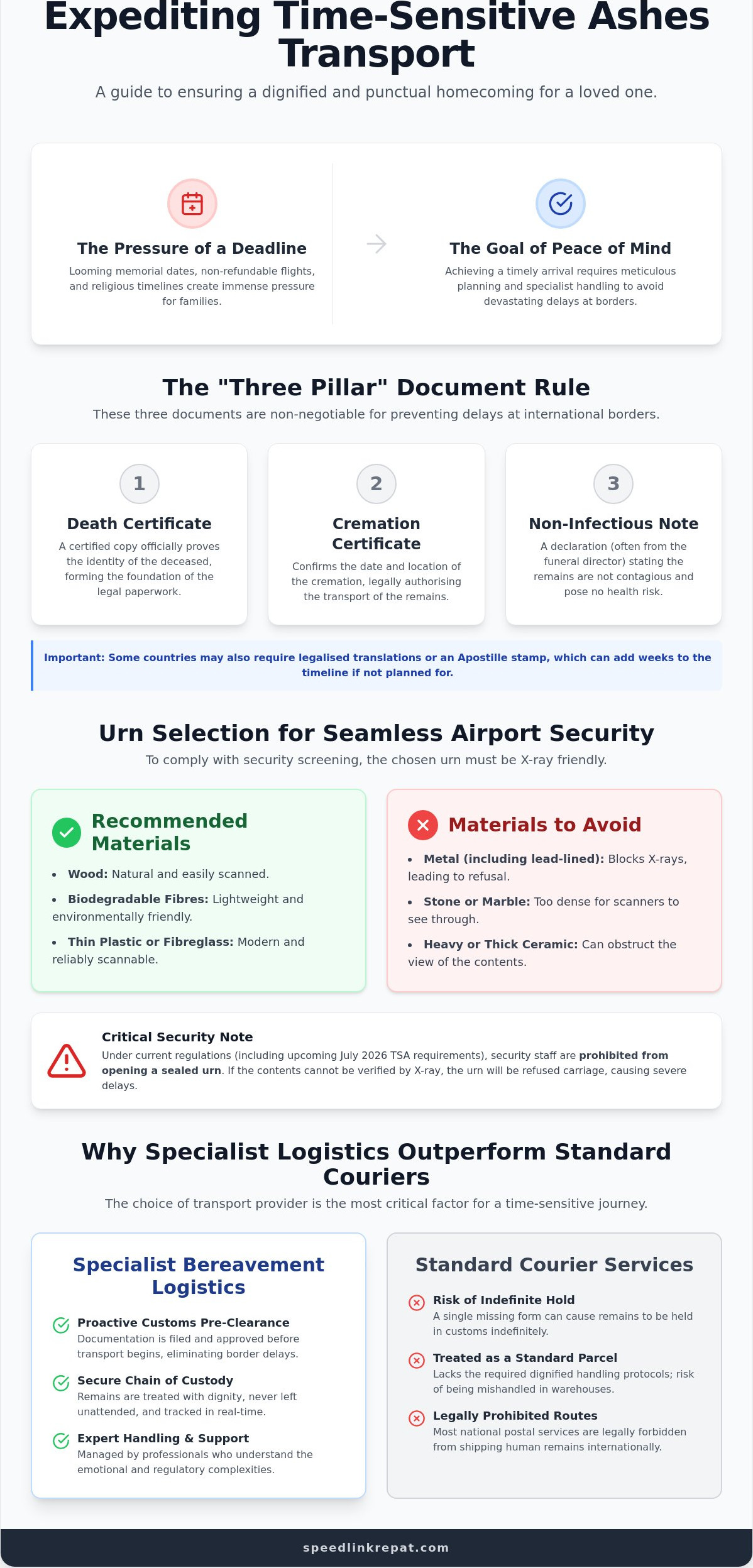
- Master the “Three Pillar” document rule—comprising the Death Certificate, Cremation Certificate, and Non-Infectious Note—to prevent avoidable delays at international borders.
- Learn how professional packaging services ensure an urn is transit-ready and compliant with global security protocols to avoid being held during transit.
- Discover why specialised bereavement logistics offer a more dignified and secure alternative to standard couriers by proactively managing customs and logistical hurdles.
What is Time-Sensitive Ashes Transport?
Time-sensitive ashes transport is the prioritised movement of cremated remains specifically managed to meet a fixed memorial, religious, or legal deadline. It’s a service that moves beyond simple logistics, focusing on the absolute certainty of arrival for a scheduled ceremony. The Cremation process is the beginning of a final journey, and ensuring that journey concludes with dignity requires a level of stewardship that standard postal services cannot provide. Most national postal carriers are legally prohibited from shipping remains internationally, which often surprises families at the most stressful of times.
Distinguishing between “fast shipping” and specialised bereavement logistics is vital. Standard express services prioritise the quickest route for a parcel, but they don’t account for the sensitive nature of the contents or the complex customs clearance required for human remains. True time-sensitive ashes transport involves pre-clearing documentation to ensure that once the remains are in transit, they don’t stop moving until they reach their destination. It’s about removing the logistical burden so you can focus on the emotional significance of the day.
Common Scenarios Requiring Urgent Transit
- International Scattering Ceremonies: Families often book non-refundable flights for a specific date, making it essential that the remains arrive well in advance of the gathering.
- Legal and Probate Requirements: Some jurisdictions require the physical presence of remains to close an estate or finalise probate documents in a secondary country.
- Religious Timelines: Specific faiths have strict windows for burial or final rites that must be honoured, regardless of the geographical distance involved.
The Risks of Non-Specialist Courier Services
Entrusting a loved one to a non-specialist courier carries profound risks. Standard companies treat every box as a parcel, meaning remains can be held indefinitely in customs if a single form is missing or incorrectly completed. They lack the “chain of custody” protocols necessary to guarantee that the remains are never left unattended or mishandled in a busy warehouse. This is why services like our USA to Ireland courier service are built on a foundation of professional precision and emotional intelligence, ensuring your loved one is never just another number in a tracking system.
Navigating International Regulations Without Delay
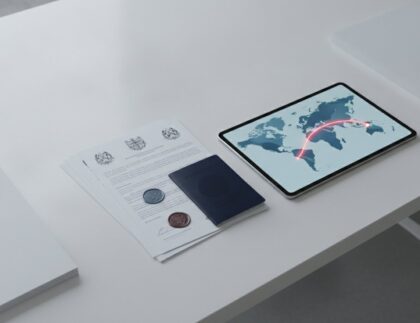
The foundation of any successful journey is the “Three Pillar” document rule. To avoid unnecessary delays, you must secure a certified Death Certificate, a Certificate of Cremation, and a Non-Infectious Note. These documents prove the identity of the deceased and confirm that the remains pose no health risk. Without this trio, even the most efficient time-sensitive ashes transport plan will stall at the first border. Consular requirements vary significantly by country; some nations require an Apostille stamp or legalised translations which can add weeks to your timeline if not managed immediately.
Pre-filing paperwork with customs is the only way to ensure remains don’t languish in a transit warehouse. We recommend a clearly visible “Declaration of Contents” on the outer packaging. This helps border officials identify the sensitive nature of the shipment, ensuring they treat the remains with the dignity they deserve whilst moving them through the system without inspection delays. If you’re feeling overwhelmed by these requirements, you can speak with our repatriation specialists for direct assistance with your documentation.
Specific Requirements for USA to UK Transport
Importing remains to the United Kingdom involves specific UK Border Force protocols that must be satisfied before the flight departs. It’s vital to coordinate with US funeral directors to ensure rapid document release, as US state laws regarding certificate issuance can vary. For a comprehensive breakdown of this specific route, consult our USA to UK Ashes Transport: The 2026 Guide to Transatlantic Repatriation.
X-Ray Compliance and Urn Selection
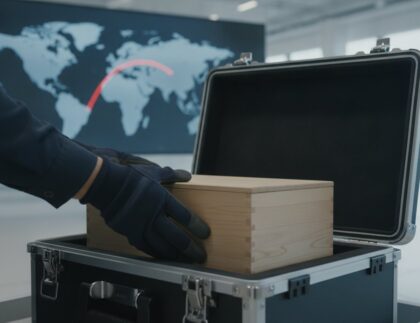
Current July 2026 security regulations require all containers to be scannable by X-ray. Materials such as wood, biodegradable fibres, or thin plastic are recommended because they allow security officers to see the contents clearly. You should avoid the “lead-lined” trap. Many decorative metal, stone, or heavy ceramic urns are too dense for scanners. Since security officers are prohibited from opening a sealed urn, a container that isn’t X-ray friendly will be refused carriage, causing significant emotional and logistical distress.
Practical Steps to Expedite Your Repatriation Timeline
Shaving days off a repatriation timeline requires a proactive approach that anticipates potential friction points. Whilst many believe that waiting for a personal flight is the quickest route, time-sensitive ashes transport through a specialist courier often proves faster. This is because a professional service doesn’t wait for a family member’s travel dates; it initiates the journey the moment the documentation is ready. To ensure your loved one arrives in time for a scheduled ceremony, follow these four essential steps.
- Secure Documents Immediately: Request multiple certified copies of the Death Certificate and Cremation Certificate as soon as they’re available. Having digital scans ready to share with your courier whilst the physical copies are being couriered to the office can save forty-eight hours of processing time.
- Use Professional Packaging: Ensuring the urn is transit-ready from the start prevents delays caused by carriers refusing non-compliant parcels.
- Select Door-to-Door Solutions: Avoid the bottlenecks of airport cargo warehouses. Specialist couriers bypass these common holding areas, moving remains directly from the point of origin to the final destination.
- Establish Real-Time Tracking: Demand a protocol that provides instant updates. This allows for immediate intervention if a flight is delayed or a customs query arises.
Professional Packaging for Speed
Speed in transit is often a direct result of how an item is presented to security officials. We utilise a double-boxing method with specific internal cushioning to protect the urn whilst ensuring it remains scannable. For a detailed look at these requirements, see our guide on How to Ship Human Ashes: A Dignified Guide to International Transit in 2026. Clear, respectful labelling in accordance with international standards ensures that border officials can identify the contents without needing to pause the shipment for inspection.
Utilising Bereavement Logistics Experts
Specialists in bereavement logistics manage the complex “final mile” delivery, ensuring remains reach a funeral home or private residence exactly when needed. This level of stewardship is particularly valuable for global scattering arrangements, where a single point of contact coordinates between multiple jurisdictions. If you’re working against a tight deadline, you can request a tailored transit timeline to see how quickly we can facilitate your repatriation.
Why Specialist Bereavement Logistics Outperform Standard Couriers
Standard couriers operate on a model of high-volume efficiency, where every item is treated as a parcel to be moved through automated sorting centres. In contrast, specialist bereavement logistics providers operate with the understanding that they are transporting a loved one, not a package. This distinction is the core of our “Dignity Protocol”, which ensures that remains are never left on a conveyor belt or unattended in a massive warehouse. For families requiring time-sensitive ashes transport, this human-centric approach provides a level of security that automated systems simply cannot replicate.
Global Reach with Personal Attention
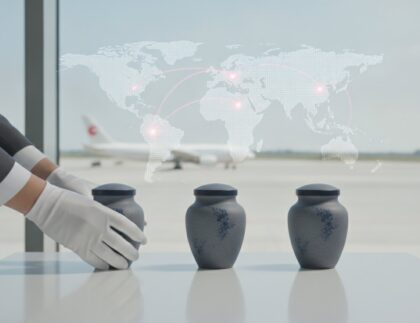
Managing complex international routes requires a network that spans continents and understands local nuances. Whether you need Australia to Europe cremated remains courier services or a more direct transatlantic solution, the level of personal attention remains the same. For instance, our USA to Ireland transit service often operates under exceptionally tight deadlines, requiring precise coordination between US funeral directors and Irish authorities to ensure a seamless homecoming.
Making the Final Arrangements
Our commitment to your loved one doesn’t necessarily end at the doorstep. By integrating with global ashes scattering services, we can facilitate a graceful transition from transit to the final memorial ceremony. This structured approach creates a sense of order and predictability when you need it most. We promise that your loved one’s journey will be handled with integrity, honesty, and professional composure, ensuring they’re present for the moments that matter most to your family.
Securing Your Loved One’s Timely Homecoming
Reaching the end of this journey requires a delicate balance of logistical precision and emotional care. You now understand that successful time-sensitive ashes transport isn’t just about the speed of the vehicle; it’s about the meticulous preparation of the “Three Pillar” documents and the selection of X-ray friendly materials. By bypassing the automated sorting centres used by standard couriers and opting for a door-to-door specialist service, you ensure your loved one remains in a dignified chain of custody from the point of origin to their final destination.
Our specialised USA to UK door-to-door service is designed to bridge the distance with absolute integrity. We provide expert handling of all international customs documentation and offer real-time tracking to give you the certainty you need before a memorial date. If you’re ready to take the next step, you can speak with a compassionate expert about your urgent repatriation needs. We’re here to provide the steady hand and professional composure required to bring your loved one home safely and with the respect they deserve.
Frequently Asked Questions
How fast can ashes be transported internationally?
International transport timelines typically range from three to seven working days once all necessary documentation is finalised. The speed of time-sensitive ashes transport depends heavily on the destination country’s specific import regulations and the efficiency of the local consulate. Whilst the physical transit is swift, the pre-clearance phase is where most time is saved through expert document management and proactive coordination.
Can I send ashes through a standard courier like DHL or FedEx?
Standard couriers such as DHL, FedEx, or UPS generally don’t knowingly transport cremated remains as part of their standard service offerings. These organisations often classify remains as prohibited items within their terms and conditions. For international repatriation, you must utilise a specialist bereavement courier that understands the specific legal and customs frameworks required for a dignified and lawful transit.
What documents are required for urgent international ashes transport?
You’ll need three primary documents: a certified copy of the Death Certificate, the Certificate of Cremation, and a Non-Infectious Note from the crematorium. Some countries also require a consular permit or an Apostille stamp, which can take additional time to organise. Ensuring these are ready before the transit begins is the most effective way to prevent delays at international borders.
Will the urn be opened by customs during time-sensitive transport?
Customs officials and security personnel are generally prohibited from opening a sealed urn. To ensure compliance with July 2026 security protocols, the urn must be made of X-ray friendly materials like wood, plastic, or biodegradable fibres. If a container is too dense to be scanned, it may be refused carriage; therefore, choosing the right material is essential for successful time-sensitive ashes transport.
Is it possible to track the ashes during the repatriation process?
Yes, real-time tracking is a fundamental component of professional bereavement logistics. Unlike standard postal services, specialist couriers provide a dedicated tracking protocol that allows you to monitor the journey at every stage. This transparency provides a necessary sense of security, ensuring you know exactly where your loved one is whilst they’re in transit and providing peace of mind during a difficult period.

Article by
David McMillen
I started my career in logistics over 30 years ago which has spanned 2 continents and several different types of courier and logistics operations. I lost my dear Mum back in 2016 and it was in the aftermath of her passing that SpeedLink Repatriation was born. We have endeavoured to bring the same care and attention to all of our clients as my mum received and to date we have helped repatriate hundreds of individuals across the globe.
Disclaimer
International requirements for cremated remains vary by origin, destination, carrier and method of transport and may change without notice.
Content is provided as general guidance and should not be treated as legal advice.
Where necessary, current requirements should be confirmed with the relevant government authority, customs authority, embassy, consulate, postal operator, airline or carrier.
SpeedLink can advise on the requirements applicable to a specific shipment.