The final journey of a loved one shouldn’t be defined by bureaucratic hurdles or the cold indifference of a customs form. You’re likely feeling the weight of a profound responsibility, wanting to ensure that sending a loved one’s ashes overseas is handled with the utmost respect and technical precision. It’s an incredibly daunting task to face whilst also managing the fog of grief, especially when you’re worried about differing international laws or the physical safety of the remains during transit.
We understand that you need more than just a logistical service; you need a steady hand to guide you through this sensitive process with both compassion and expertise. This guide provides the professional clarity required to manage international repatriation with total confidence. You’ll learn exactly which documents are essential, how to meet specific customs regulations for different territories, and how to ensure a dignified, secure delivery to your final destination. We’ll break down the complexities of airport security and courier requirements, giving you the peace of mind that every detail is being managed with the care it deserves.
Key Takeaways
- Understand the legal framework of international repatriation and why specific regulations exist to protect the dignity of your loved one.
- Identify the ‘Golden Three’ essential documents needed for customs and learn when you’ll require certified translations for your destination.
- Evaluate the practical differences between personal carry-on transport and professional courier services when sending a loved one’s ashes overseas.
- Learn the specific packaging standards required to ensure remains are secure, sift-proof, and compliant with international transit laws.
- Discover how a dedicated service organises every step of the journey, from the initial collection to the final, safe delivery at the destination.
Understanding the Legal Framework for Sending Ashes Overseas
International ashes repatriation is the formal legal process of transporting cremated remains across sovereign borders. It isn’t a standard shipping transaction; it’s a regulated movement of human remains that requires strict adherence to both international treaties and local statutes. These regulations exist to protect public health and safety whilst honouring global perspectives on repatriation and the diverse cultural sensitivities surrounding death.
When sending a loved one’s ashes overseas, you must prioritise the laws of the receiving country. Whilst your local funeral director might be familiar with domestic rules, the destination nation’s customs officials hold the ultimate authority. For example, if you are sending cremated remains from the USA to Ireland, specific consular declarations are required to ensure the package clears customs without delay.
A frequent point of confusion involves the legal classification of the remains. Ashes should never be declared as “personal effects” or “gift items” on customs forms. They are legally human remains. Mislabelling them to bypass paperwork can lead to distressing border seizures. Accurate declaration is the only way to ensure the journey remains dignified and legally sound.
Key International Bodies and Regulations
The International Air Transport Association (IATA) provides the primary guidelines for air transit. They require remains to be housed in sift-proof containers that are also “security friendly,” meaning they can be effectively X-rayed. Beyond air travel rules, you’ll often need to engage with the destination country’s consulate. They may require a formal seal on the outer packaging or a specific mortuary certificate before granting entry.
Common Legal Hurdles in 2026
By 2026, many customs agencies have transitioned to digital-first documentation systems. Whilst physical paper copies of death certificates are still vital, pre-filing digital permits is now often a mandatory step to avoid delays at the port of entry. Additionally, be aware of restrictions regarding the final disposition. Some nations, like Germany, have strict burial laws, meaning ashes cannot be scattered in public and must be sent directly to a licensed cemetery for interment.
Essential Documentation and Packaging for International Transit
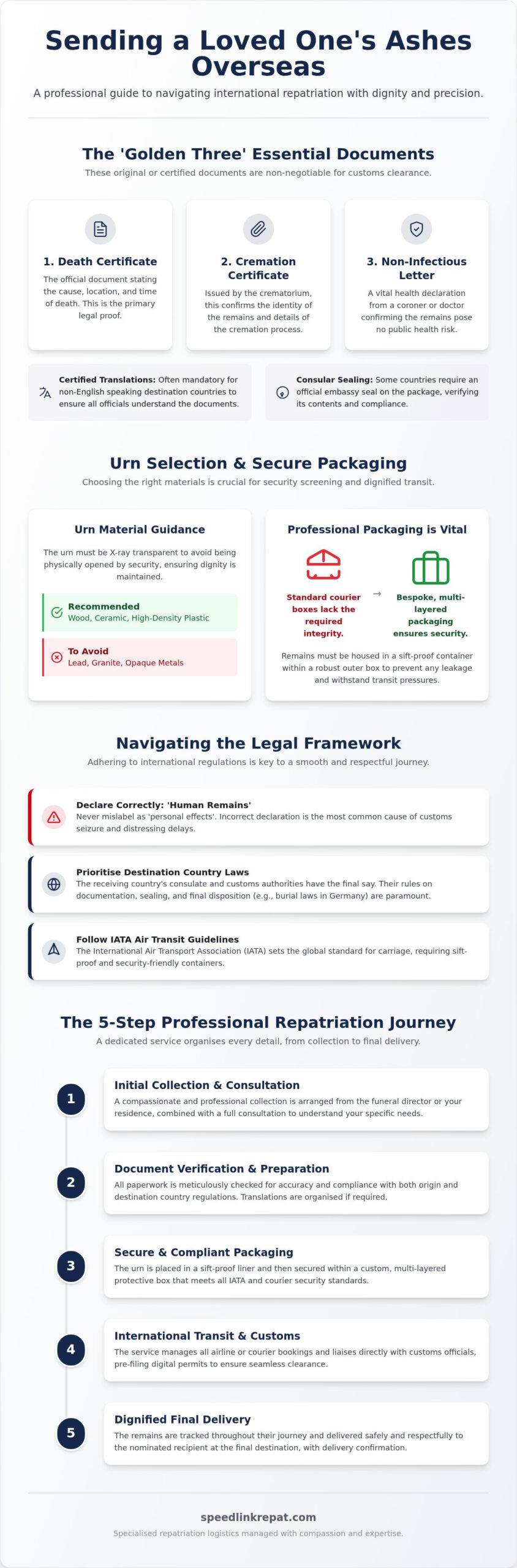
Successfully preparing for sending a loved one’s ashes overseas requires meticulous attention to the ‘Golden Three’ documents: the Death Certificate, the Cremation Certificate, and the Non-Infectious Disease Letter. For those moving remains across the Atlantic, the U.S. and U.K. repatriation requirements provide a clear benchmark for the level of detail required by border authorities. These documents must be original or certified copies. Standard photocopies are rarely accepted by customs officials and can lead to distressing delays at the port of entry.
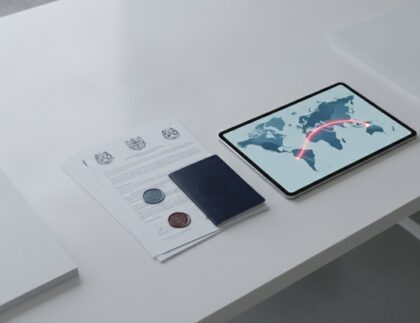
In some instances, a destination country may require ‘Consular Sealing’. This involves an official from the embassy or consulate applying a wax seal or a formal stamp to the outer packaging, verifying that the contents have been inspected and meet all legal criteria. This step is a formal guarantee of the package’s integrity, ensuring it is treated with the required reverence throughout its journey.
Required Paperwork Checklist
The Non-Infectious Disease Letter is a vital health declaration from the coroner or attending physician, confirming that the remains pose no risk to public health during transit. Without this, many airlines and couriers will refuse carriage. If you are sending cremated remains from the USA to Poland or other non-English speaking nations, you must also provide certified translations of all paperwork. This ensures that every official, from the courier to the local customs agent, understands the nature of the transit.
Urn Selection and Protective Packaging
Choosing the right urn is a matter of both aesthetics and practical necessity. Whilst heavy lead or certain metal urns are traditional, they are often opaque to security scanners. We recommend using materials like wood, ceramic, or high-density plastic, as these allow for clear X-ray transparency at airport security. This prevents the need for officials to physically open the container, maintaining the dignity of the remains.
Dignity is further maintained through robust, multi-layered protection. Standard courier boxes lack the structural integrity required for long-haul international transit. SpeedLink’s professional packaging service utilises bespoke systems to secure the urn against transit vibrations and external pressure. If you’re unsure about the specific requirements for your destination, you can speak with our repatriation experts for tailored guidance.
Choosing Between Personal Transport and Professional Courier Services
Deciding how to manage the physical journey of remains is a deeply personal choice that often balances cost against emotional security. Many families initially consider “carry-on” transport, keeping the urn with them in the aircraft cabin. Whilst this allows for a sense of closeness, it requires you to navigate airport security scanners and varying airline policies personally. If a security agent cannot clearly see through the urn material, or if your paperwork is deemed insufficient at a layover point, the resulting delays can be distressing. You should never place remains in checked luggage; the risk of loss or rough handling in the hold is far too high for such a precious cargo.
Professional courier services offer a more secure alternative by providing a dedicated chain of custody. Unlike standard postal routes, a specialist service ensures that sending a loved one’s ashes overseas is treated with the reverence it requires rather than as a transactional shipment. Even the USPS international regulations for cremated remains emphasise strict packaging and specific service constraints that must be met to ensure legal entry into another country. A specialist courier manages these details for you, preventing the remains from being held in customs warehouses.
When to Consider a Professional Courier
A specialist service is particularly beneficial for complex logistical routes. For instance, sending ashes from the USA to Ireland involves specific customs declarations that a professional can file on your behalf. You should also consider a courier if you’re unable to travel personally or if you’re transporting a high-value or fragile urn. These items require specialised handling and protective packaging that exceeds the capabilities of standard luggage.
The Peace of Mind Factor
The primary advantage of a dedicated service is the removal of the bureaucratic burden. Bereavement logistics professionals act as a steady hand, managing the “red tape” whilst providing you with real-time tracking and updates. This allows you to focus on your family’s emotional needs rather than worrying about customs interactions or transit schedules. Whilst personal transport might seem simpler, the assurance of a guaranteed, dignified delivery is often invaluable. If you need assistance with these complex arrangements, you can contact our repatriation team for expert support.
How a Dedicated Repatriation Service Organises the Journey
SpeedLink’s approach is built on a foundation of stewardship and ethical responsibility. We begin every journey with a compassionate consultation to understand your specific requirements and the emotional context of the repatriation. This isn’t merely a logistical task; it’s a managed process where we take on the full weight of the bureaucratic burden. Our team organises secure collection from funeral homes or private residences, ensuring the urn is handled with professional care from the very first moment it leaves your hands.
The most critical phase of sending a loved one’s ashes overseas is the customs clearance process. Our experts manage all pre-filing requirements, ensuring that the health declarations and consular permits discussed in previous sections are in order before the journey commences. This proactive stance prevents remains from being held at the border in impersonal warehouses, allowing for a smooth, uninterrupted transition through international ports. The journey concludes with a dignified final delivery, whether that is directly to a family member or to a designated cemetery for interment.
Specialised Services for Complex Needs
Modern families are often spread across different continents, which may require an ashes splitting service to transport remains to multiple international locations simultaneously. We also facilitate global scattering arrangements for those wishing to hold memorials in distant lands. This includes managing complex transit paths, such as Australia to Europe routes, where differing continental regulations must be navigated with technical precision and cultural respect.
Next Steps for Families
To begin the process, you can request a bespoke quote tailored to your specific route and requirements. Before your first call, it’s helpful to have the deceased’s full name, the current location of the remains, and the final destination address ready. This information allows our team to provide immediate, accurate guidance on the specific documentation required for your destination. Contact SpeedLink Repatriation for a dignified, expert consultation to ensure your loved one’s final journey is handled with the composure and security it deserves.
Securing a Dignified Path Forward
Managing the final journey of a family member requires a delicate balance of legal compliance and emotional care. You’ve seen how meeting the specific documentation standards of the receiving country and selecting security-friendly packaging can prevent distressing delays at the border. By moving beyond the risks of personal carry-on transport, you ensure that the remains are handled with the professional reverence they require throughout their entire transit.
Whilst the process of sending a loved one’s ashes overseas involves complex international regulations, you don’t have to face the bureaucracy alone. Our specialist bereavement logistics experts provide comprehensive customs documentation support and secure door-to-door global tracking to ensure a seamless delivery. We’re committed to acting as your steady hand, removing the logistical burden so you can focus on what truly matters. When you’re ready to take the next step, you can Request a Dignified Repatriation Quote. You can take comfort in knowing that every detail will be managed with the utmost integrity and care.
Frequently Asked Questions
Can I send a loved one’s ashes through standard international post or DHL?
No, standard international couriers and private parcel services like DHL or FedEx generally prohibit the transport of human remains. In the United States, the USPS is the only legal carrier authorised for this task. Choosing a specialist courier service is the most secure method for sending a loved one’s ashes overseas, as it provides a dedicated chain of custody that standard postal networks simply cannot offer.
What documents are required for shipping cremated remains to the UK from the USA?
You must provide a certified copy of the Death Certificate, the Cremation Certificate, and a Non-Infectious Disease Letter. These documents should be placed in a clear pouch on the exterior of the package for easy inspection. For entry into the UK, these papers verify the identity of the remains and confirm they pose no public health risk, ensuring a dignified transition through customs.
Does the urn need to be made of a specific material for international transport?
The urn must be made from X-ray transparent materials such as wood, ceramic, or high-density plastic. This allows security officials to scan the contents without needing to open the container, which preserves the dignity of the remains. You should avoid lead-lined or thick metal urns, as these are opaque to scanners and will likely result in the shipment being delayed or rejected at the airport.
How long does the international ashes repatriation process typically take?
The process for sending a loved one’s ashes overseas usually takes between 7 and 14 working days, though this varies by destination. This timeframe accounts for the secure collection of the remains, the verification of all required permits, and the customs clearance process. Whilst we understand the desire for a swift delivery, we maintain a methodical pace to ensure every legal detail is handled with absolute precision and care.
Is it possible to split the ashes and send them to different countries?
Yes, you can split the remains and have them delivered to different countries for multiple memorials. This is a specialised service that requires each portion to have its own set of certified documents and sift-proof packaging. We can manage these separate journeys concurrently, ensuring that each part of the remains reaches its final destination in compliance with the specific import laws of each receiving nation.
What happens if the ashes are stopped at customs during transit?
If ashes are stopped at customs, it’s typically because of a documentation error or an incorrect declaration. Border officials will hold the remains in a secure facility until the necessary paperwork is provided. Our team acts as a steady hand in these situations, liaising directly with customs agents to correct any issues and ensure the remains are released and delivered with the respect they deserve.

Article by
David McMillen
I started my career in logistics over 30 years ago which has spanned 2 continents and several different types of courier and logistics operations. I lost my dear Mum back in 2016 and it was in the aftermath of her passing that SpeedLink Repatriation was born. We have endeavoured to bring the same care and attention to all of our clients as my mum received and to date we have helped repatriate hundreds of individuals across the globe.
Disclaimer
International requirements for cremated remains vary by origin, destination, carrier and method of transport and may change without notice.
Content is provided as general guidance and should not be treated as legal advice.
Where necessary, current requirements should be confirmed with the relevant government authority, customs authority, embassy, consulate, postal operator, airline or carrier.
SpeedLink can advise on the requirements applicable to a specific shipment.