
An ashes transportation certificate is not necessarily one standard form. The paperwork required for a journey with cremated remains can depend on the countries involved, any transit points and how the ashes will travel.
If you’re unsure whether a certificate is required, or how it differs from a death certificate or cremation record, the first step is to find out exactly which document has been requested and by whom. The phrase may refer to different records or permits required for a particular journey.
This article explains what a request for an ashes transportation certificate may mean and how to check the requirements for your route. You’ll learn which records may be relevant, where to verify current instructions and why personal travel and professional transport can involve different checks.
Key Takeaways
- An ashes transportation certificate may refer to destination-specific permission or paperwork, rather than one universal document.
- Check official guidance for the destination and identify any transit points before arranging transport.
- Keep country requirements separate from airline, carrier or postal-service rules, as each may have its own instructions.
- Gather available records and journey details early. SpeedLink arranges cremated-remains transport and supports families with customs documentation.
What an ashes transportation certificate means for an international journey
An ashes transportation certificate may mean permission or documentation requested for a particular destination, rather than one universal form. The name and purpose can vary, so first establish which authority or organisation has requested it and what journey the request relates to.
It isn’t automatically the same as a death certificate or a certificate of cremation. A destination authority may ask for one of these supporting records alongside a separate certificate or permit. Requirements can differ according to the countries involved and any transit points. Check current instructions with the relevant official authorities before making arrangements.
Certificate, cremation certificate and death certificate: how they differ
A death certificate records a person’s death. A certificate of cremation confirms that cremation took place. The Cremation overview provides background on the process, but the document’s exact form and use depend on the issuing organisation and the requirements that apply.
A transport certificate or permit, where required, generally relates to permission or documentation for moving the ashes on a particular journey. Its name, issuing authority and application process should be confirmed through official guidance for the destination. Don’t assume a document requested for one country will meet another country’s requirements.
Before proceeding, write down the exact name of the document requested and the authority that requested it. Check whether that authority also requires supporting records, such as proof of death or cremation. This helps distinguish a specific transport permission from records that identify the deceased or confirm what took place. No single supporting document should be treated as universally required.
How to check ashes transportation certificate requirements for your destination
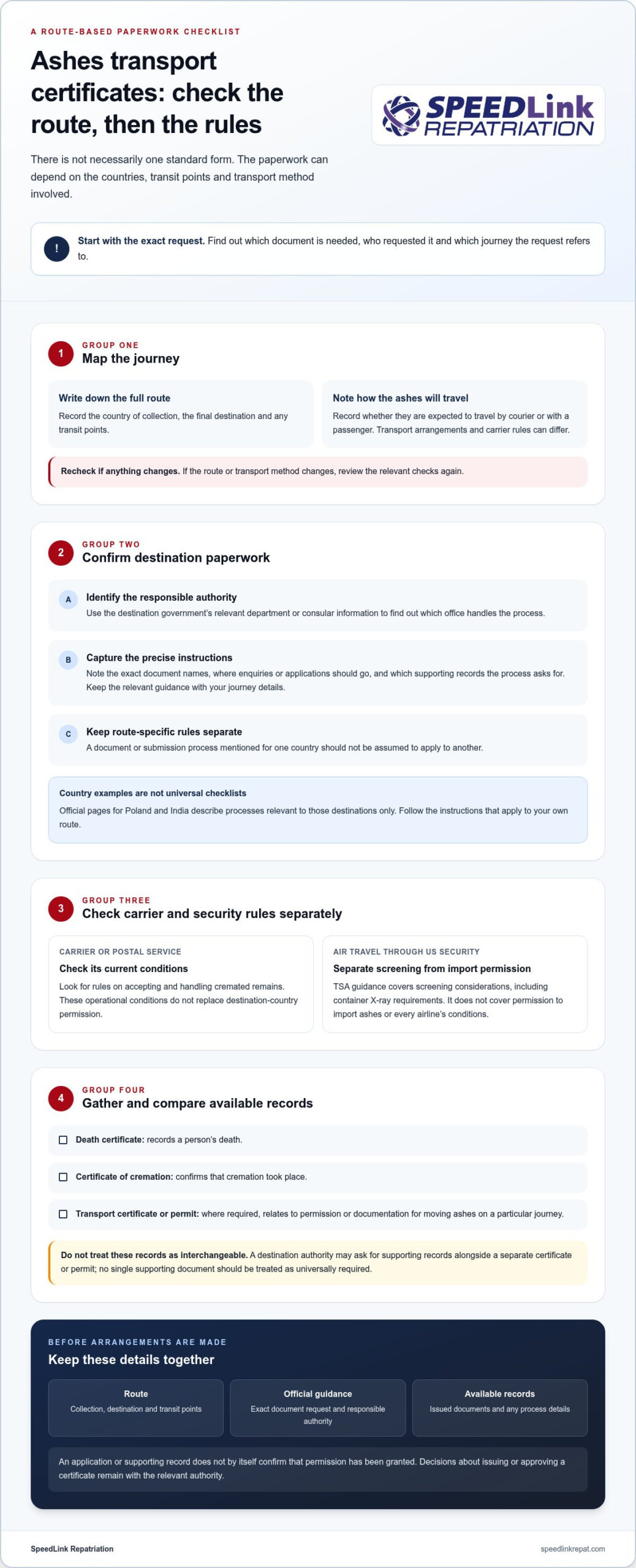
Use the planned itinerary as a checklist, and keep the instructions you find with the transport details. This helps you separate destination paperwork from the conditions for carrying or sending the ashes.
- Write down the route. Include the country of collection, destination, any transit points and the intended transport method. If the route or method changes, review the relevant checks again.
- Record the destination authority’s instructions. Note the exact document names, where enquiries or applications should go, and which supporting records the process asks for. Save the relevant guidance so you can refer to the same instructions later.
- Check the carrier or postal service separately. Look for its current rules on accepting and handling cremated remains. These are operational conditions, not a substitute for destination-country permission.
Official pages for Poland and India describe processes relevant to those destinations. Treat them as country-specific examples, not a checklist for other journeys. A document or submission route mentioned on either page should not be assumed to apply elsewhere.
For air travel through US airport security, the TSA guidance on travelling with cremated remains explains screening considerations, including container X-ray requirements. It covers security screening, not permission to import ashes or every airline’s conditions.
Which authority should you consult about the certificate?
Use the destination government’s relevant department or consular information to identify the office responsible for the process. Keep that advice distinct from transit and carrier instructions. Document names and submission methods may be specific to the process described, so follow the guidance for your route rather than relying on an example from another country. For help coordinating cremated-remains transport and customs documentation, contact SpeedLink Repatriation.
Arrange ashes transport with the certificate and paperwork in view
Before arranging transport, bring the route details and available paperwork together. This gives the transport plan a clear starting point and helps identify which questions still need an answer from the relevant authority.
What to prepare before arranging the transport
Make a short record of the collection country, final destination and any transit points. Note whether the ashes are expected to travel by courier or with a passenger, as transport arrangements and carrier rules can differ.
Gather the documents already issued, such as a death certificate, cremation certificate or any permit or certificate requested for the journey. Compare the names and details on these records with the official instructions. If a document is still being arranged, note who is issuing it and any process details provided by the authority. An application or supporting record does not by itself confirm that permission has been granted.
SpeedLink arranges domestic and international cremated-remains transport and supports families with customs documentation. This can help coordinate the transport and paperwork, but decisions about issuing or approving a particular ashes transportation certificate remain with the relevant authority. SpeedLink’s Track & Trace supports shipment visibility; it is not a certificate or an approval service.
Keeping the route, official guidance and available records together makes it easier to discuss the transport arrangements. If you’d like support planning the journey, discuss your cremated-remains transport with SpeedLink.
Take the next step with a clear plan
Set aside your route notes and any paperwork you’ve gathered, then identify the next action needed. For example, you may need to confirm the exact document name with the authority, or check the carrier’s instructions for the planned method of transport.
If you’re unsure what an ashes transportation certificate request means for your plans, keep the wording of the request handy. Sharing the exact name and route details can help focus the conversation and clarify what needs to happen next.
SpeedLink can help coordinate cremated-remains transport and customs documentation. Contact the team to discuss your journey and the support you need.
Frequently Asked Questions
Is an ashes transportation certificate required for every international journey?
No, it isn’t automatically required for every journey. Check the official instructions for the destination to see whether they name a certificate or another form of permission. Keep a copy of the guidance with your travel or shipment details. A carrier accepting a shipment does not confirm that all destination formalities have been met.
Who issues a certificate for transporting ashes?
The relevant issuing body is the one identified in the official process for the destination. Read the instructions carefully to distinguish the authority that issues the document from an office that only provides advice or receives an application. Keep the issuing body’s name and any reference number with your paperwork so you can follow up with the correct office.
What documents may be requested alongside an ashes transportation certificate?
The process may ask for supporting records, such as proof of death or cremation. Check the authority’s instructions for any requirements about originals, copies, translation or authentication. Before submitting documents, compare names and identifying details across the records and keep a note of what you sent.
Can I use the same ashes transportation certificate for a return journey?
Don’t assume a document for the outward journey will cover the return. Check whether it names a route, travel date or direction, and ask the issuing authority whether it applies to your planned return. Keep the return journey’s paperwork distinct from the documents used outbound.

Article by
David McMillen
I started my career in logistics over 30 years ago which has spanned 2 continents and several different types of courier and logistics operations. I lost my dear Mum back in 2016 and it was in the aftermath of her passing that SpeedLink Repatriation was born. We have endeavoured to bring the same care and attention to all of our clients as my mum received and to date we have helped repatriate hundreds of individuals across the globe.
Disclaimer
International requirements for cremated remains vary by origin, destination, carrier and method of transport and may change without notice.
Content is provided as general guidance and should not be treated as legal advice.
Where necessary, current requirements should be confirmed with the relevant government authority, customs authority, embassy, consulate, postal operator, airline or carrier.
SpeedLink can advise on the requirements applicable to a specific shipment.