A loved one’s wish to return home overseas may be clear, but circumstances can change what is possible. Honouring a deceased loved one’s final wishes to return home overseas means understanding what they wanted, considering legal and practical requirements, and finding a respectful way forward if the original plan cannot be followed exactly.
It’s understandable to want to fulfil their wishes, especially while grieving. Written instructions and family discussions can help clarify what they wanted, while destination rules and changing circumstances may affect the arrangements. If the original plan cannot be followed, meaningful alternatives can still reflect their values. This guide explains how to approach those decisions with care, without assuming every detail can be fulfilled as intended.
Key Takeaways
- Use written instructions and family conversations to clarify what your loved one wanted, including where they hoped to return.
- Consider how destination rules and changing circumstances may affect the arrangements; seek legal advice if a legal constraint prevents the requested plan.
- If the original wish can’t be carried out as intended, explore a meaningful alternative that reflects your loved one’s values.
- Approach family disagreements with open communication and a willingness to find a respectful way forward.
1. Changes in circumstances or legal constraints
A wish to return home overseas may encounter practical or legal barriers. The destination, whether the remains are cremated, family circumstances and funeral timing can all affect the arrangements. If a legal issue prevents a requested tribute, seek advice from a lawyer before deciding how to honour your loved one’s values.
For human remains travelling from the United States, required documents depend on the destination and arrangements. The funeral home handling the case can explain which records and approvals apply. Cremated ashes are handled differently from a person’s body, so don’t assume the same process applies to both. Requirements for ashes also vary by destination country and carrier. Check the rules for the exact route before making plans.
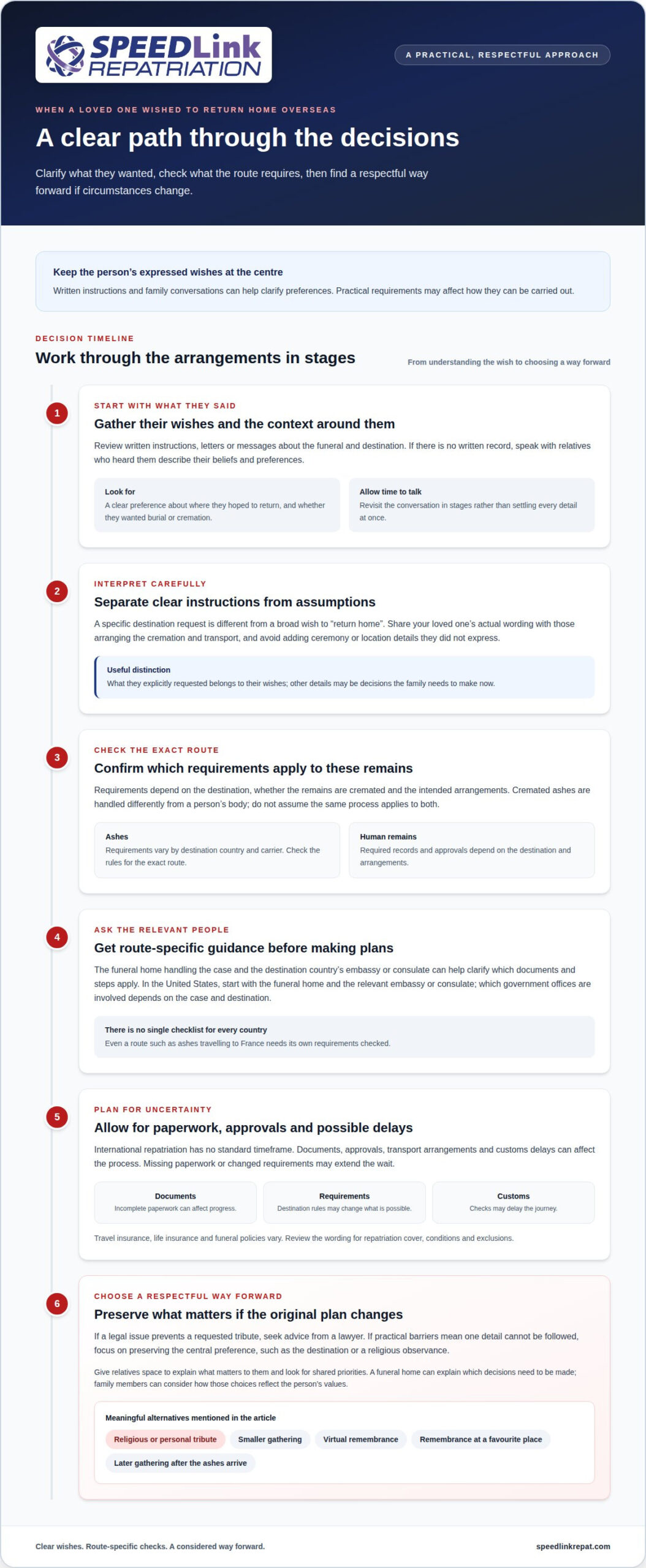
There is no single checklist for returning remains that applies to every country. Requirements depend on the destination, whether the remains are cremated and the intended arrangements. A US funeral home and the destination country’s embassy or consulate can help clarify the relevant steps. Even for ashes travelling to France, route-specific requirements need to be considered.
International repatriation does not have one standard timeframe. The process depends on documents, approvals, transport arrangements and any customs delays. Missing paperwork or changed requirements can extend the wait, so allow time for each step.
In the United States, start by speaking with the funeral home and the relevant embassy or consulate. Which government offices are involved depends on the case and destination. Travel insurance, life insurance and funeral policies vary, so review the wording for repatriation cover, conditions and exclusions.
Changes to transport arrangements, incomplete documents, destination requirements or customs checks can delay a journey. These obstacles may mean adjusting your loved one’s wishes. Families can still honour their legacy with a religious or personal tribute, or another choice that reflects their values and brings friends together.
Required records and approvals depend on the destination and arrangements. Ask the funeral home handling the case and the destination country’s embassy or consulate which documents apply.
Requirements for cremated ashes vary by destination country and carrier. Check the rules for the exact route before making plans. A US funeral home and the destination country’s embassy or consulate can help clarify the steps.
Requirements depend on the destination, whether the remains are cremated and the intended arrangements. A US funeral home and the destination country’s embassy or consulate can clarify which steps apply.
2. Final wishes and grief
Grief can make practical decisions especially difficult, particularly when family members remember someone’s requests differently. Honouring a deceased loved one’s final wishes to return home overseas starts with understanding what they expressed. Review written instructions, letters or messages about the funeral and destination. These can help distinguish a clear preference from an idea discussed casually. If there is no written record, speak with relatives who heard your loved one describe their beliefs and preferences.
It can help to revisit the conversation in stages rather than settle every detail at once. One discussion might clarify whether your loved one wanted burial or cremation; another could focus on where people should gather. A funeral home can explain which decisions need to be made, while relatives consider how those choices reflect the person’s values and dignity.
Disagreement doesn’t mean the family has forgotten their loved one. One sibling may focus on the exact destination, while another worries about cost, distance or the strain of losing someone. Give everyone space to explain what matters most, then look for shared priorities. If the requested memorial is unaffordable, a smaller gathering or virtual remembrance can still create a meaningful tribute.
If the original plan changes, you can still preserve its meaning. Consider holding a remembrance at your loved one’s favourite place, sharing stories with friends overseas, or arranging a later gathering after the ashes arrive. These choices can honour their legacy without requiring grieving relatives to resolve every question immediately.
If discussing arrangements would help clarify practical next steps, talk through your situation at a pace that feels manageable.
3. Respecting the deceased’s final wishes
Respect means giving a clearly expressed preference proper weight, even when it differs from what relatives would choose. Honouring a deceased loved one’s final wishes to return home overseas may mean following a specific destination request, rather than treating it as a general wish to be remembered there. Share the person’s wording with those arranging the cremation and transport, so practical decisions reflect what they actually asked for.
Religious traditions can shape funeral preferences, including whether someone requested burial or cremation. Relatives may hold different beliefs, but disagreement alone does not change what the deceased asked for. A funeral home can explain how the chosen arrangements may be carried out. For burial, relevant details might include a preferred plot, headstone or grave marker.
Some instructions are precise; others leave room for interpretation. Avoid turning a broad statement, such as wanting to return home, into assumptions about a particular ceremony or location. Separate what your loved one explicitly requested from the decisions the family needs to make now. This preserves their intentions without attributing choices they never expressed.
When wishes are clear, share them with the people responsible for the arrangements and keep decisions consistent with those instructions. If a practical barrier prevents one detail from being followed, focus on preserving the central preference, such as the destination or religious observance. This respects the person’s choices while allowing the arrangements to reflect the circumstances.
SpeedLink Repatriation
SpeedLink Repatriation helps families arrange international transport of cremated remains in keeping with a loved one’s wishes. Its International Ashes Repatriation service supports families planning an overseas return, while Bereavement Logistics can help with related arrangements. For delivery within the UK, the UK Domestic Ashes Delivery Service may be relevant. Families wishing to share ashes between relatives can also consider the Ashes Splitting Service.
When you’re ready to discuss transporting ashes, contact SpeedLink Repatriation, whether the destination is overseas or within the UK. The route, destination requirements and your family’s plans will shape the arrangements. SpeedLink can help you talk through the practical next steps.
Take the next step at your own pace
Honouring a deceased loved one’s final wishes to return home overseas can mean making considered choices rather than following a plan at any cost. If circumstances have changed, take time to decide what matters most: the destination, a family gathering or a connection with home. A thoughtful next step can turn those priorities into practical arrangements while respecting the person you remember.
When you’re ready to discuss transporting the ashes, contact SpeedLink Repatriation. Explain what your loved one wanted and where your family hopes to take their ashes. The conversation can help you consider arrangements that fit your situation.
There is no single way to honour someone’s wishes. A careful decision made with love can keep their values close as your family moves forward.
Frequently Asked Questions
How can I ensure I’m honouring my loved one’s wishes after they pass?
Choose a family member to keep a clear record of the decisions and arrangements. They can note which choices reflect the person’s stated preferences and share relevant details with relatives and the funeral home. For example, if the destination matters most but the timing can change, recording that distinction helps everyone understand what the family hopes to preserve.
What are some common challenges in fulfilling last wishes, and how can they be addressed?
Families may face conflicting recollections, practical obstacles or different ideas about what matters most. Write down the specific difficulty, then separate the underlying intention from the requested method. If a particular gathering cannot happen, a shared remembrance with relatives overseas may honour the same intention. For unresolved legal questions, seek professional legal advice to understand the available options.
What if there’s no will or legal document indicating final wishes?
The absence of a will does not necessarily mean your loved one never expressed a preference. Look for personal letters, messages or funeral-planning notes, and ask close friends or relatives what they remember. A will and funeral instructions may serve different purposes. If family members disagree about who can make arrangements, the applicable local law and circumstances matter.
What should I do if I don’t know what my loved one wanted?
Start with what you know about your loved one’s life rather than guessing at a detailed plan. Consider where they felt at home, which traditions mattered to them and whether they spoke about particular places or causes. A trusted friend may remember a conversation you didn’t hear. Choose a thoughtful tribute that fits those known values without presenting an assumption as a definite instruction.
Why is fulfilling a deceased loved one’s requests important?
Respecting a clearly expressed request can acknowledge a person’s identity, beliefs and relationship with home. It may also help relatives make decisions with a shared purpose during mourning. Honouring someone does not require carrying out every detail regardless of circumstances. If the original plan cannot be followed, preserving its central meaning through a considered alternative can still be an act of respect.

Article by
David McMillen
I started my career in logistics over 30 years ago which has spanned 2 continents and several different types of courier and logistics operations. I lost my dear Mum back in 2016 and it was in the aftermath of her passing that SpeedLink Repatriation was born. We have endeavoured to bring the same care and attention to all of our clients as my mum received and to date we have helped repatriate hundreds of individuals across the globe.
Disclaimer
International requirements for cremated remains vary by origin, destination, carrier and method of transport and may change without notice.
Content is provided as general guidance and should not be treated as legal advice.
Where necessary, current requirements should be confirmed with the relevant government authority, customs authority, embassy, consulate, postal operator, airline or carrier.
SpeedLink can advise on the requirements applicable to a specific shipment.