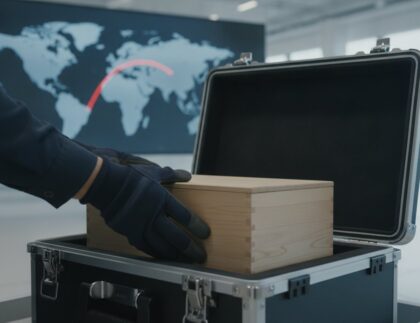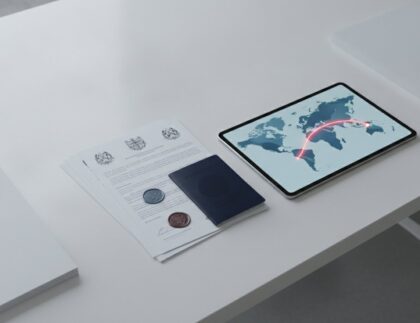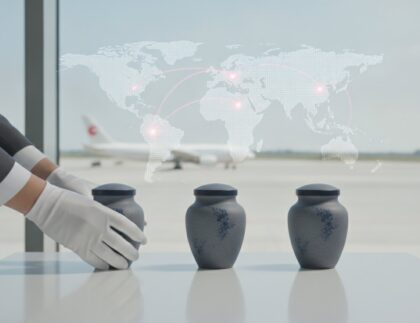
The financial burden of repatriating a body internationally can reach as high as $40,000, which is why more families in 2026 are choosing the more manageable and personal path of returning a loved one’s ashes home. However, this choice brings its own set of worries, particularly the fear that a precious urn might be mishandled or delayed by complex border regulations. Learning how to get ashes repatriated is not just a logistical task; it’s an act of stewardship that requires a clear understanding of international law and airline protocols.
We recognise the profound stress you’re feeling whilst trying to navigate conflicting rules and the anxiety of potential customs issues. This guide is designed to replace that confusion with a sense of calm and security. You’ll gain a comprehensive understanding of the legal requirements and the practical steps needed to ensure a safe, dignified journey. We will detail the essential documentation required for 2026, explain why certain urn materials are mandatory for security screening, and provide the expert guidance you need to clear customs without unnecessary delays.
Key Takeaways
- Understand why international repatriation requires formal coordination with consulates and embassies rather than standard postal services to ensure legal compliance.
- Identify the critical documentation needed, such as certified death certificates and cremation certificates, to navigate international border requirements with confidence.
- Learn how to get ashes repatriated through airport security by choosing scannable, non-metallic urns that meet strict airline and TSA standards for 2026.
- Evaluate the security of specialist door-to-door bereavement logistics versus personal carry-on options for a dignified and uninterrupted journey home.
- Prepare for a successful homecoming by mastering the customs clearance process and coordinating the final handover with professionals at the destination.
Understanding the International Ashes Repatriation Process
International repatriation is the legal and logistical transfer of cremated remains across sovereign borders. It’s a process that demands far more than simple postage; it requires a deep understanding of both international law and the specific regulations of the receiving nation. When families ask how to get ashes repatriated, they’re often seeking a path that balances technical precision with emotional care. This journey is grounded in an International Repatriation Overview that respects the ethical and cultural significance of returning a loved one to their ancestral or chosen home.
Consulates and Embassies play a pivotal role in this journey. They act as the primary gatekeepers, issuing the necessary transit permits and verifying that all health and safety protocols are met. In 2026, the landscape has shifted towards highly digitised customs systems. Whilst these digital portals can speed up the transfer, they leave no room for error. A single digitised typo can lead to a delay at the border, making professional oversight more critical than ever to ensure a dignified, uninterrupted passage.
Why Standard Couriers Often Refuse Ashes
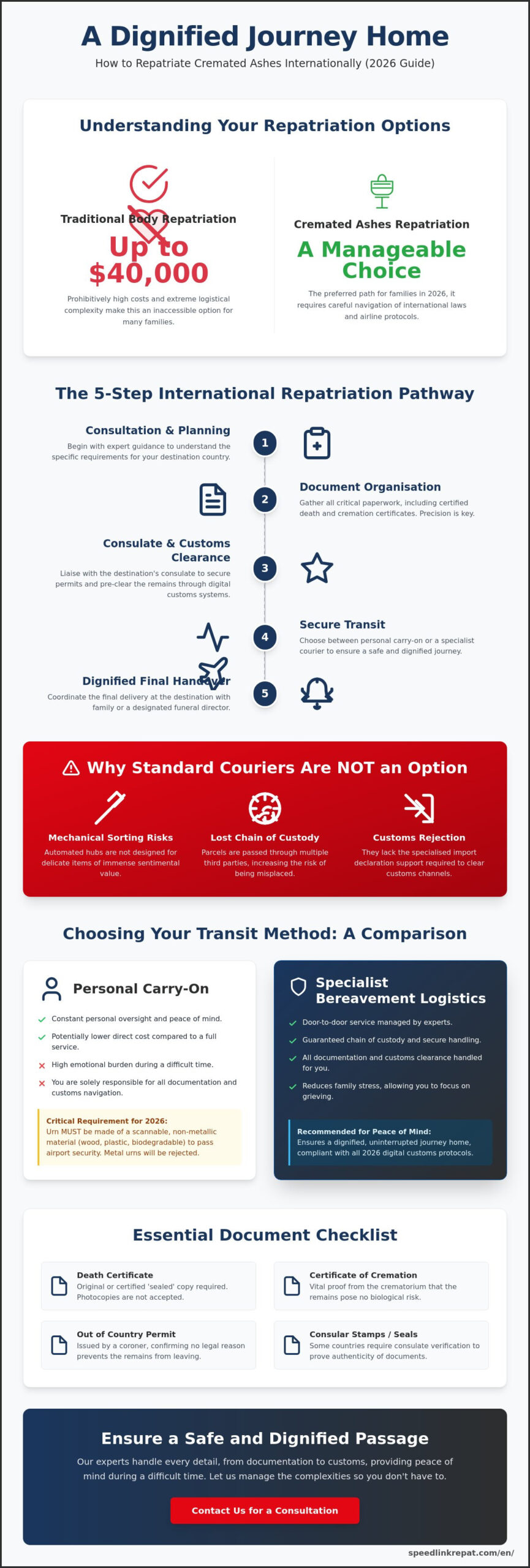
You might wonder why household names like Royal Mail, DHL, or FedEx aren’t suitable for this task. Most standard couriers list cremated remains as “prohibited items” within their terms of service. This isn’t a reflection of the remains themselves, but rather a recognition that their automated sorting systems aren’t designed for items of such immense sentimental value. Understanding how to get ashes repatriated safely involves recognising that standard postal routes carry risks that are simply unacceptable in bereavement logistics:
- Mechanical Sorting Risks: High-speed conveyor belts and automated hubs aren’t built for the delicate handling an urn requires.
- Lack of Chain of Custody: General parcels are often handled by multiple third-party contractors, increasing the risk of a package being misplaced.
- Customs Rejection: Standard couriers don’t provide the “Import Declaration” support needed to clear ashes through specialised customs channels.
Families often rely on an Australia to Europe cremated remains courier or similar specialists to handle these complexities across vast distances. This ensures the journey is managed by experts who understand that they aren’t just moving a package, but a person’s history and a family’s peace of mind. Knowing what to look for when choosing an ashes repatriation company is therefore one of the most important decisions a family can make during this process.
The Essential Checklist: Documents You Need to Organise
Successfully managing how to get ashes repatriated relies heavily on the precision of your paperwork. In 2026, as international borders move towards digital-first customs entries, having the correct physical and digital copies is paramount. You’ll need to organise several key documents before the journey can begin to ensure there are no delays at the border. This structured approach provides a sense of order during a difficult time.
- The Death Certificate: You must provide an original or a certified ‘sealed’ copy issued by the registrar. Photocopies are rarely accepted by customs officials or airlines.
- The Certificate of Cremation: This document, provided by the crematorium, serves as vital evidence that the remains are purely cremated ashes and pose no biological risk.
- Out of Country Permit: Usually issued by a coroner, this permit confirms there’s no legal reason the remains cannot leave the country. Some nations also require a ‘Freedom from Infection’ certificate, even though the cremation process renders remains sterile.
- Consular Stamps and Lead Seals: Certain countries require a consulate representative to physically seal the urn with a lead seal or apply specific stamps to the documentation to verify its authenticity.
The post-Brexit landscape has introduced additional layers of complexity for transfers between the UK and the EU. Digital customs declarations now require specific commodity codes for cremated remains. If you’re unsure which specific permits apply to your destination, our team can provide expert guidance on current regulations to help you avoid common pitfalls. Understanding the full international ashes shipping cost, including permit fees and document translation expenses, is an essential part of planning this process without financial surprises.
Navigating Customs and Consulate Clearances
Contacting the receiving country’s consulate is a necessary step to verify local burial laws. Some nations have strict rules regarding where ashes can be interred or scattered. The Consular Mortuary Certificate is the gold standard for legal transit, acting as an all-encompassing document that verifies the identity of the deceased and the legality of the transport. If the destination is not English-speaking, you must ensure all documents are translated by a certified professional. For instance, families using a cremated remains courier Canada to Poland service must provide sworn translations to satisfy the Starosta permit requirements often found in Polish law.
Choosing Your Method: Airline Carry-on vs. Specialist Courier
Deciding on the most appropriate method for transport is a deeply personal choice. Many families prefer the “Personal Carry-on” route, allowing them to keep their loved one close during the flight. Whilst this offers emotional comfort, it places the burden of regulatory compliance squarely on your shoulders. You must ensure the urn is made of X-ray transparent materials such as wood, plastic, or biodegradable cardboard. Security officers cannot open an urn; if the scanner cannot see through the material, the remains will be refused at the gate. Understanding how to get ashes repatriated via an airline requires meticulous attention to these baggage rules. For example, British Airways requires both the death certificate and the cremation certificate for travel, and the container must be scannable.
In contrast, a Cremated Remains Courier Service provides a “Specialist Courier” route that prioritises security and professional oversight. When considering how to get ashes repatriated, many find that the initial lower cost of an airline ticket is offset by the hidden complexities of customs brokerage. A specialist service manages the “Import Declaration” and ensures all paperwork aligns with 2026 digital customs requirements. This removes the risk of your loved one being held in a warehouse if a flight is diverted or if documentation is questioned by local officials. It provides a steady hand to guide the process when you may not have the emotional capacity to handle logistical hurdles. To ensure you select a provider with the right credentials and ethical standards, reviewing a dedicated ashes repatriation company selection checklist can help you make a fully informed decision.
The Advantages of a Dedicated Ashes Courier
Professional bereavement logistics offer more than just transport. It’s about a commitment to dignity through every mile. This includes a Professional Packaging Service that ensures the remains are hermetically sealed according to international standards, yet presented in a way that remains respectful rather than clinical. You can also benefit from real-time tracking. This provides the comfort of knowing exactly where your loved one is at every moment of their journey, from the point of collection to the final destination.
For a deeper look at these logistical nuances, you may find our article on International Ashes Repatriation: A Dignified Guide to Transporting Cremated Remains in 2026 helpful. Whether you are seeking a USA to UK ashes courier service or help with European transfers, we are here to support you. Please contact our team for a personal consultation to discuss the safest path for your family.
Final Steps: Secure Delivery and Memorial Arrangements
The final stage of the journey is as significant as the first. Once the remains arrive in the destination country, a seamless handover to a local professional is essential for maintaining dignity. We often coordinate directly with the funeral director at the destination to ensure your loved one is received with the appropriate care. This stage also involves the critical task of customs clearance. A specialist handles the ‘Import Declaration’ on your behalf, ensuring that all 2026 digital requirements are met without the family needing to intervene in complex bureaucratic processes. Knowing how to get ashes repatriated successfully means looking beyond the flight itself to the final arrival at the place of rest.
For families who are spread across different continents, an Ashes Splitting Service offers a practical and compassionate solution. Instead of choosing a single location, remains can be respectfully divided and sent to multiple destinations. This allows for several memorial ceremonies, ensuring that every family member has the opportunity to pay their respects locally. Whether you are planning a Global Ashes Scattering in a favourite coastal spot or a formal interment, the logistics must be handled with precision to avoid any interruption to your memorial plans. It’s about providing you with the flexibility to honour your loved one’s wishes whilst keeping the family connected.
Specialist Routes and Regional Guidance
Specialist routes require nuanced knowledge of regional laws. For instance, families using USA to Ireland ashes courier services must be aware of specific Irish requirements regarding the ‘Freedom from Infection’ certificate. Similarly, long-haul repatriations, such as those facilitated by Australia to Europe cremated remains courier services, involve complex transit through multiple international hubs. If you’re still in the early stages of planning how to get ashes repatriated, you can refer to our guide on how to arrange transport of ashes for more detailed logistical support. Every journey is unique, and having a steady hand to guide the process ensures the focus remains on the person you’re bringing home.
Bringing Your Loved One Home with Confidence
Returning ashes home in 2026 requires a meticulous approach to digital customs entries and the careful gathering of registrar-sealed documentation. As we’ve explored, the choice between personal carry-on and professional logistics depends on your emotional capacity and the specific requirements of the destination country. Mastering how to get ashes repatriated ensures that the final journey is uninterrupted, legally compliant, and deeply respectful.
As a specialist division of SpeedLink Repatriation established in 2003, we bring decades of expertise to every transfer. We specialise in USA to UK transatlantic bereavement logistics, providing secure, door-to-door handling with the reassurance of real-time tracking. Our team acts as a compassionate expert, taking the complex logistical burden off your shoulders whilst maintaining a human-centric focus on your family’s needs.
You don’t have to navigate these international regulations alone. Request a dignified quote for international ashes repatriation to begin this process with a partner you can trust. You’ve honoured their memory with every step taken so far; let us help you complete the final, most important part of their journey home.
Frequently Asked Questions
Can I take ashes on a plane in my hand luggage?
Yes, most major airlines permit you to carry cremated remains in your hand luggage, provided the urn is made of a scannable material and you have the correct documentation. Carrying remains in the cabin is often the preferred method, as it ensures the urn stays with you and avoids the risk of loss associated with checked baggage. You should always notify the airline in advance; for instance, Southwest Airlines requires advance notice and only permits ashes in carry-on bags.
What is the best material for an urn when shipping ashes internationally?
The best material for an international urn is one that is X-ray transparent, such as wood, plastic, or high-quality cardboard. Security scanners must be able to see the contents clearly; materials like lead, dense stone, or thick ceramic will likely be blocked by the scanner and refused at the gate. If you’re moving remains to Australia, be aware that wooden urns are subject to biosecurity inspections to ensure they’re free from insects or soil, so a non-organic material like plastic or zinc may be more efficient.
How much does it cost to repatriate ashes in 2026?
The cost of returning ashes home is significantly more affordable than repatriating a body, which industry data suggests can reach as high as $40,000. Total expenses for ashes vary based on the destination country’s permit fees, the cost of certified document translations, and the chosen transport method. For a transparent breakdown of all the factors that influence the international ashes shipping cost in 2026, including consular fees and specialist courier charges, our dedicated budgeting guide can help you plan with confidence. To understand how to get ashes repatriated within your specific requirements, you should check the current consular fees for the receiving nation and any specific airline baggage surcharges that may apply.
Do I need a special coffin or container for cremated remains?
You don’t need a coffin, but the container must meet specific international transport and security standards. For airline travel, the urn must be scannable, whilst professional courier routes often require the remains to be hermetically sealed within a protective outer layer to prevent leakage. In the United States, domestic transfers now strictly require the official Priority Mail Express Cremated Remains Box (BOX-CRE), though international requirements are governed by the specific customs laws of the destination country.
How long does the ashes repatriation process usually take?
The process typically takes between several days and two weeks, largely depending on how quickly the relevant consulate can issue the necessary transit permits. The timeline begins once you have the original death certificate and cremation certificate in hand. Professional services can often streamline this by managing the digital customs entries and coordinating directly with international authorities to ensure that how to get ashes repatriated is handled without the administrative delays often faced by individuals navigating the system alone.

Article by
David McMillen
I started my career in logistics over 30 years ago which has spanned 2 continents and several different types of courier and logistics operations. I lost my dear Mum back in 2016 and it was in the aftermath of her passing that SpeedLink Repatriation was born. We have endeavoured to bring the same care and attention to all of our clients as my mum received and to date we have helped repatriate hundreds of individuals across the globe.
Disclaimer
International requirements for cremated remains vary by origin, destination, carrier and method of transport and may change without notice.
Content is provided as general guidance and should not be treated as legal advice.
Where necessary, current requirements should be confirmed with the relevant government authority, customs authority, embassy, consulate, postal operator, airline or carrier.
SpeedLink can advise on the requirements applicable to a specific shipment.