What if the final tribute you’ve planned for your loved one is delayed at an international border because of a technicality you didn’t know existed? It’s a distressing thought, especially when you’re already carrying the weight of grief and the responsibility of a final homecoming. You rightfully believe that this process should be handled with the highest level of care, yet the shifting landscape of international regulations can often feel like an impenetrable wall. Navigating customs clearance for human ashes shouldn’t be a source of additional trauma during such a sensitive period.
We’ll help you master the complexities of global regulations for 2026, ensuring your loved one’s journey is seamless, legally compliant, and profoundly dignified. This guide examines the latest mandatory shipping protocols, such as the required use of specific transit kits and x-ray friendly containers, while providing a clear roadmap for the documentation needed to avoid bureaucratic delays. You’ll gain the certainty that every legal detail is addressed, allowing you to focus on the personal significance of the journey rather than the stress of logistics.
Key Takeaways
- Understand why cremated remains are classified as sterile by global health authorities, dispelling the biohazard myths that often cause unnecessary anxiety whilst in transit.
- Identify the essential legal documents, such as certified death and cremation certificates, required for a seamless customs clearance for human ashes at international borders.
- Learn how to choose an X-ray compatible urn and assemble a secure “Transit Pack” to prevent intrusive physical inspections or bureaucratic delays.
- Discover why specialist bereavement logistics provide a level of stewardship and legal protection that standard courier services cannot offer.
- Gain a clear, methodical roadmap for 2026 that removes the burden of logistical complexity, ensuring your loved one is treated with the utmost dignity.
Understanding Customs Clearance for Human Ashes in 2026
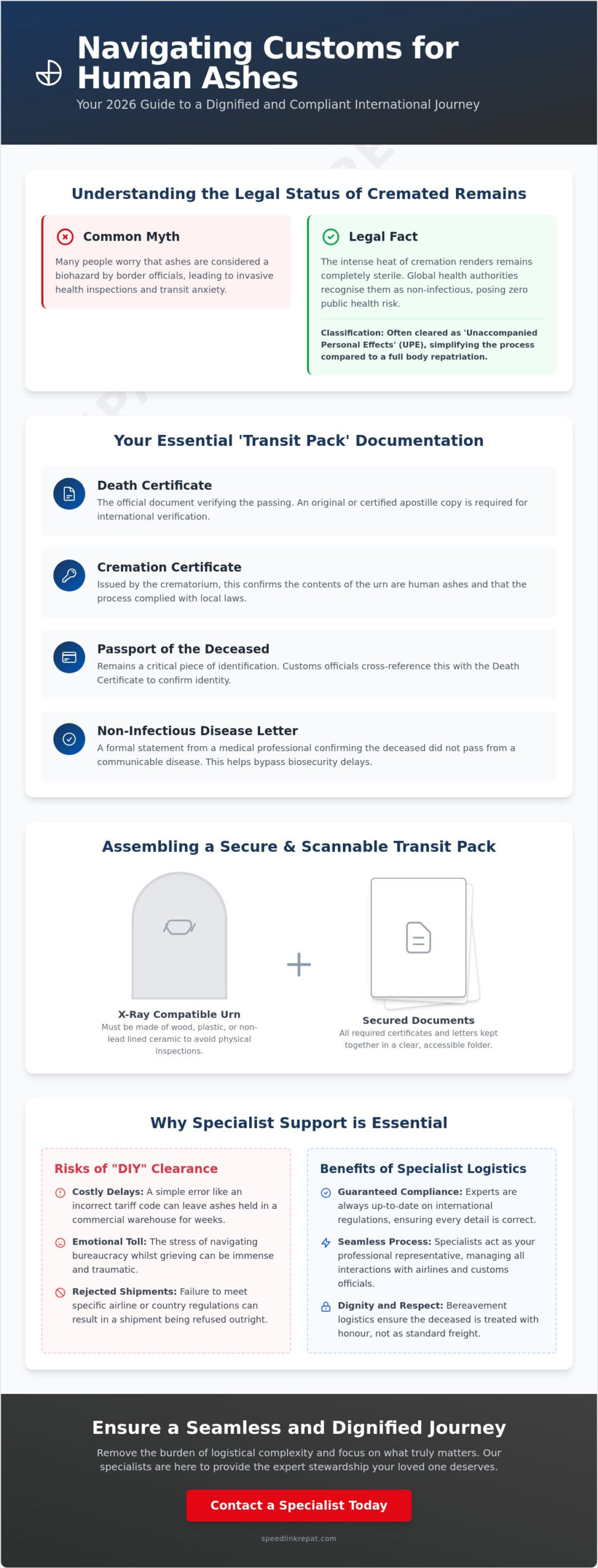
At its core, customs clearance for human ashes is the formal legal process of verifying the identity and origin of cremated remains as they cross international borders. It’s a procedure designed to ensure that the transport complies with both the departing country’s export laws and the destination’s specific import requirements. Many families feel anxious about health inspections, yet it’s vital to understand that ashes are not a biohazard. Because the process of Cremation involves such intense heat, the resulting remains are entirely sterile and non-infectious. Most global health authorities recognise that ashes pose no risk to public health, which is a significant distinction from the repatriation of a physical body.
The Legal Status of Cremated Remains
Customs officials distinguish sharply between “Human Remains” (uncremated bodies) and “Cremated Remains.” In jurisdictions like the UK and Australia, ashes are frequently cleared under the category of “Unaccompanied Personal Effects” (UPE). This classification simplifies the process compared to a full body repatriation, but it still requires precise declaration. International standards set by the International Air Transport Association (IATA) influence how airlines and customs officers perceive these remains. These standards ensure that ashes are handled with specific logistical care rather than being processed as standard commercial freight.
Why “DIY” Customs Clearance is Risky
Attempting to handle border formalities without professional assistance often leads to heart-wrenching delays. A simple error, such as using an incorrect tariff code or missing a mandatory consular stamp, can result in a loved one’s ashes being held in a commercial warehouse. The emotional toll of such a situation is immense. Specialist Australia to Europe cremated remains courier services act as a professional bridge, providing the expert representation needed to navigate these bureaucratic hurdles. They ensure that the unique “Human Rights” aspect of the transit is respected, preventing the deceased from being treated as mere merchandise during the customs clearance for human ashes process.
Essential Documentation for International Transit
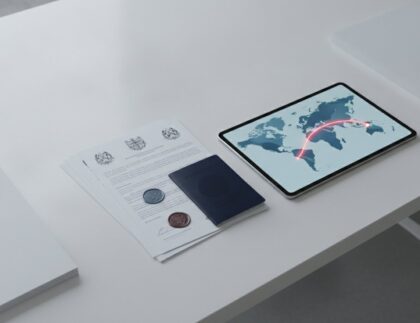
Securing the correct paperwork is the most critical step in ensuring a dignified journey for your loved one. Without precise documentation, customs clearance for human ashes can become stalled, causing unnecessary distress. The cornerstone of your “Transit Pack” is the Death Certificate. For international travel, you’ll typically need the original or a certified apostille copy. This document is cross-referenced by customs agents against the Passport of the Deceased, which remains a vital piece of identification even after death. It confirms the identity of the remains and ensures the legal “i”s are dotted before the journey begins.
Accompanying these is the Cremation Certificate. This document is issued by the crematorium to confirm that the contents of the urn are indeed ashes and were processed according to local laws. Some jurisdictions also require a Consular Mortuary Certificate. This acts as a formal permit from the destination country’s consulate, proving that the deceased is being repatriated respectfully and in accordance with their national regulations. If you feel overwhelmed by these requirements, you can speak with a repatriation specialist to clarify which specific documents apply to your route.
The Importance of the Non-Infectious Disease Letter
Whilst we’ve established that ashes are sterile, many border authorities still require a formal statement. A Non-Infectious Disease Letter, often provided by the crematorium or a medical professional, confirms that the deceased did not pass away from a communicable disease. This simple letter is a powerful tool. It helps you bypass lengthy biosecurity inspections that might otherwise occur if a customs officer is unfamiliar with the sterile nature of cremated remains.
Nuances of Transatlantic Paperwork
Moving ashes from the USA to Ireland or the UK involves specific transatlantic protocols. For instance, adhering to USPS regulations for shipping ashes is mandatory if using postal services, which includes the required use of the BOX-CRE kit as of March 2025. You must also ensure your documentation aligns with the “Declaration of Contents” required by UK Border Force. Any discrepancy between the US export paperwork and the UK import declaration can lead to delays in customs clearance for human ashes, making professional oversight a sensible choice for these complex routes.
Step-by-Step Guide to Clearing Customs Smoothly
Achieving a seamless transition across international borders requires a methodical approach that respects both legal requirements and the sanctity of your loved one’s remains. By following a structured sequence, you can mitigate the risk of bureaucratic delays and ensure that customs clearance for human ashes is handled with the appropriate level of stewardship. This process begins long before the package reaches the airport; it starts with the physical preparation of the vessel itself.
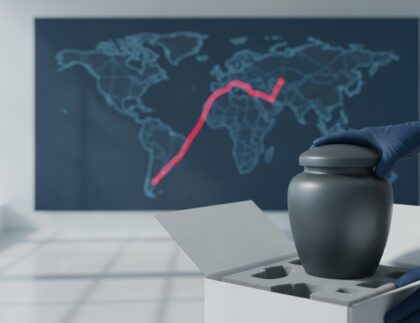
- Step 1: Secure the correct urn. The container must be constructed from materials that allow for clear X-ray penetration. Avoid lead linings or exceptionally thick stone, as these will obscure the contents.
- Step 2: Collate a “Transit Pack.” Gather all original documents discussed previously and place them in a durable, waterproof sleeve. This should be securely attached to the exterior of the shipping container so that officials can review paperwork without disturbing the inner packaging.
- Step 3: Appoint a specialist courier. Professional USA to Germany cremated remains courier services possess the technical mastery to manage “Master Air Waybill” entries and complex customs declarations on your behalf.
- Step 4: Monitor the “Clearance Status.” Proactively track the shipment to ensure that destination authorities haven’t requested additional information. A swift response to such queries is essential to prevent the ashes from being moved to a holding facility.
If you require assistance with any stage of this journey, you can contact our bereavement logistics team for professional guidance.
Preparing the Urn for Inspection
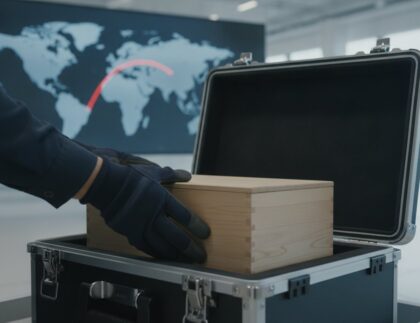
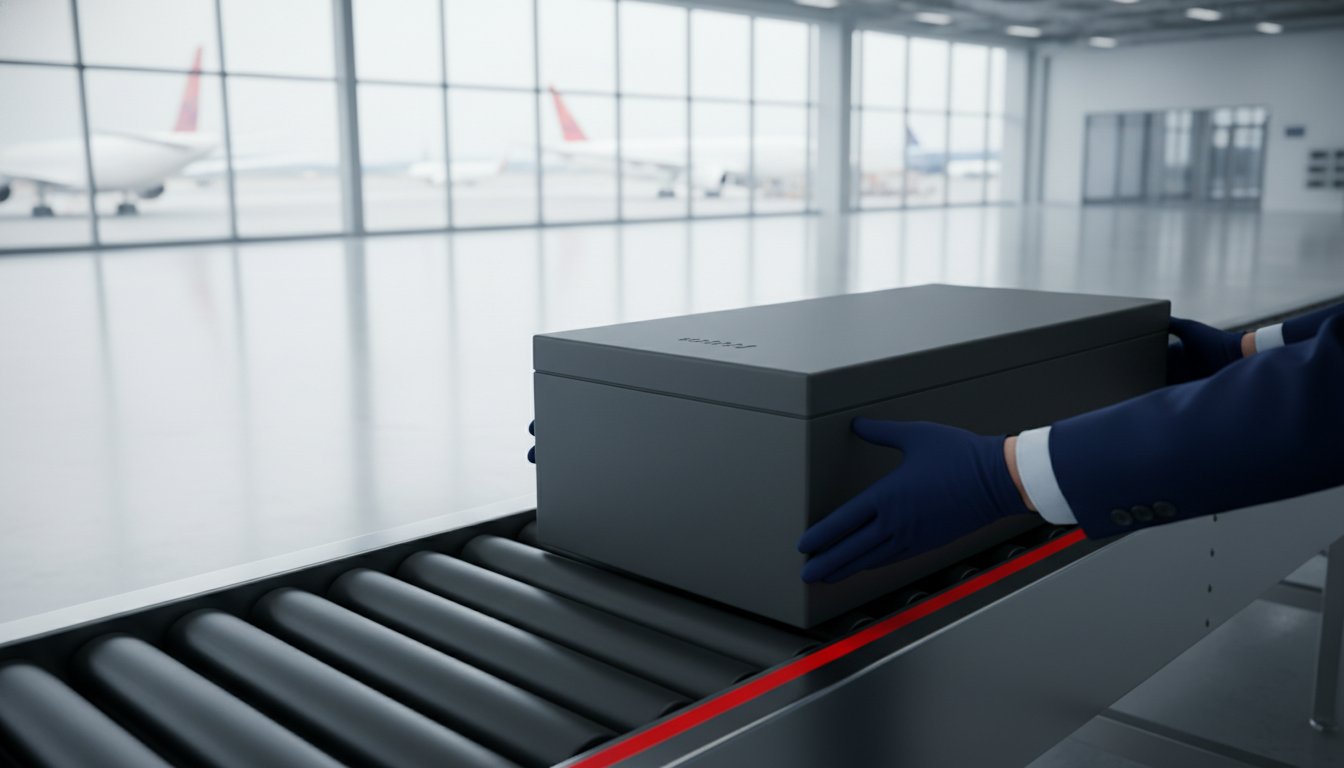
Customs officials are legally mandated to verify the contents of every package. However, they are generally prohibited from opening a sealed urn. To facilitate a respectful inspection, choose materials such as wood, ceramic, or biodegradable polymers. These substances are easily scanned, allowing officers to confirm the contents via X-ray whilst maintaining the seal and dignity of the vessel. If a container cannot be scanned, it may be rejected at the point of entry, causing significant emotional distress.
Managing the Bill of Lading
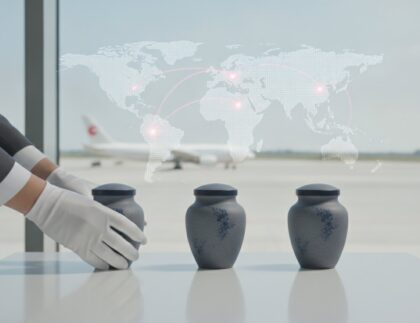
The logistics of customs clearance for human ashes rely heavily on the accuracy of the shipping manifest. The Air Waybill acts as the “passport” for the ashes, providing a trackable record of the journey from origin to destination. The Air Waybill is the primary contract of carriage for international bereavement logistics. Ensuring that this document is correctly coded for cremated remains is vital; it signals to every handler along the route that the package requires specific, dignified care rather than standard freight handling.
Why Specialist Bereavement Logistics are Essential
Standard couriers are designed for efficiency and volume, which often means packages are handled with a clinical, transactional focus. In contrast, specialist bereavement logistics providers recognise that they aren’t just moving a parcel; they’re acting as an ethical guardian for a person’s remains. This distinction is vital when managing customs clearance for human ashes. Specialist services navigate the unique “Human Rights” aspects of international transit, ensuring that remains are never subjected to the indignity of being lost amongst general cargo or delayed in a generic warehouse.
Peace of mind is provided through real-time tracking and a dedicated point of contact who understands the profound emotional weight of the task. You won’t be dealing with a faceless call centre; you’ll have a partner who provides transparency and security at every stage. This level of stewardship ensures the final journey is handled with the same level of dignity as the funeral service itself, protecting both the deceased and the grieving family from logistical distress.
Global Reach and Local Expertise
Navigating specific regional rules requires more than just a checklist; it requires deep local knowledge. For example, our Australia to Europe cremated remains courier services rely on an intimate understanding of port-specific customs behaviour. This local expertise allows us to anticipate how specific officials might interpret documentation, preventing unnecessary delays that a general courier would likely encounter. We understand the nuances of local regulations, ensuring that customs clearance for human ashes is completed with precision regardless of the destination.
The Logical Conclusion of Your Care
Choosing professional repatriation is the final act of stewardship for your loved one. It’s the completion of a promise to bring them home or to their final resting place with honour and legal certainty. For a broader perspective on this process, you may wish to read our pillar article, International Ashes Repatriation: A Dignified Guide.
If you’re ready to begin this journey, please contact SpeedLink Repatriation for a compassionate consultation on customs clearance. We’re here to take the logistical burden off your shoulders whilst maintaining the highest standards of care and professional integrity.
Securing a Dignified Final Homecoming
The journey of returning a loved one’s ashes home is a profound responsibility that requires both technical precision and emotional intelligence. By ensuring you have the correct documentation and an X-ray compatible urn, you’ve already laid the foundation for a respectful transit. However, the true security comes from having a dedicated partner to manage the intricate details of customs clearance for human ashes. This professional oversight ensures that legal requirements are met without compromising the sanctity of the remains.
As a specialist division of SpeedLink Transport Limited, established in 2003, our dedicated bereavement logistics specialists bring decades of experience to every case. We possess particular expertise in USA to UK transatlantic repatriation, ensuring that your loved one is treated with stewardship rather than as mere cargo. You don’t have to carry the burden of global regulations alone during this difficult period. Our team is here to provide the steady hand you need to navigate these complexities with confidence.
Request a dignified customs clearance consultation with SpeedLink to ensure every legal detail is handled with care. We’re here to help you bring your loved one home with the honour and peace of mind they deserve.
Frequently Asked Questions
Do I need to pay customs duty on human ashes?
Most countries don’t levy customs duty or VAT on the import of cremated remains. They are typically classified as “Unaccompanied Personal Effects” or handled under specific humanitarian exemptions that recognise their non-commercial nature. Whilst you must still lodge a formal declaration to achieve customs clearance for human ashes, this process is focused on identity verification and legal compliance rather than revenue collection.
Can I send ashes through a standard courier like DHL or FedEx?
You cannot typically use standard commercial couriers like DHL or FedEx, as their internal policies often prohibit the transport of human remains. In the United States, the USPS is the only authorised carrier for this service, requiring Priority Mail Express International. For most global routes, it’s essential to use a specialist bereavement logistics provider who utilises secure, authorised airline networks rather than standard parcel sorting facilities.
What happens if customs wants to open the urn?
Customs officials generally avoid opening a sealed urn out of respect for the deceased and to maintain the integrity of the remains. Instead, they rely on X-ray technology to verify the contents against your paperwork. If the urn is made of lead or dense stone that prevents a clear scan, the shipment may be delayed or rejected at the border. Using an X-ray friendly container ensures the customs clearance for human ashes proceeds without the need for physical intrusion.
How long does customs clearance for human ashes usually take?
The clearance process itself typically takes between 24 and 48 hours, provided all documentation is accurate and complete upon arrival. Whilst the physical transit via specialist services often takes 3 to 5 business days to reach most global destinations, administrative processing at the border depends on the efficiency of local officials. Engaging a specialist helps ensure that paperwork is pre-vetted to avoid your loved one spending unnecessary time in a customs warehouse.
Is a Consular Mortuary Certificate always required for the UK?
A Consular Mortuary Certificate isn’t always a mandatory requirement for bringing ashes into the UK, as requirements can vary based on the country of departure. UK Border Force primarily requires a certified Death Certificate and a Cremation Certificate to permit entry. However, certain airlines or foreign governments may insist on consular seals to allow the export of remains. It’s always best to verify the specific requirements of your departure point to ensure a seamless arrival.

Article by
David McMillen
I started my career in logistics over 30 years ago which has spanned 2 continents and several different types of courier and logistics operations. I lost my dear Mum back in 2016 and it was in the aftermath of her passing that SpeedLink Repatriation was born. We have endeavoured to bring the same care and attention to all of our clients as my mum received and to date we have helped repatriate hundreds of individuals across the globe.
Disclaimer
International requirements for cremated remains vary by origin, destination, carrier and method of transport and may change without notice.
Content is provided as general guidance and should not be treated as legal advice.
Where necessary, current requirements should be confirmed with the relevant government authority, customs authority, embassy, consulate, postal operator, airline or carrier.
SpeedLink can advise on the requirements applicable to a specific shipment.