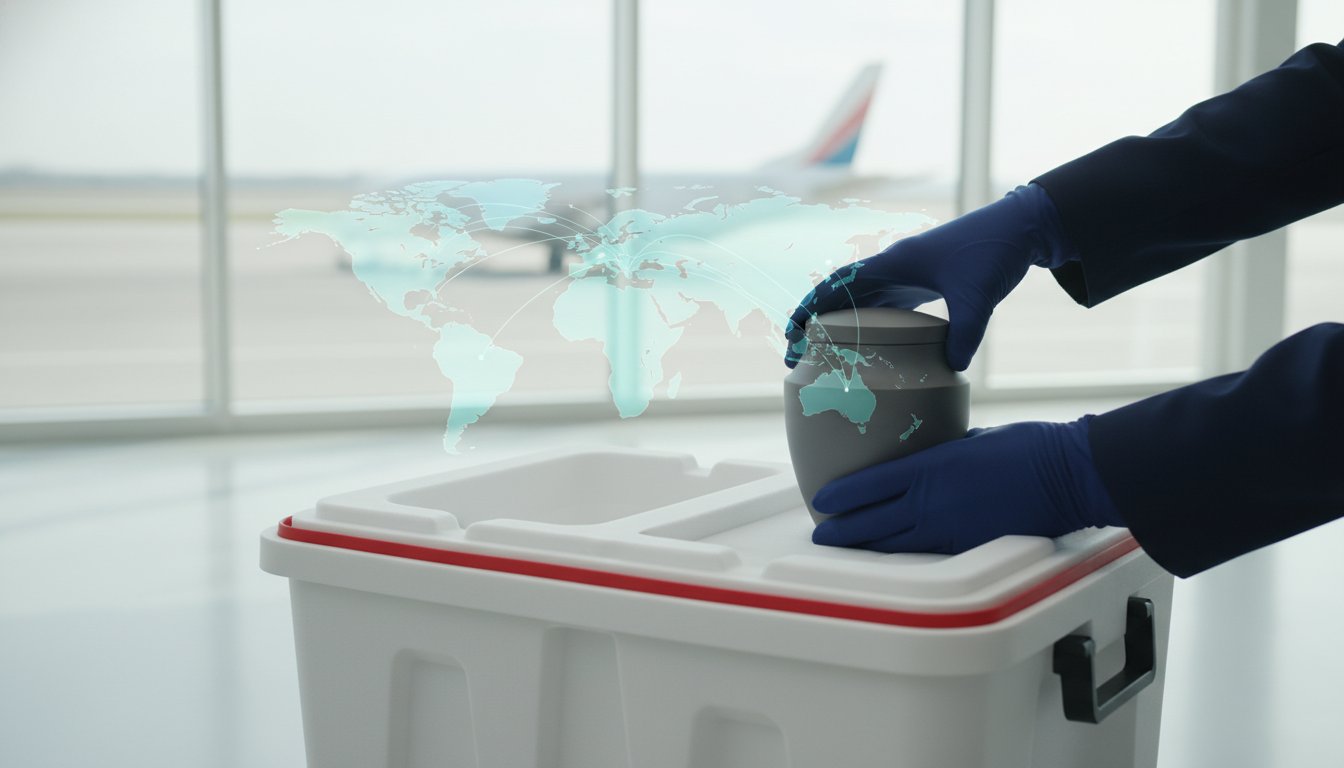
Choosing the most traditional method to bring a loved one home might actually be the most complex and distressing path you can take. When a death occurs across borders, the instinct is often to repatriate the body immediately; however, the logistical hurdles and costs, which can reach $20,000 for international transport, often add significant burden to an already painful time. Understanding why choose ashes repatriation has become a vital consideration for global families in 2026, as it offers a more flexible, personalised, and gentle alternative.
We know you want to ensure your loved one is treated with the highest level of dignity whilst avoiding the fear of mishandling or unexpected financial strain. This article provides a clear comparison of the logistical, emotional, and financial differences between body and ashes repatriation to help you make an informed choice. We’ll examine the latest 2025 shipping mandates, scannable container requirements, and the specific steps needed for a stress-free return to your home country.
Key Takeaways
- Contrast the logistical demands of transporting a zinc-lined coffin with the streamlined use of TSA-compliant urns and specialised courier services.
- Identify the specific documentation required for each process, including the essential cremation and death certificates needed for a smooth transition.
- Discover the significant financial benefits of choosing ashes over body repatriation, primarily driven by reduced weight and fewer embalming requirements.
- Understand why choose ashes repatriation to gain greater flexibility and a more personalised approach to returning your loved one home.
- Gain clarity on how specialised courier services navigate international regulations to provide a dignified, secure journey for your loved one’s remains.
Understanding the Fundamental Differences in Repatriation
Repatriation is the deeply personal process of returning a loved one to their home country after they have passed away abroad. Understanding Repatriation involves recognising two distinct paths, each with its own set of requirements and emotional considerations. Body repatriation refers to the transport of a deceased person within a casket or coffin, whilst ashes repatriation involves the transport of cremated remains in a specialised urn or container. Families often ask why choose ashes repatriation when tradition suggests otherwise; the answer lies in the balance between emotional needs and logistical reality.
Whilst both methods aim for a dignified “return home,” the journey they take differs significantly. Body repatriation is a complex undertaking involving international mortuary cargo regulations, whilst the transport of remains offers a more streamlined approach. Acknowledging the emotional weight of this decision is vital, as cultural and religious traditions often dictate which path a family feels is most respectful.
When is Body Repatriation the Traditional Choice?
Some families find that body repatriation is the only path that aligns with their deeply held beliefs. Certain faiths strictly prohibit cremation, requiring the physical body to be present for specific burial rituals. Others may prioritise a traditional viewing or an open-casket funeral in the home country to allow extended family to say their final goodbyes in person. In these instances, the goal is often a local burial alongside ancestors in a family plot, maintaining a physical connection to heritage that spans generations.
The Rise of Ashes Repatriation in 2026
As global movement becomes more common, cremation abroad followed by the return of remains has become a practical necessity for many. This method removes the immediate pressure of international transport timelines, allowing families to breathe. When considering why choose ashes repatriation, families often find the following benefits helpful:
- Memorial services can be organised for a later, more convenient date when all relatives are able to travel.
- The process avoids the rigid, weight-based requirements of international mortuary cargo.
- Families retain more control over the final resting place, whether that involves a global scattering or local interment.
Ashes repatriation is the preferred choice for modern, mobile families who require a dignified yet flexible way to honour their loved ones. This path reduces the immediate logistical burden, providing a sense of calm during an otherwise chaotic period.
Comparing Logistical Realities: The Practical Freedom of Ashes
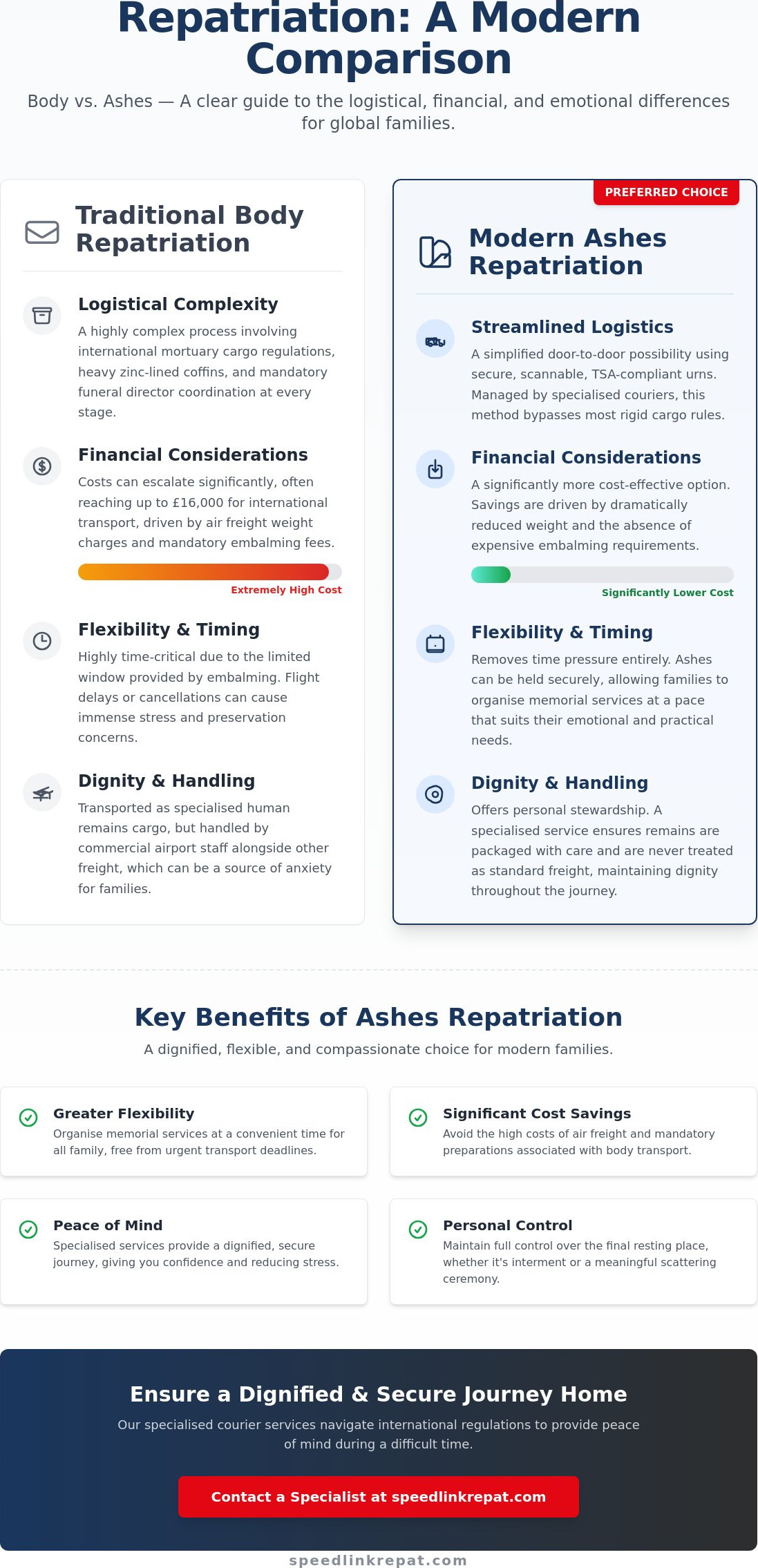
The physical logistics of returning a loved one home can be overwhelming. Traditional body repatriation necessitates the use of heavy, zinc-lined coffins to comply with international health and safety regulations. This contrasts sharply with the use of secure, TSA-compliant urns for USA to UK ashes transport. When families evaluate why choose ashes repatriation, the ability to bypass the rigid requirements of mortuary cargo is often a primary motivator. Ashes allow for a door-to-door possibility that is rarely available for bodies, which typically require funeral director coordination at every transfer point.
Handling and Dignity in Transit
Many people worry about how their loved one will be handled during a flight. Bodies are typically transported as human remains cargo, which means they are managed by commercial airport staff alongside other freight. A specialised international ashes repatriation service offers a much more personal level of stewardship. Professionals package the remains with extreme care, using specialised materials to ensure they are never treated as standard freight. This personalised approach maintains dignity throughout the entire journey.
Storage and Delay Management
Delays or cancellations can cause immense stress when transporting a body due to preservation concerns. Embalming only provides a limited window for transport, making the process highly time-critical. Ashes don’t carry this biological risk, offering a secure buffer if travel plans change. They can be held in secure, temperature-controlled storage facilities, allowing families the freedom to organise a dignified return at a pace that suits their needs. When comparing the costs of repatriation, the flexibility of ashes often proves to be the more compassionate and practical choice for modern families. Why choose ashes repatriation becomes clear when you consider the peace of mind that comes from removing the pressure of a ticking clock.
Regulatory Hurdles and Documentation Requirements
Entering a country with a deceased loved one involves strict legal protocols that vary significantly depending on the form of the remains. For body repatriation, the administrative burden is substantial. You’ll typically need to secure embalming certificates, a “Freedom from Infection” document, and various consular permits before transport can even be considered. In contrast, the paperwork for cremated remains is far more manageable, usually requiring only the death certificate and a cremation certificate. This reduction in administrative complexity is a primary reason why choose ashes repatriation when certainty and ease of clearance are priorities.
The USA to UK corridor has specific nuances that families must navigate. Whilst “Out of England” certificates are a requirement for those leaving the UK, incoming remains still face rigorous customs scrutiny. Correct, certified translations are non-negotiable if the original documents aren’t in English, as any ambiguity can lead to distressing delays at the border.
Navigating Customs and Consulate Rules
Biosecurity rules vary globally because different nations define human remains in various ways. Some countries have stringent inspections that can trigger unexpected hold-ups. Notarising your documents correctly ensures they’re legally recognised by foreign officials, preventing administrative friction. If you’re managing a specific route, such as using a USA to Ireland ashes courier, consulting a specialist is wise. They understand the regional nuances and specific consulate requirements that often catch families off guard.
The ‘Freedom from Infection’ Requirement
Body repatriation often stalls because of the “Freedom from Infection” certificate. This document confirms the deceased doesn’t pose a public health risk, which can be a major hurdle depending on the cause of death. Cremation naturally resolves these health-related transport restrictions. Ashes are biologically inert and thus easier to clear through biosecurity without the need for complex medical clearances. This biological safety makes the customs process far more predictable for grieving families.
Understanding these legal barriers helps clarify why choose ashes repatriation for a smoother, more predictable journey home. If you’re feeling overwhelmed by the paperwork required for your loved one’s return, contact our bereavement logistics specialists for clear, professional guidance on the documentation you need.
Financial Considerations: Understanding the Cost-Efficiency of Ashes
Financial transparency is essential when families are faced with the sudden necessity of international transport. Body repatriation is inherently more expensive due to the complex requirements of embalming, zinc-lined coffins, and the sheer weight of the remains. Industry data indicates that repatriating ashes can be up to 75% cheaper than repatriating a body. Understanding why choose ashes repatriation often begins with a clear-eyed look at these financial commitments, allowing families to allocate their resources toward a meaningful memorial rather than high logistical fees.
Beyond the obvious transport costs, hidden expenses often arise with body repatriation. Local mortuary storage fees can accumulate quickly whilst waiting for consular permits or flight availability. In contrast, local cremation fees are typically more predictable, and once the process is complete, the remains do not incur the same time-sensitive storage costs. This predictability provides a sense of security during a period of significant upheaval.
Cost Drivers in International Repatriation
The primary driver of cost in this field is weight. A standard casket and outer shipping crate can easily exceed 200kg, leading to substantial weight-based airline cargo fees. A specialised urn, however, typically weighs around 3kg, which drastically reduces the airline’s mortuary cargo charges. Additionally, body transport almost always requires the hiring of two funeral directors-one in the sending country and one in the receiving country-to manage the legal handover. A single, dedicated ashes courier service can often manage the entire journey from door to door, simplifying the professional fees involved.
Which Path is Right for You?
Choosing between these two paths requires balancing tradition with practical reality. Whilst body repatriation offers a traditional farewell, ashes repatriation provides the peace of mind that comes with a more flexible, hand-carried journey. If you are planning for a long-haul route, exploring options like an Australia to Europe cremated remains courier can help you understand the specific savings and timelines involved for your destination.
To help you make the most informed choice, consider this checklist:
- Does the destination country mandate the involvement of a local funeral director for incoming bodies?
- Have you accounted for mandatory embalming and zinc-lining costs?
- What are the weight-based cargo fees for the specific airline route?
- Does the chosen urn meet TSA scannability requirements for international transit?
Deciding why choose ashes repatriation is a deeply personal step. We recommend consulting with a bereavement logistics specialist to understand the most dignified and cost-effective route for your loved one’s final journey home.
Choosing a Dignified Path Forward for Your Loved One
The decision to return a loved one home involves weighing traditional values against the practical realities of modern international travel. We’ve seen that ashes repatriation offers a significantly more flexible path; it bypasses the heavy equipment and complex biosecurity permits required for body transport. By selecting this route, families gain the freedom to organise memorials without the pressure of a ticking clock whilst ensuring the highest level of care.
Understanding why choose ashes repatriation helps you reclaim control during a period of profound loss. It replaces the uncertainty of commercial cargo handling with a structured, transparent process. Since 2003, we’ve provided expert bereavement logistics to guide families through these difficult moments. Our specialised door-to-door ashes courier service ensures a secure journey with GPS-tracked transit for your total peace of mind.
Request a dignified quote for international ashes repatriation to begin this journey with a steady hand by your side. You don’t have to navigate these complexities alone; we’re here to ensure your loved one returns home with the respect they deserve.
Frequently Asked Questions
Is it cheaper to repatriate ashes or a body?
Yes, repatriating ashes is significantly more cost-effective than transporting a body. Body repatriation involves weight-based cargo fees for caskets that often exceed 200kg, alongside mandatory embalming and dual funeral director fees. Because cremated remains typically weigh around 3kg, airline mortuary fees are reduced by up to 75%. This substantial saving is a primary reason why families ask why choose ashes repatriation when managing global logistics.
Can I carry ashes on a plane myself instead of using a courier?
You can carry ashes as carry-on luggage on most major airlines, provided the urn is made of a scannable material. Security scanners must be able to see the contents, so materials like wood, plastic, or non-lead-based ceramic are essential. If the container blocks the X-ray, security staff aren’t permitted to open it, and it won’t be allowed on board. Many families prefer a courier to avoid this potential distress at the airport.
Do I need a special coffin for international body repatriation?
International aviation regulations require a zinc-lined coffin for the transport of a deceased person. This hermetically sealed liner is a mandatory health requirement to prevent the leakage of fluids or gases during the flight. These specialised containers are heavy and expensive, adding layers of complexity to the journey. In contrast, ashes require only a secure, TSA-compliant urn, which is much simpler to handle and transport across borders.
What happens if the death occurred due to an infectious disease?
Deaths involving infectious diseases often face strict bans or rigorous quarantine requirements that can prevent body repatriation entirely. Most countries won’t accept a body if a “Freedom from Infection” certificate cannot be issued by medical authorities. Cremation solves this hurdle because the high temperatures render the remains biologically inert. This ensures the remains are safe for transport and will clear international biosecurity without the risk of medical rejection.
How long does the repatriation process typically take for ashes vs a body?
Ashes repatriation is generally more flexible and can be completed faster than body transport. Body repatriation is time-critical due to preservation needs, often taking 7 to 14 days to coordinate between international funeral directors and airlines. Ashes don’t carry the same biological urgency. Once the cremation certificate is issued, the transport can be organised at a pace that suits the family, often completing the door-to-door journey within a few working days.

Article by
David McMillen
I started my career in logistics over 30 years ago which has spanned 2 continents and several different types of courier and logistics operations. I lost my dear Mum back in 2016 and it was in the aftermath of her passing that SpeedLink Repatriation was born. We have endeavoured to bring the same care and attention to all of our clients as my mum received and to date we have helped repatriate hundreds of individuals across the globe.
Disclaimer
International requirements for cremated remains vary by origin, destination, carrier and method of transport and may change without notice.
Content is provided as general guidance and should not be treated as legal advice.
Where necessary, current requirements should be confirmed with the relevant government authority, customs authority, embassy, consulate, postal operator, airline or carrier.
SpeedLink can advise on the requirements applicable to a specific shipment.