A single missing signature can be the difference between a dignified journey home and a loved one’s ashes being held indefinitely at a foreign border. It is completely natural to feel exhausted whilst facing conflicting advice from airlines and embassies. You simply want to ensure this final journey is handled with the respect it deserves. Organising the specific documents for shipping ashes overseas is a complex task; however, these papers act as a vital passport to ensure your loved one is treated with dignity by every official they encounter.
We believe in a people-first approach to bereavement logistics, providing the steady hand you need during this stressful period. This guide offers a comprehensive checklist of every legal requirement for 2026 to ensure your peace of mind. We will cover mandatory USPS BOX-CRE packaging standards, the necessity of death and cremation certificates, and the “State-Only” delivery rules common in many European countries. By the end of this article, you will have the confidence to manage the paperwork correctly and ensure a secure, legal international repatriation.
Key Takeaways
- Identify the core legal requirements, including why original death certificates must feature a raised seal to be accepted by international customs.
- Understand the role of consular clearance and when you must arrange for certified translations to satisfy the specific entry laws of your destination country.
- Learn how to organise your documents for shipping ashes overseas using a three-set photocopy system to ensure a secure and dignified transit.
- Discover the practical steps for collating paperwork in a waterproof, secure folder to protect essential records from damage during the repatriation process.
- Recognise the risks of a DIY approach in 2026 and how professional logistics expertise can manage embassy liaison on your behalf.
The Core Legal Documents for Shipping Ashes Overseas
Securing the correct documents for shipping ashes overseas is the most critical step in ensuring a seamless transition across international borders. It isn’t merely about bureaucracy; it’s about providing a clear, legal narrative of your loved one’s identity and the nature of their remains. You’ll need to gather several specific papers before the transport can begin to avoid the risk of customs delays.
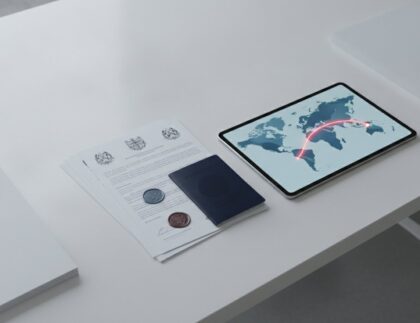
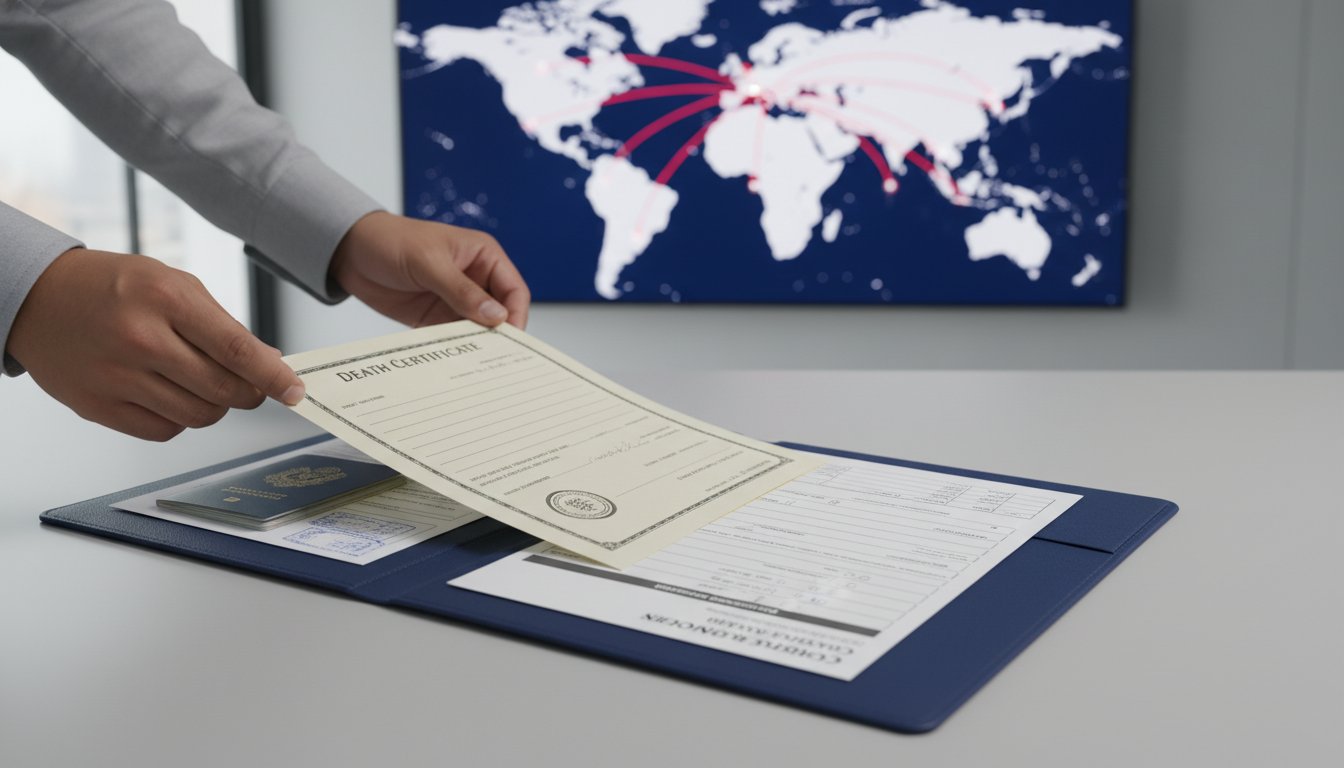
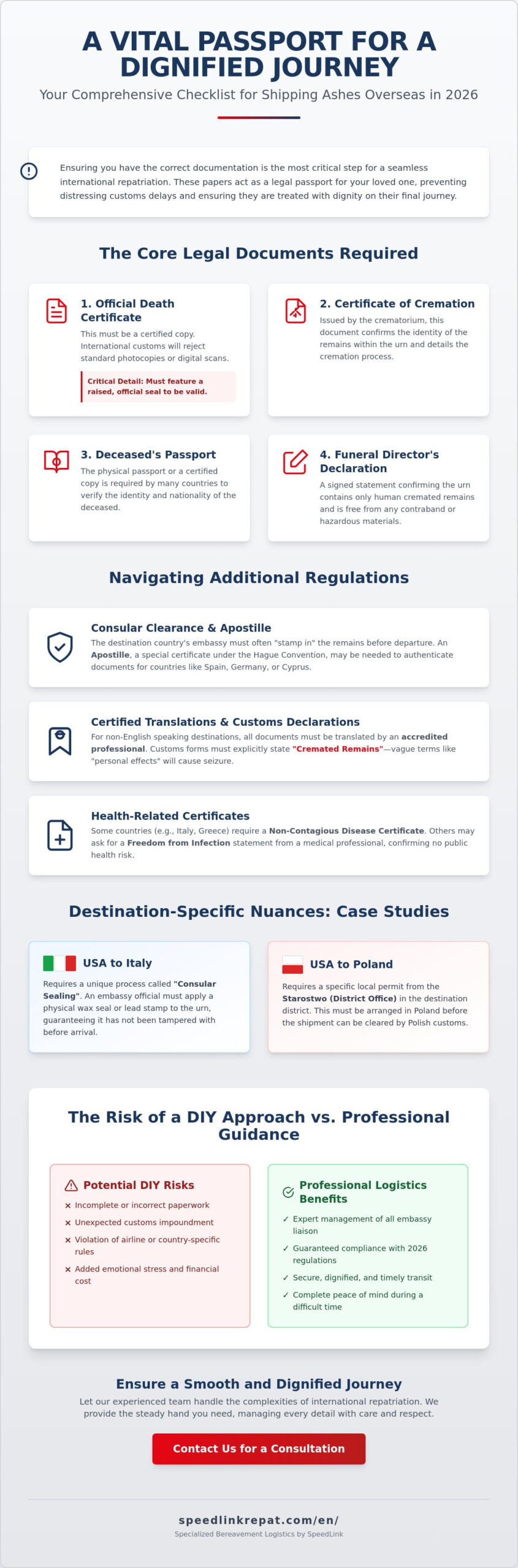
First, you must obtain a certified copy of the Death Certificate. Most customs authorities require an original or a copy featuring a raised seal. A standard digital scan usually won’t suffice for international clearance. Alongside this, the Certificate of Cremation provides essential proof from the crematorium. It details the Cremation process and confirms the identity of the remains within the urn.
Many countries also demand the deceased’s physical passport or a certified copy to verify nationality. Finally, a Funeral Director’s Declaration is necessary. This signed statement is a staple amongst the documents for shipping ashes overseas, as it confirms the urn contains only cremated remains and is free from hazardous materials or contraband. We don’t recommend relying on photocopies alone when preparing these files.
The Role of the Out-of-England Certificate
If you’re shipping from the UK, you must obtain an ‘Out-of-England’ certificate from the Coroner. This document grants legal permission to remove the remains from the jurisdiction. Whilst the process is straightforward, it requires notification at least four days before the intended departure. Similar local authority permits exist for those using a USA to Ireland or European departure point to ensure a legal exit.
Non-Contagious Disease Certificates
Specific territories, such as Italy or Greece, often require a Non-Contagious Disease Certificate. This document, issued by the attending physician or a local health authority, confirms that the deceased did not suffer from a condition that poses a public health risk. If you are arranging a USA to Italy repatriation, failing to include this specific certificate can lead to significant delays at customs.
Navigating International Regulatory Requirements
Whilst the core certificates form the foundation of your paperwork, the international stage often demands additional layers of verification. Consular Clearance is a frequent requirement where the destination country’s embassy must formally “stamp in” the remains before they leave their country of origin. This process ensures that the receiving nation has pre-approved the entry, preventing a distressing impoundment at the border. We understand that this added bureaucracy can feel heavy, yet it serves as a vital safeguard for a dignified arrival.
If you’re sending remains to a non-English speaking territory, certified translations of all documents for shipping ashes overseas are typically mandatory. These aren’t simple translations; they must be performed by an accredited professional to be legally recognised by foreign customs officials. Accuracy in customs declarations is also paramount. Vague descriptions like “personal effects” can lead to packages being seized. According to the USPS guidelines for shipping remains, the contents must be clearly identified as “Cremated Remains” on the declaration form. This transparency ensures that handlers treat the package with the appropriate care and priority.
You may also need a “Freedom from Infection” statement. Whilst this sounds similar to a death certificate, it’s a distinct declaration from a medical professional confirming that the remains pose no health risk. It’s an essential requirement for many territories that maintain strict health and safety protocols for imported biological material.
Apostille and Legalisation
An Apostille is an international certification that verifies the authenticity of a document’s signature or seal under the Hague Convention. Countries such as Spain, Germany, or Cyprus often require this for bereavement paperwork. It acts as a final layer of trust, proving to foreign authorities that your UK or US documents are genuine and legally binding.
Destination-Specific Nuances
Different nations have unique protocols. For instance, a USA to Poland transfer requires specific permits from the local Starostwo office in the destination district. In other cases, such as a USA to Italy repatriation, an embassy official may need to perform a “Consular Sealing” of the urn. This involves placing a physical wax seal or lead stamp on the container to guarantee it hasn’t been tampered with. If you feel overwhelmed by these embassy requirements, you might wish to speak with a repatriation specialist who can manage these complex liaisons for you.
Checklist: Organising Your Documentation for Transit
Once you’ve gathered your papers, the way you organise them is just as vital as the information they contain. A disorganised folder can cause unnecessary stress at a security checkpoint or customs desk. We recommend a methodical approach to ensure your documents for shipping ashes overseas remain protected and accessible throughout the journey. Following this checklist will help maintain the dignity of the process and prevent logistical errors.
- Step 1: Collate originals in a waterproof folder. Use a secure, transparent folder to house all original certificates. This protects them from moisture or accidental tearing whilst allowing officials to view them without constant handling.
- Step 2: Create three sets of high-quality photocopies. You’ll need one set to remain with the urn, one for your personal records, and one for the recipient at the destination. This redundancy is a vital safety net.
- Step 3: Secure digital backups. Scan every page and upload them to a secure cloud server. If physical papers are misplaced, having instant access via a mobile device can resolve customs queries in minutes.
- Step 4: Ensure the Certificate of Cremation is accessible. Don’t bury this document deep inside the packaging. Security inspectors may need to verify the contents quickly to confirm they’re non-hazardous.
The Importance of Professional Packaging
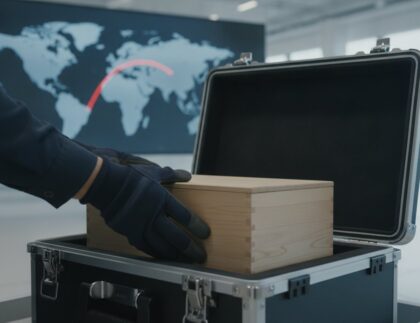
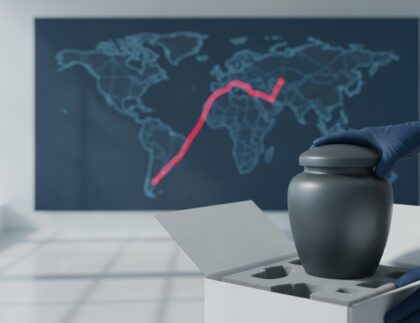
The physical safety of your documents is often overlooked. Papers kept inside the shipping crate can become crushed or damp if not properly shielded. Utilising a professional packaging service ensures that both the urn and the accompanying paperwork are housed in a manner that exceeds international transit standards. This extra layer of care acts as a safeguard against the unpredictable nature of global logistics.
Airline and Courier Specific Forms
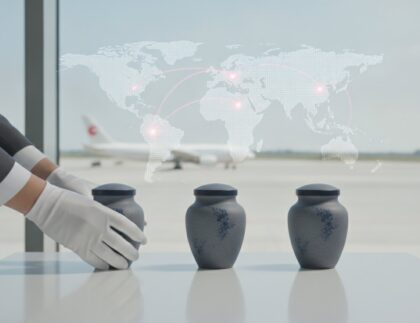
There’s a significant difference between carrying ashes as hand luggage and using a professional courier. If you’re using a courier service, you’ll need a “Shipper’s Letter of Instruction” (SLI). This document provides the courier with specific permission to act on your behalf during the customs process. It’s a formal requirement that ensures the airway bill is processed with the correct bereavement codes. If you’re unsure which forms apply to your specific route, it’s best to request a professional document review to avoid any oversight.
Professional Assistance: Why Logistics Expertise Matters
The burden of managing documents for shipping ashes overseas whilst grieving is a significant weight to carry. In 2026, global regulations have become increasingly stringent, with many European nations enforcing “State-Only” delivery rules that require remains to be sent directly to a licensed facility. Attempting a DIY approach carries the risk of your loved one’s remains being impounded due to a minor clerical error or an unrecognised translation. A dedicated cremated remains transport service removes this uncertainty, providing a steady hand to guide you through the process.
SpeedLink Repatriation acts as an ethical guardian for your loved one’s final journey. We handle the intricate embassy liaisons and secure the necessary consular stamps that many private individuals find difficult to obtain. By managing the customs clearance support and providing door-to-door tracking, we allow you to step away from the logistical stress. This transition from paperwork to the dignity of the memorial service is a vital part of the healing process. We ensure that every detail is handled with the stewardship it deserves.
Managing Complex Repatriations
Certain routes present unique challenges that require specialised knowledge. For example, coordinating an Australia to Europe transfer involves navigating distinct oceanic and continental transit laws. Similarly, our experts can seamlessly integrate the repatriation of ashes from Europe with our UK domestic delivery service. This ensures a continuous, respectful chain of custody from the moment the remains leave their origin until they reach their final resting place.
Conclusion and Next Steps
Securing the correct documents for shipping ashes overseas is the essential passport to a respectful repatriation. Whilst the checklist provided in this guide offers a clear foundation, the peace of mind that comes from professional stewardship is invaluable. We remain committed to providing a transparent and dignified service that honours the memory of your loved one. If you’re ready to begin the process with a reliable partner, you can contact SpeedLink for a bespoke repatriation plan today.
Securing Peace of Mind for Your Loved One’s Repatriation
Organising the documents for shipping ashes overseas is a profound act of care that ensures your loved one is treated with the highest level of integrity. You now understand the necessity of original certificates with raised seals and the vital role of consular stamps in navigating the 2026 regulatory landscape. By following a structured organisation checklist and opting for professional packaging, you significantly reduce the risk of distressing customs delays.
SpeedLink Repatriation brings over 20 years of specialised logistics experience to this delicate task. We provide a dedicated door-to-door courier service with real-time tracking, alongside expert handling of all consular and customs documentation. This allows you to focus on the memorial whilst we manage every technical detail with transparency and care. Our “people-first” philosophy ensures that every repatriation is treated with the stewardship it deserves.
Request a Compassionate Consultation for International Ashes Repatriation
You don’t have to carry this logistical burden alone. We are here to act as a steady hand, ensuring your loved one returns home with the dignity and respect they deserve.
Frequently Asked Questions
Do I need a death certificate to ship ashes overseas?
Yes, you absolutely need a certified copy of the death certificate. It’s the primary document required by customs officials to verify the identity and cause of death. Most border authorities won’t accept a standard photocopy; you must provide an original or a version with a raised seal. This ensures the documents for shipping ashes overseas meet the strict legal standards required for international repatriation and prevents unnecessary delays at the border.
Can I send ashes through standard international post or DHL?
You cannot send cremated remains via standard international post or private couriers like DHL or FedEx. These carriers generally prohibit the shipment of human remains in their terms of service. In the United States, only the USPS is authorised to handle such shipments using Priority Mail Express International. For a truly secure and dignified journey, a specialised cremated remains transport service is the most reliable option to ensure the remains are handled with proper stewardship.
What is an Apostille and do I need one for my loved one’s ashes?
An Apostille is an international certification that verifies the authenticity of a document’s signature and seal under the Hague Convention. Whether you need one depends on the destination country. Territories like Spain or Cyprus frequently require an Apostille for the death and cremation certificates. It provides foreign officials with a high level of confidence that your paperwork is genuine, which is a vital step in the repatriation process.
How long does it take to get consular clearance for ashes repatriation?
The timeframe for consular clearance typically ranges from five to ten business days, though this varies significantly between embassies. Some nations require the remains to be “stamped in” by their local consulate before departure. This process involves a meticulous review of all your documents for shipping ashes overseas. We recommend starting this process as early as possible to account for specific embassy appointment availability and administrative processing times.
What happens if my documents are not in the destination country’s official language?
If your paperwork isn’t in the official language of the destination country, you’ll need to provide certified translations. Customs officers must be able to read and verify every detail of the death and cremation certificates. These translations must be performed by an accredited professional translator who can provide a certificate of accuracy. This ensures that the legal narrative of your loved one’s journey remains transparent and respected by foreign authorities.

Article by
David McMillen
I started my career in logistics over 30 years ago which has spanned 2 continents and several different types of courier and logistics operations. I lost my dear Mum back in 2016 and it was in the aftermath of her passing that SpeedLink Repatriation was born. We have endeavoured to bring the same care and attention to all of our clients as my mum received and to date we have helped repatriate hundreds of individuals across the globe.
Disclaimer
International requirements for cremated remains vary by origin, destination, carrier and method of transport and may change without notice.
Content is provided as general guidance and should not be treated as legal advice.
Where necessary, current requirements should be confirmed with the relevant government authority, customs authority, embassy, consulate, postal operator, airline or carrier.
SpeedLink can advise on the requirements applicable to a specific shipment.