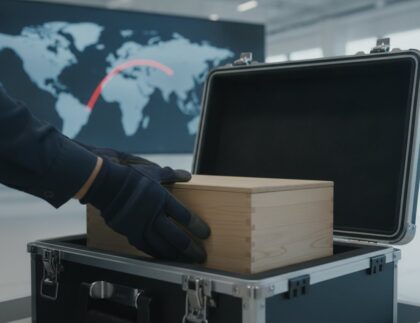
Could you imagine the distress of arriving at a departure gate only to discover that a loved one’s urn cannot pass through security because of its material? When you are responsible for shipping cremated remains by air, the logistical weight often feels as heavy as the emotional burden. We understand that the fear of a container being mishandled or delayed by customs is a source of profound anxiety during an already difficult period. You deserve the absolute certainty that this final journey will be conducted with the utmost dignity and care.
This guide offers a steady hand through the complex landscape of international regulations and airline policies for 2026. We provide a clear roadmap of the essential documentation required for customs clearance and explain the latest mandatory packaging standards, including the 2025 USPS requirements for international transit. You will gain the confidence to choose between personal hand-carry and professional courier services, ensuring your loved one reaches their destination securely and with the respect they deserve.
Key Takeaways
- Understand the global standards set by IATA and how they define the choice between passenger hand-carry and professional air freight.
- Identify the core documentation, including the Death Certificate and Cremation Certificate, necessary for almost all international journeys.
- Learn how to select x-ray-transparent materials for the inner container when shipping cremated remains by air to ensure a seamless security process.
- Discover the benefits of specialised bereavement logistics and real-time tracking that only a professional courier service can provide.
What Does Shipping Cremated Remains by Air Involve?
Shipping cremated remains by air involves more than just booking a flight. It is a specialised logistical operation that requires a balance between airline security, IATA safety standards, and international consular law. In practice, this transport usually falls into two categories: passenger hand-carry or professional air freight. The International Air Transport Association (IATA) provides the global framework for these services, ensuring that remains are handled with safety and consistency across different jurisdictions. Whilst technical compliance is essential, the emotional priority is often the chain of custody. This ensures that your loved one is never left unattended or lost in a standard sorting facility. Every airline maintains its own set of cargo rules; therefore, what works for one carrier might not be acceptable for another.
Hand-Carry vs. Air Freight: Which is Right for You?
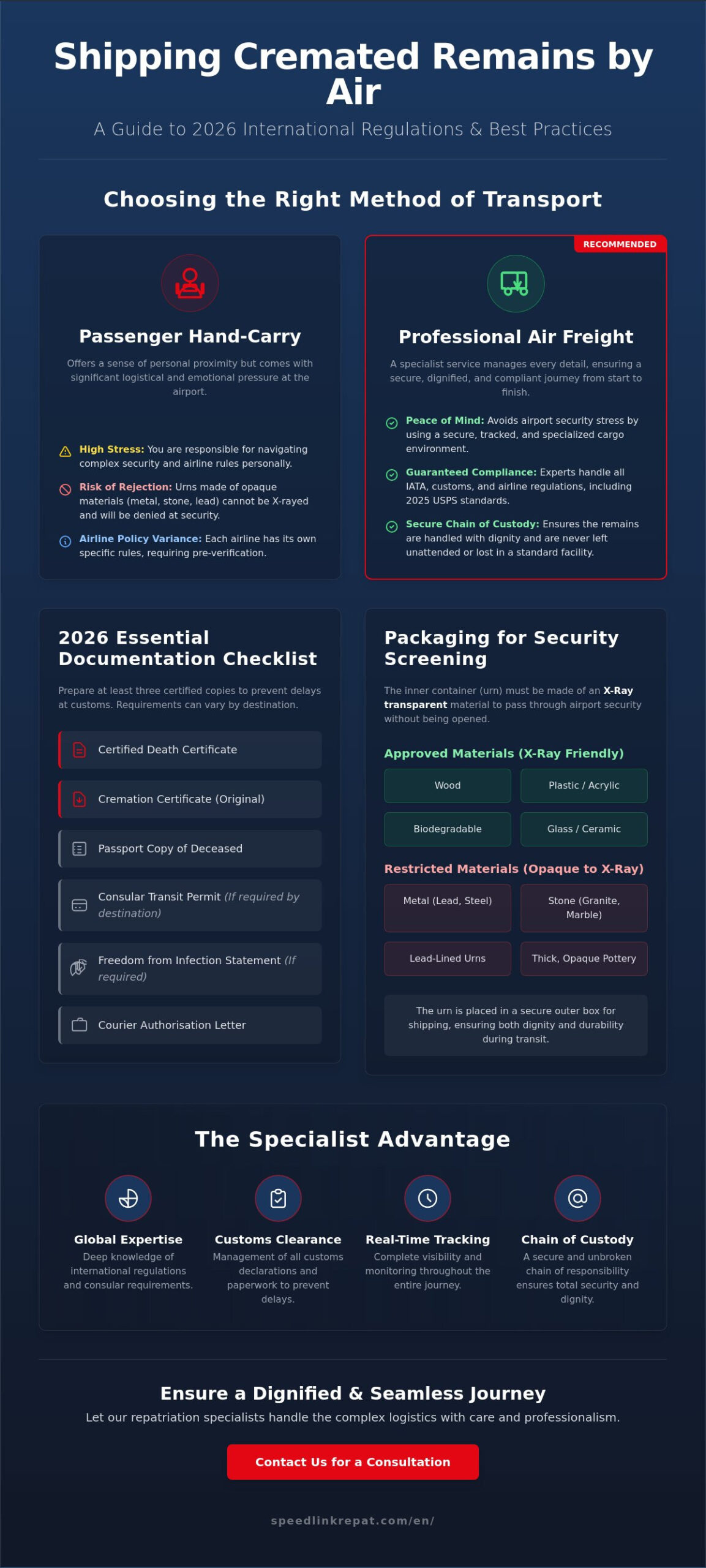
Hand-carrying an urn offers a sense of personal proximity, but it comes with significant pressure. You must navigate security checkpoints where x-ray machines and strict container rules apply. If an urn is made of an opaque material like lead or heavy stone, security officers cannot clear it. Professional air freight removes this burden. By using a specialist courier, you avoid the stress of airport security whilst benefiting from a secure, tracked environment. Standard parcel services are rarely equipped to handle the legal and ethical complexities of international transit, especially since 2025 regulations have tightened the requirements for postal remains.
The Role of Specialist Repatriation Services
Specialist providers manage every detail of the journey, from initial collection to final delivery. They act as a steady hand, coordinating with airlines and customs officials to ensure all regulations are met. Choosing a comprehensive international ashes repatriation service provides a seamless solution. This professional oversight guarantees that the logistics are handled with technical mastery, allowing you to focus on your family’s needs rather than complex paperwork. Shipping cremated remains by air becomes a manageable process when you have an expert guiding the chain of custody from start to finish.
Essential Documentation for International Air Transport
Securing the correct paperwork is the most critical step in ensuring your loved one’s remains are not delayed or held at a border. Whilst the emotional weight of this task is significant, a methodical approach to documentation provides the transparency required by global authorities. At a minimum, every international journey requires a certified copy of the Death Certificate and the original Cremation Certificate. These documents verify the identity of the deceased and confirm that the remains have been processed according to legal standards. You should also ensure the container meets the requirements for TSA screening for cremated remains, as security officers must be able to verify the contents via x-ray without opening the urn.
In certain jurisdictions, authorities require a “Freedom from Infection” certificate. Although cremated remains are biologically sterile, this document provides a formal statement that the remains pose no health risk, satisfying specific public health codes. Furthermore, if you are crossing national borders, you may need a “Consular Out of State” permit or a similar transit document issued by the destination country’s embassy. This is particularly common when shipping cremated remains by air to countries with strict funerary laws, where the consulate acts as an ethical guardian for the transit process. Families who also need to share remains amongst relatives in different countries should consider using a professional ashes splitting service to ensure each portion is accurately prepared and legally documented for separate international journeys.
Customs Clearance and Consular Requirements
Customs declarations vary significantly depending on the arrival port. For instance, routes from the USA to Ireland often require straightforward documentation, whereas the USA to Italy corridor involves complex consular seals and specific translations. If you feel overwhelmed by these local nuances, seeking funeral home support for ashes customs clearance can provide much-needed clarity. For a thorough understanding of the full scope of bereavement logistics for ashes, including the mandatory documentation and packaging standards required in 2026, our comprehensive reference guide covers every aspect of the process in detail. If you’re unsure which permits apply to your specific destination, you can speak with our repatriation specialists for guidance tailored to your situation.
The 2026 Checklist for Overseas Shipping
To avoid complications during transit, we recommend preparing at least three certified copies of the following documents:
- Certified Death Certificate: The primary legal record of the passing.
- Cremation Certificate: Proof from the crematorium that the remains are ashes.
- Passport Copy: A photocopy of the deceased’s passport to verify nationality.
- Consular Transit Permit: Required by specific embassies for entry.
- Freedom from Infection Statement: A formal declaration of health safety.
- Courier Authorisation: A letter permitting a professional service to act on your behalf.
Packaging Requirements: Ensuring Security and Dignity
Correct packaging is not merely a logistical necessity; it is a fundamental act of respect for the deceased. When shipping cremated remains by air, the inner container must be constructed from x-ray-transparent materials such as wood, high-density plastic, or reinforced card. This choice allows security personnel to verify the contents without compromising the seal of the urn. According to the TSA guidelines for cremated remains, if an officer cannot clearly see the contents through the x-ray scan, the container will be denied entry. You should avoid lead-lined urns or heavy metal vessels, as these are opaque to security scanners and will inevitably cause delays.
To maintain dignity throughout the journey, we recommend a “double-bagging” protocol. Placing the ashes in a sealed, durable internal bag before housing them in the urn provides a vital secondary layer of protection. This is especially important during air transit, where rapid changes in cabin pressure can affect the integrity of standard seals. Every package should also be clearly marked with professional labelling stating, “Cremated Remains – Handle with Great Care.” This ensures that every handler in the chain of custody is aware of the sensitive nature of the shipment. Where multiple family members in different locations each require a portion of the remains, a dedicated ashes splitting service can prepare each individually packaged portion to meet these same stringent aviation security standards.
IATA Standards for Air Freight Packaging
For those opting for air freight rather than hand-carry, the requirements for a robust cremated remains shipping container are even more stringent. IATA standards dictate that the outer packaging must be strong enough to withstand the rigours of international cargo handling. Additionally, the airway bill must include a “non-perishable” declaration. This technical detail ensures that the shipment is categorised correctly, avoiding unnecessary inspections that are usually reserved for biological materials or foodstuffs.
Avoiding the “Security Refusal” at the Airport
It’s a common misconception that security officers will open a container if the x-ray is unclear. In reality, TSA and other global security agencies are strictly prohibited from opening an urn, even at a passenger’s request. If the container cannot be successfully screened, it will simply be refused passage. Professional packaging services mitigate this risk entirely by ensuring every material used is compliant with current aviation security technology. If you need assistance choosing a compliant vessel or require expert help, you can enquire about our professional packaging service to ensure your loved one’s journey remains uninterrupted.
Choosing Professional Air Courier Services for Peace of Mind
Whilst hand-carrying remains is a personal choice, it often introduces unnecessary stress during a period of mourning. Standard postal services, despite their best efforts, often lack the end-to-end visibility required for such a sensitive journey. Shipping cremated remains by air through a specialist courier ensures a dedicated chain of custody that standard parcel delivery simply cannot match. We prioritise bereavement logistics, providing real-time tracking and professional oversight from the moment of collection until the final door-to-door delivery. For families managing USA to UK ashes transport, SpeedLink Repatriation navigates the specific customs requirements and airline regulations that often cause delays for unaccompanied shipments.
The transition from air transport to the final destination is handled with the same level of care as the flight itself. Once the aircraft lands, our specialists manage the customs clearance process, ensuring that the remains are not held in a warehouse longer than necessary. This seamless hand-off between air and ground logistics is what provides true security. By maintaining a single point of contact with SpeedLink Repatriation, you avoid the confusion of dealing with multiple agencies, airlines, and local couriers who may not understand the sensitive nature of their cargo.
The SpeedLink Repatriation Advantage: Empathy Meets Logistics
Our team approaches every repatriation with a people-first philosophy. We maintain professional composure whilst acknowledging the profound emotional weight of the task. This expertise isn’t limited by geography. Our global reach covers specialised routes such as Australia to Europe, where SpeedLink Repatriation ensures that local regulations are met with precision and care. We act as your ethical guardian, taking the logistical burden off your shoulders so you don’t have to worry about the technicalities of international transit.
Next Steps: How to Organise Your Shipment
Your first point of contact shouldn’t be a source of confusion. Whilst you can contact airlines directly, they typically view remains as standard cargo rather than a loved one. A specialist repatriation service understands the difference. We recommend starting with a professional consultation to review your documentation and packaging needs. This proactive step ensures that every detail is handled correctly before the journey begins. If you’re ready to arrange transit, you can request a consultation with SpeedLink Repatriation to begin shipping cremated remains by air with confidence and dignity.
Moving Forward with Confidence and Dignity
We’ve explored the technical precision required for scannable packaging and the rigorous documentation needed to satisfy international border authorities. Successfully shipping cremated remains by air depends on this meticulous preparation, ensuring that your loved one’s journey remains uninterrupted by security or customs delays. By understanding these requirements, you regain a sense of control and security during a period that often feels overwhelming. You now have a roadmap to navigate these global regulations with the respect and care they require.
SpeedLink Repatriation provides the technical mastery and emotional intelligence needed for such a sensitive task. Established in 2003, our team offers deep expertise in complex USA, UK, and global customs clearance, acting as an ethical guardian for the entire process. We take pride in our dignified door-to-door bereavement logistics, ensuring a steady hand guides every step of the transit. You don’t have to manage these logistical burdens alone whilst navigating your grief.
Enquire about our dignified international ashes courier services to learn how SpeedLink Repatriation can support your family. We are here to provide the clarity and professional composure you need to bring your loved one home safely.
Frequently Asked Questions
Can I ship cremated remains by air internationally in 2026?
Yes, you can ship cremated remains by air internationally in 2026, provided you adhere to the specific regulations of both the departure and destination countries. Each nation maintains its own consular requirements and health codes that must be met before transit begins. Whilst the process is complex, using a specialist courier ensures all international laws are followed, preventing the remains from being delayed or confiscated at a border.
Does the airline need to know I am transporting ashes?
Yes, you must inform the airline in advance if you plan on shipping cremated remains by air, whether you are hand-carrying them or using air freight. Most carriers require at least seven days’ notice for cargo shipments to ensure they can accommodate the request under IATA safety standards. Failure to declare the remains can lead to boarding denials or significant security delays at the departure gate.
What happens if security cannot see through the urn on the x-ray?
If security officers cannot see through the urn during an x-ray scan, the container will be denied passage through the security checkpoint. TSA and other global security agents are strictly prohibited from opening a cremation urn, even if you give them verbal permission to do so. To avoid this distressing situation, you should always use a temporary or permanent container made of wood, plastic, or card for the flight.
How much does it cost to ship ashes by air internationally?
The cost of transporting ashes internationally varies depending on the destination, the weight of the shipment, and the level of courier service required. Factors such as consular fees, transit permits, and professional packaging also influence the final expense. Because every repatriation route involves unique logistical challenges, it’s best to request a bespoke quote that covers all bereavement logistics and door-to-door handling requirements.
Are there specific airlines that do not allow cremated remains?
Some airlines do have restrictive policies, whilst others only allow remains to be transported as air cargo rather than hand-carry items. Policies change frequently based on carrier-specific safety protocols and international agreements. It is essential to check the current terms and conditions of your chosen airline well before your travel date or consult a repatriation specialist who manages these carrier relationships on a daily basis.

Article by
David McMillen
I started my career in logistics over 30 years ago which has spanned 2 continents and several different types of courier and logistics operations. I lost my dear Mum back in 2016 and it was in the aftermath of her passing that SpeedLink Repatriation was born. We have endeavoured to bring the same care and attention to all of our clients as my mum received and to date we have helped repatriate hundreds of individuals across the globe.
Disclaimer
International requirements for cremated remains vary by origin, destination, carrier and method of transport and may change without notice.
Content is provided as general guidance and should not be treated as legal advice.
Where necessary, current requirements should be confirmed with the relevant government authority, customs authority, embassy, consulate, postal operator, airline or carrier.
SpeedLink can advise on the requirements applicable to a specific shipment.