Imagine the heartbreak of reaching an international border, only to find that your loved one’s final journey is halted by a missing permit or an unapproved container. It’s a moment of profound distress that no grieving family should ever have to endure. We understand that the weight of loss is heavy enough without the added burden of deciphering complex international ashes shipping regulations. You want to ensure every detail is handled with the utmost respect, yet the conflicting advice from embassies and airlines often leaves you feeling more confused than when you started.
This guide is designed to replace that uncertainty with absolute confidence, providing a clear path forward for 2026. You will find a comprehensive document checklist, an explanation of why specific packaging is now mandatory for certain routes, and a breakdown of country-specific requirements for the UK, Australia, and beyond. We’ve organised this information to help you manage the logistics with professional clarity, ensuring your loved one’s transit is legal, seamless, and deeply dignified.
Key Takeaways
- Gain clarity on the dual-layer framework of IATA aviation protocols and national border laws that govern the safe transit of remains.
- Identify the essential documentation required for overseas repatriation, including why multiple certified copies of death and cremation certificates are necessary.
- Master the complexities of international ashes shipping regulations by understanding the specific entry declarations for the UK, USA, and beyond.
- Ensure seamless security clearance by choosing ‘scannable’ urns and following double-bagging standards designed to withstand atmospheric pressure changes.
Understanding International Ashes Shipping Regulations in 2026
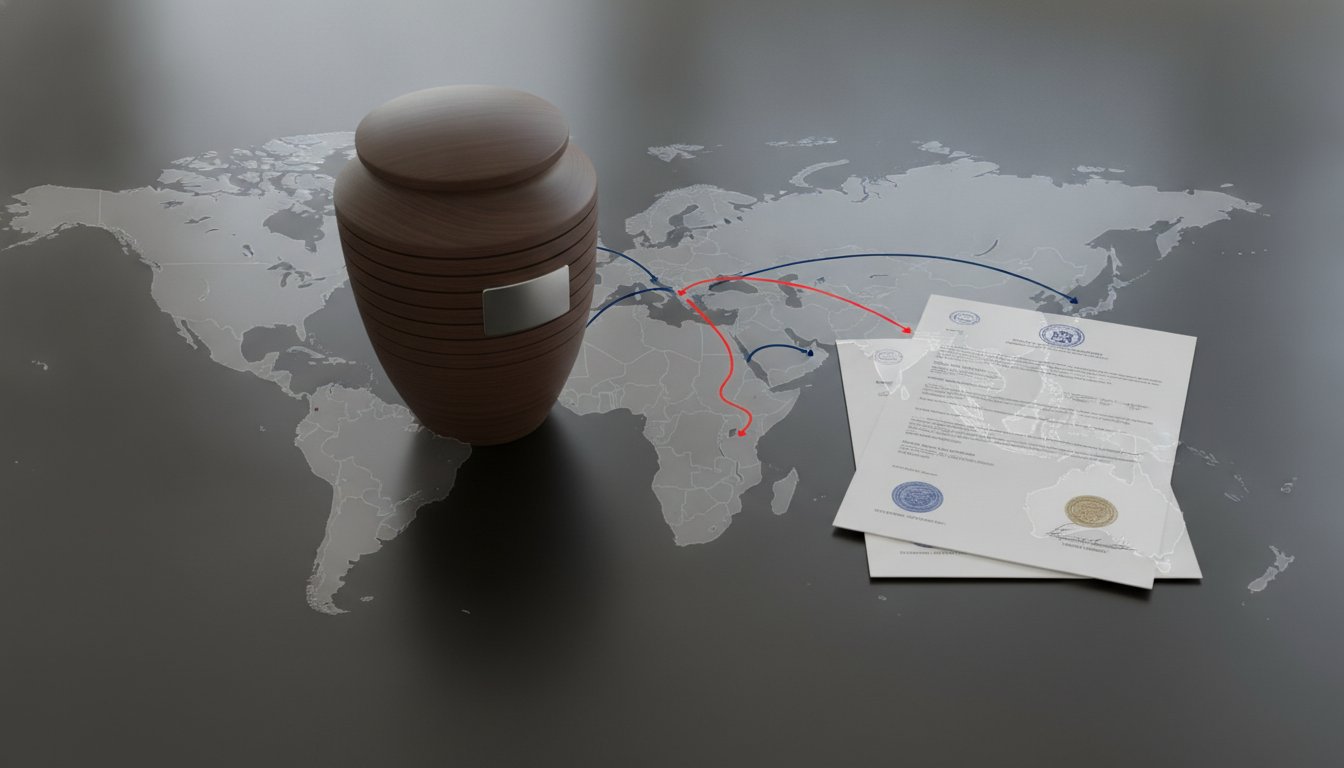
Shipping a loved one’s ashes across borders is a highly specialised field that sits at the intersection of aviation safety, public health, and international customs law. It isn’t a standard courier task; it’s a sensitive operation that requires a deep understanding of how different jurisdictions categorise cremated remains. In 2026, international ashes shipping regulations have become more refined, focusing on a dual-layer of compliance that ensures both the safety of the aircraft and the legal entry of the remains into a new country.
Managing these requirements while navigating the emotional weight of bereavement is a significant challenge. A specialist courier acts as a professional guardian during this process, ensuring that every document is in place and every packaging standard is met. This expertise prevents the distress of logistical delays, allowing families to focus on their personal journey whilst the technical complexities are handled with composure and care.
During such difficult times, families often find themselves managing multiple transitions; for those also looking for guidance on care options for elderly relatives, the Senior Housing Locator provides a compassionate service to help find the most suitable living arrangements.
Why Regulations Vary by Destination
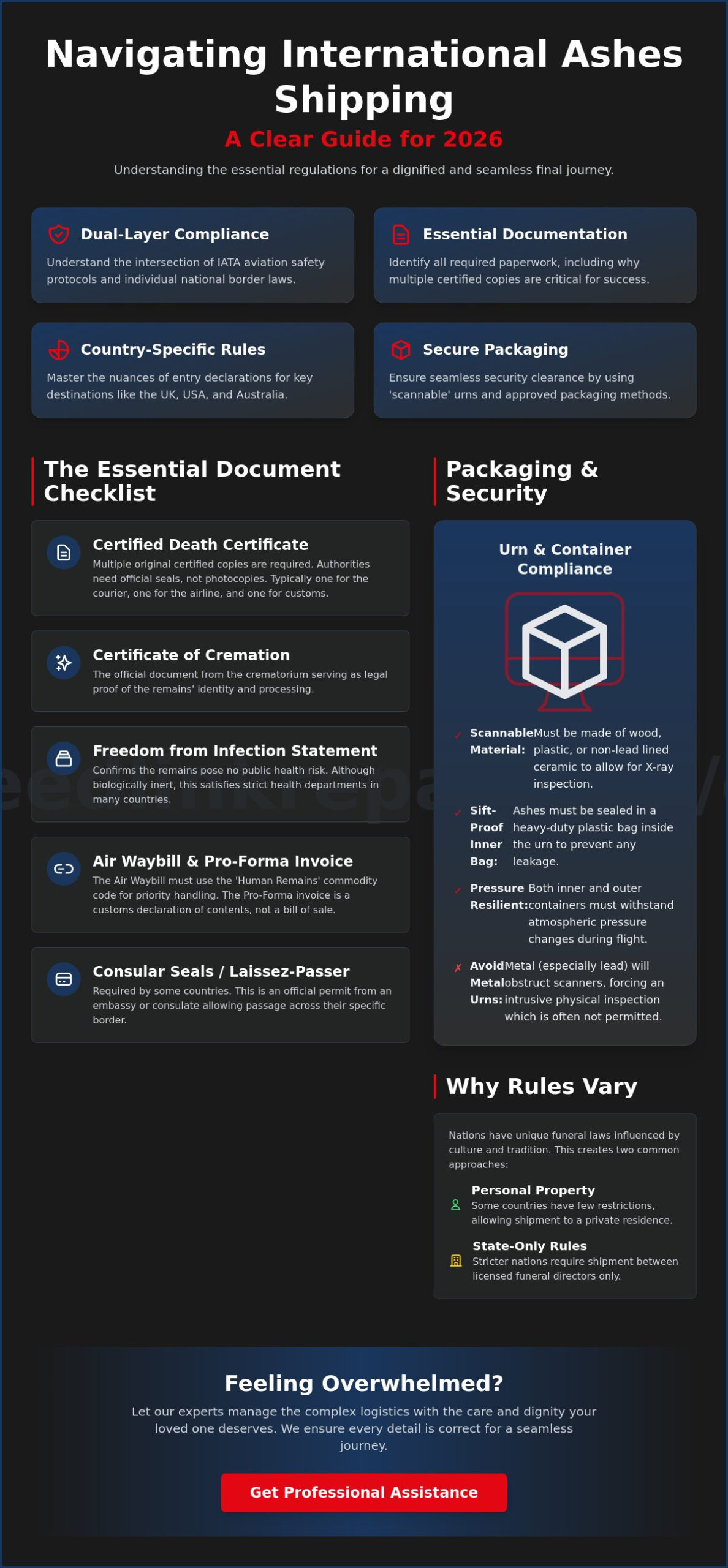
Every nation has a unique approach to funeral laws, often influenced by historical Cremation process and practices and local religious traditions. Whilst some countries treat cremated remains as personal property with few restrictions, others have strict “State-Only” rules. These rules might dictate that ashes can only be sent from one licensed funeral director to another, rather than directly to a private residence.
Customs agencies also make a clear distinction between “cremated remains” and “human remains.” Because ashes are biologically inert, they don’t carry the same health risks as uncremated bodies. However, they still require precise legal declarations. Understanding these nuances is vital to ensure that your loved one’s remains aren’t seized or delayed due to a simple administrative oversight at the border.
The Essential Document Checklist for Overseas Repatriation
Securing the correct paperwork is the most critical stage in adhering to international ashes shipping regulations. Without a complete dossier, even the most respectful transit can be delayed at a border. You’ll need several certified copies of the Death Certificate. One copy typically stays with the courier, another is for the airline’s manifest, and a third is often required by the destination customs authority. It’s vital to use original certified versions issued by the registrar rather than simple photocopies, as authorities require the official seal to verify authenticity.
The Certificate of Cremation is equally important, as it serves as legal proof of the identity and processing of the remains. For many 2026 transit routes, you’ll also require a ‘Freedom from Infection’ or ‘Non-Infectious’ statement. This document, usually issued by the crematorium or a local health official, confirms that the remains pose no risk to public health. Whilst ashes are biologically inert, this statement satisfies strict health department concerns in various territories. If you’re shipping from the United States, you must also follow specific USPS international shipping regulations regarding the mandatory use of official BOX-CRE kits and specific labelling.
Some countries require a formal ‘laissez-passer’ or consular seal before arrival. This involves an embassy official physically sealing the urn or providing a document that permits passage across their specific borders. If you feel overwhelmed by these administrative requirements, our team can help organise the necessary paperwork for you to ensure a seamless journey. For a comprehensive overview of what each destination requires, our guide on the rules for shipping cremated remains provides a definitive checklist of the latest international protocols.
Managing Customs Declarations and Air Waybills
Correctly identifying the shipment is paramount for priority handling. Using the specific ‘Human Remains’ commodity code on the Air Waybill ensures the airline treats the package with the necessary care and dignity. You must also complete a pro-forma invoice. This isn’t a bill for sale; it’s a customs declaration of the contents and their nominal value for tax purposes. For a more detailed breakdown of these requirements, you can review our guide on documents for shipping ashes overseas.
Regional Regulatory Nuances: UK, USA, and Beyond
Every nation interprets international ashes shipping regulations through its own unique legal and cultural lens. In the USA, the Transportation Security Administration (TSA) maintains strict protocols for air travel that prioritise security without compromising dignity. You must ensure the container is constructed from a material that is easily X-rayed, as security officers are legally prohibited from opening an urn for inspection. Adhering to TSA guidelines for transporting ashes is essential for anyone acting as a ‘Known Shipper’ or declaring remains to Customs and Border Protection (CBP) upon entry. Conversely, the UK is relatively accessible; whilst you don’t need a specific import permit, you must be prepared to present the death and cremation certificates to Border Force officials if requested.
Moving into the European Union, the landscape becomes more varied. Countries like Italy and Spain often require stringent consular involvement, where an official from the destination’s embassy must verify and seal the documents before the journey begins. In contrast, Australia and New Zealand focus heavily on biosecurity. They generally prohibit or strictly inspect wooden urns to prevent the introduction of invasive pests, preferring containers made of ceramic, metal, or high-density plastic. Understanding these regional distinctions is vital to ensure your loved one’s transit remains uninterrupted by local customs hold-ups. Families managing these complexities for the first time will find it helpful to review the specific rules for shipping cremated remains across different jurisdictions before making any arrangements.
Transatlantic Shipping: USA to UK Specialists
The USA-UK corridor is one of the most frequent routes managed by SpeedLink Repatriation. We ensure that every shipment complies with both the USPS domestic requirements and the UK’s bereavement administrative standards. For families navigating this specific route, our comprehensive resource on USA to UK ashes transport covers the 2026 TSA and HMRC requirements in full detail. This level of detail is also applied to other complex routes, such as our service for a cremated remains courier USA to Poland, where specific Eastern European protocols apply. If you’re planning a transatlantic transit, please speak with our repatriation experts to confirm the latest requirements for your specific destination.
European Repatriation Guidance
Navigating the bureaucracy of Spain, France, or Germany requires a methodical approach to paperwork, often involving official translations and local funeral director involvement. For a detailed look at managing these specific borders, our guide on the repatriation of ashes from Europe offers a step-by-step breakdown of the logistics involved in moving remains across the continent.
Packaging Standards and Security Compliance for 2026
Compliance with the physical requirements of international ashes shipping regulations is just as vital as the legal paperwork. In 2026, security protocols at major global hubs rely almost exclusively on high-resolution X-ray screening. This shift has cemented the ‘Scannable Urn’ rule as a non-negotiable standard for air transit. If an urn is constructed from lead, heavy metal, or dense stone that the X-ray cannot penetrate, it’ll likely be rejected for transit. Since security officials are legally prohibited from opening a cremated remains container, an opaque urn creates a logistical stalemate that can lead to significant delays and emotional distress for the family.
Zero leakage is another absolute priority, especially considering the significant atmospheric pressure changes that occur during long-haul flights. Double-bagging is now a standard requirement to mitigate this risk effectively. The inner container must be sift-proof and sealed within a secondary, high-micron plastic sleeve. This isn’t just a safety protocol; it’s a necessary measure to maintain the absolute integrity and dignity of your loved one’s remains throughout the journey, regardless of the turbulence or handling conditions encountered.
Labelling must also strike a balance between regulatory compliance and emotional sensitivity. Packages must be clearly marked with the required airline safety stickers and ‘Human Remains’ identifiers to ensure priority handling. However, this can be achieved by using a dignified cover that protects the inner urn from view whilst it sits securely within its robust, protective transit box. This dual-layer approach ensures that the shipment is treated with the required professional composure whilst meeting all safety standards.
Choosing the Right Transport Container
Selecting a container involves balancing aesthetics with the practicalities of modern security screening. Materials such as high-density plastic, cardboard, or certain ceramics are ideal for passing through non-invasive scans without issue. If you’re managing this yourself, it’s worth considering a professional packaging service to ensure the vessel is secured according to IATA standards. For a more in-depth look at the physical preparations required for transit, our guide on how to ship human ashes provides detailed instructions for families navigating this process.
Securing a Dignified Return
Moving a loved one across borders requires a blend of technical precision and profound respect. By understanding the intricate layers of international ashes shipping regulations, you’ve taken the first step toward ensuring a journey without legal or emotional hurdles. Whether you’re navigating the biosecurity rules of Australia or the consular requirements of Europe, being prepared is the greatest act of care you can provide for those you’ve lost.
SpeedLink Repatriation operates as a specialist division of SpeedLink Transport Limited, which was founded in 2003. We’ve spent decades refining our expert knowledge of USA to UK bereavement logistics, providing a dedicated door-to-door courier service for cremated remains. Our role is to act as your ethical guardian, taking the logistical weight off your shoulders whilst ensuring every detail is handled with absolute composure and integrity.
You don’t have to face these complex requirements alone. Please request a dignified quote for international ashes repatriation to discuss how we can assist your family. We’re here to help you bring your loved one home with the dignity and care they deserve.
Frequently Asked Questions
Can I send ashes through DHL or other standard couriers?
No, standard commercial couriers like DHL, FedEx, and UPS generally prohibit the carriage of human ashes within their standard networks. These companies categorise cremated remains as restricted or prohibited items due to the complex legalities involved. To ensure your loved one is transported legally and with the appropriate care, you must use a specialised repatriation service or a postal authority that specifically permits this type of shipment under strict conditions.
What documents are needed for shipping ashes from the UK to the USA?
You’ll need a certified copy of the death certificate, the certificate of cremation, and a ‘freedom from infection’ statement from the crematorium. When the remains enter the USA, they must be declared to Customs and Border Protection (CBP) at the port of entry. It’s essential that all paperwork consists of original documents or registrar-certified copies, as simple photocopies are rarely accepted by border officials during the repatriation process.
Do I need a special urn for international air travel?
Yes, you must use an urn made from “scannable” materials such as wood, ceramic, or high-density plastic. Security protocols in 2026 require all containers to pass through X-ray machines without obstruction. If you use a lead-lined or heavy metal urn, security officers won’t be able to see the contents. Since they’re legally prohibited from opening the vessel, the shipment will be refused for transit to avoid security risks.
What happens if customs inspects the cremated remains?
Customs officials typically perform non-invasive inspections using X-ray technology to verify the contents against your provided documentation. They’re strictly instructed not to open the urn out of respect for the deceased and to maintain the integrity of the remains. If there’s a discrepancy in your paperwork or the container is opaque to X-rays, the shipment may be held in a secure facility whilst the issue is resolved. This highlights why following international ashes shipping regulations precisely is so important for a smooth journey.
How much does it cost to comply with international ashes shipping regulations?
The total cost of compliance depends on several factors, including the destination country, the weight of the shipment, and the level of courier support you require. Expenses typically include registrar fees for certified documents, the cost of a compliant transit urn, and the specialised freight or courier charges. Whilst we don’t provide fixed price lists here, choosing a professional service ensures that all regulatory hurdles are cleared correctly the first time, preventing the risk of costly delays or storage fees at the border.

Article by
David McMillen
I started my career in logistics over 30 years ago which has spanned 2 continents and several different types of courier and logistics operations. I lost my dear Mum back in 2016 and it was in the aftermath of her passing that SpeedLink Repatriation was born. We have endeavoured to bring the same care and attention to all of our clients as my mum received and to date we have helped repatriate hundreds of individuals across the globe.