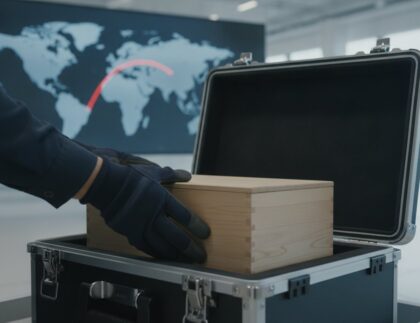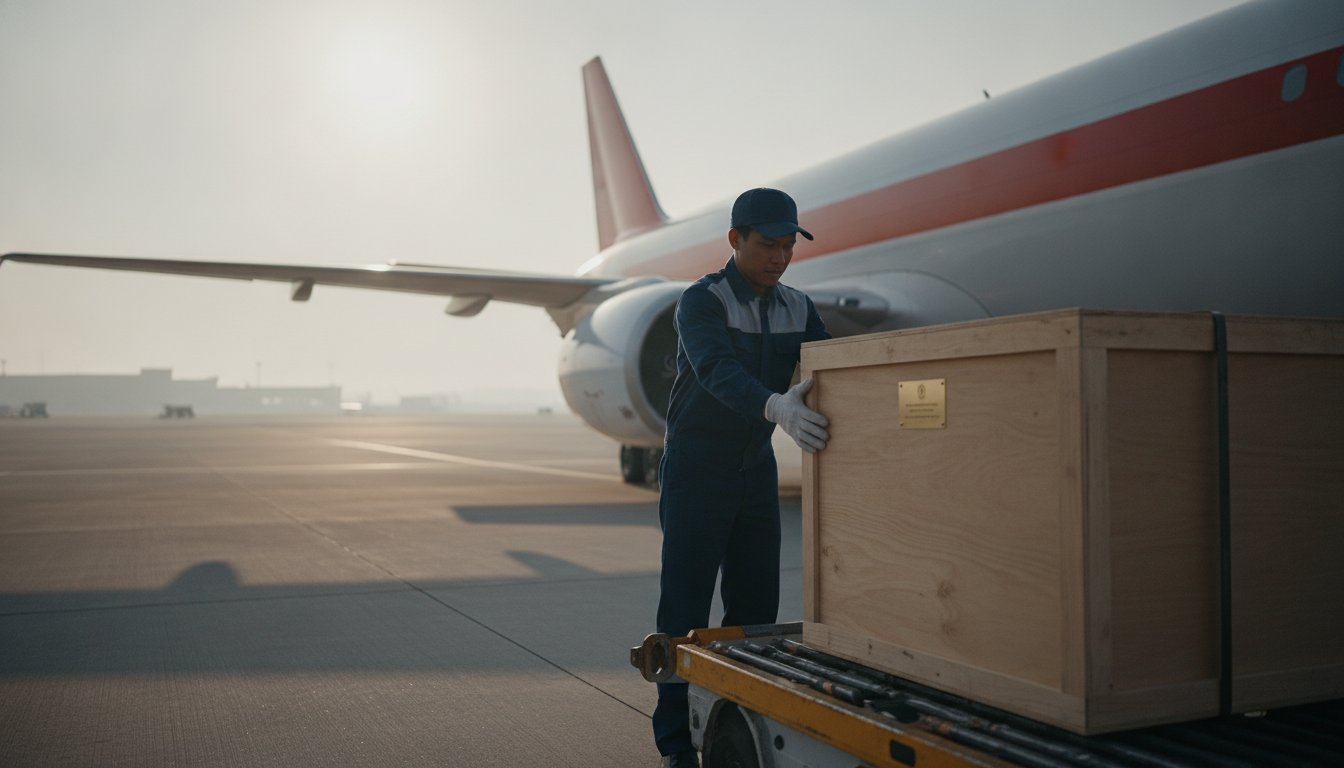
What if the final journey of a loved one was halted at an international border simply because of a missing document or an unapproved shipping container? It is a distressing thought, yet many families find themselves lost in a maze of conflicting airline policies and the strict rules for shipping cremated remains. We understand that you want to honour a final wish with absolute certainty, but the technicalities often feel cold and overwhelming during such a sensitive time.
You shouldn’t have to face this logistical burden alone. This 2026 guide is designed to help you navigate these legalities, providing a clear path through the complex requirements of transporting ashes across borders with dignity and precision. We fulfil this promise by breaking down the latest international protocols into manageable steps, ensuring you remain in control of the process while we provide the necessary expert oversight.
Key Takeaways
- Identify the specific legal status of ashes as restricted cargo to ensure compliance with both domestic and international transport regulations.
- Prepare the necessary “Big Three” documents and understand when a “Non-Contagious Disease” statement is required for seamless customs clearance.
- Learn the non-negotiable rules for shipping cremated remains, including the industry-standard “sift-proof” packaging and the essential double-container method.
- Evaluate the benefits of a specialist courier’s chain of custody compared to standard postal routes to minimise the risk of mishandling during transit.
- Gain a clear roadmap for navigating the distinct requirements of domestic post versus international air transit to ensure a dignified journey for your loved one.
Understanding the Legal Framework for Transporting Ashes in 2026
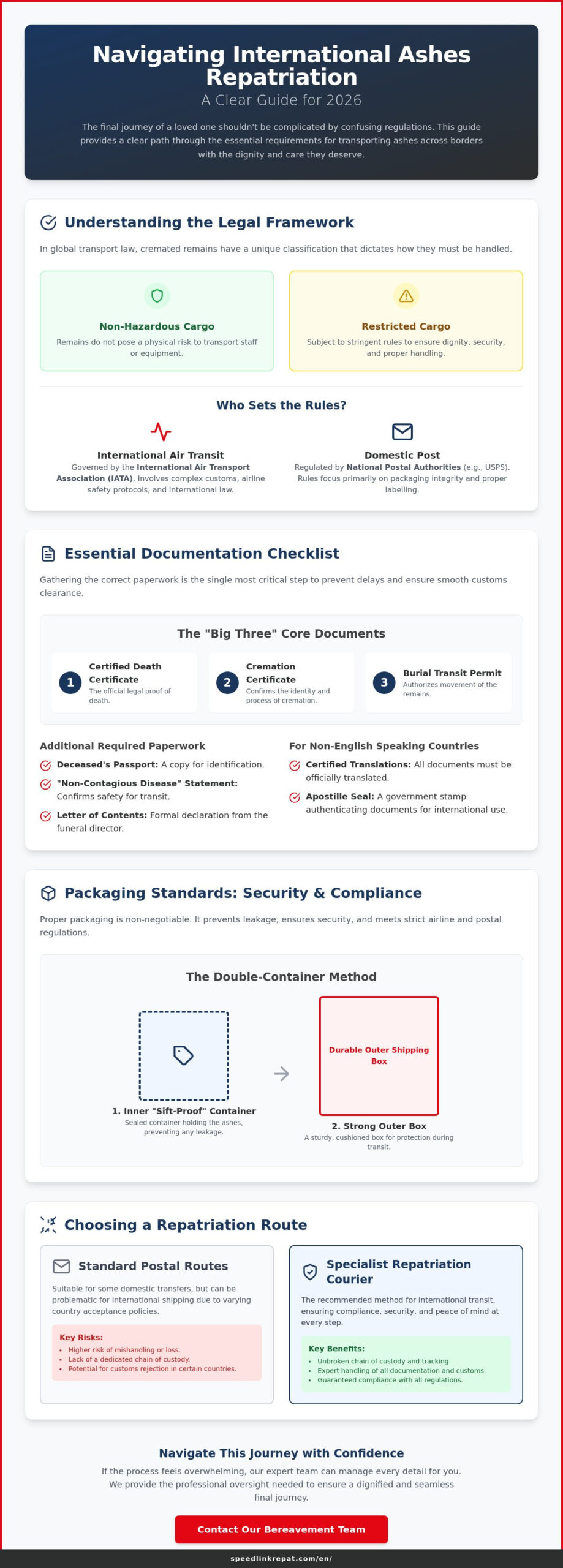
Understanding the legal status of a loved one’s ashes is the first step in ensuring their safe arrival. In the eyes of global transport law, these remains are classified as ‘non-hazardous’ yet ‘restricted’ cargo. This means that while they don’t pose a physical risk to transit staff, the rules for shipping cremated remains are far more stringent than those for standard parcels. These regulations exist to uphold the dignity of the deceased, ensuring that remains are handled with the highest level of care and accountability throughout their journey.
The International Air Transport Association (IATA) sets the global benchmark for air transit, whilst national postal authorities govern domestic movements. You’ll find that domestic postal rules often focus on packaging integrity, whereas international air transit involves a complex interplay of customs declarations and airline-specific safety protocols. This distinction is vital; a method that works for a local delivery may not meet the rigorous standards required for an overseas flight.
Why Regulations Vary by Country
Legal definitions change as soon as a border is crossed. Some nations categorise ashes as ‘merchandise’ or ‘personal effects’, which simplifies the customs process. Others strictly define them as ‘human remains’, requiring the same level of oversight as a full body repatriation. Cultural and religious laws also play a significant role. For instance, certain jurisdictions have specific requirements regarding the Cremation process itself or the type of vessel used, which can dictate whether remains are permitted entry at all.
The 2026 Regulatory Landscape
As we move through 2026, we’ve seen a shift towards digital documentation and enhanced tracking requirements across the globe. Many countries have updated their protocols to require pre-clearance via electronic customs portals before the remains even leave their country of origin. To stay fully informed on these evolving standards, you can consult our International Ashes Shipping Regulations: The Complete 2026 Reference Guide. This resource provides the granular detail needed for specific corridors, helping you avoid unexpected delays during transit.
Essential Documentation for International Ashes Shipping
Gathering the correct paperwork is often the most taxing part of the process, yet it’s the only way to ensure a smooth journey. To follow the rules for shipping cremated remains, you must first secure the ‘Big Three’ documents. These consist of a certified Death Certificate, the Cremation Certificate, and a Burial Transit Permit. Understanding the specific rules for shipping cremated remains across different borders is the best way to prevent your loved one’s journey from being interrupted by administrative errors.
Beyond these basics, customs clearance often requires a copy of the deceased’s valid passport. You may also need a ‘Non-Contagious Disease’ statement from a medical examiner, which confirms the remains are safe for transit. A ‘Letter of Contents’ from the crematorium or funeral director is equally vital. This letter provides a formal declaration to airline or postal staff, helping to maintain the dignity of the remains whilst they are in transit.
Customs Declarations and Consular Requirements
Correctly labelling customs forms is vital to avoid unnecessary ‘merchandise’ taxes. You must ensure the contents are clearly identified as “Cremated Human Remains” on all declaration paperwork. Some nations also require consular stamps or a “laissez-passer” from the destination country’s consulate. You can find a comprehensive list of these requirements in our guide to Documents for Shipping Ashes Overseas: The Essential 2026 Checklist.
Apostille and Translation Services
If the destination is a non-English speaking country, certified translations of all documents are usually mandatory. Certain jurisdictions also demand an Apostille seal. This is a government-issued stamp that authenticates the signatures on your legal documents for international use. Documentation must always match the physical state of the parcel; for instance, following the latest USPS packaging requirements ensures that your paperwork and your parcel are both fully compliant. If the administrative burden feels too heavy, please reach out to our bereavement team for support.
Packaging Standards: Ensuring Security and Compliance
Securing the physical remains is as much about respect as it is about regulatory adherence. The industry operates on the “Double Container” rule, which requires the ashes to be placed in a primary inner vessel, which is then sealed inside a durable outer shipping box. When you follow the rules for shipping cremated remains, you ensure that the journey is free from logistical delays or, more distressingly, physical damage. Every layer of packaging serves as a safeguard for both the remains and the peace of mind of the family.
For 2026, labelling requirements have become more explicit to assist transit staff in identifying the sensitive nature of the cargo. You must clearly mark “Cremated Remains” on all sides of the outer package, including the top and bottom. This ensures that regardless of how the parcel is oriented during sorting, its contents are handled with the necessary stewardship. If you feel unsure about meeting these technical standards, our professional packaging service can provide the specialised materials and expertise required.
Choosing the Right Inner Container
The choice of the inner urn is governed by security technology. Whilst decorative metal or lead-lined urns are beautiful for a memorial service, they’re prohibited during transit because they block X-ray scanners. Security officials must be able to verify the contents without opening the vessel. We recommend using X-ray transparent materials such as wood, high-density plastic, or biodegradable polymers. These materials allow for clear imaging whilst providing a sturdy, dignified environment for the remains.
The Outer Shipping Box and Padding
The outer container must be rigid and capable of withstanding the pressures of international air transit. It’s essential to use shock-absorbent padding, such as shaped foam or heavy-duty bubble wrap, to prevent any internal movement. The sift-proof requirement is an airtight seal that prevents any escape of dust even if the outer box is compromised. For a detailed breakdown of how to prepare these layers, see our guide on How to Ship Human Ashes: A Dignified Guide to International Transit in 2026.
Choosing a Repatriation Route: Postal vs. Specialist Courier
Deciding on the transport method is perhaps the most critical choice you’ll make in this process. Standard postal routes, such as the mandatory USPS Priority Mail Express International service in the United States, provide a regulated path but often lack the personal touch required for such a sensitive task. When you consider the rules for shipping cremated remains, the risk of impersonal handling in a busy sorting centre can be a significant source of anxiety for many families.
A specialist courier offers a dedicated ‘Chain of Custody’ that standard post simply cannot match. This ensures your loved one is never treated as mere freight. Instead, they’re tracked by a steady hand from the moment of collection to the final delivery. This level of oversight is particularly vital for complex routes like USA to UK ashes transport, where transatlantic regulations and customs checks add layers of potential friction to the journey.
Some families consider the ‘Hand-Carry’ option by taking the ashes on a flight themselves. Whilst this keeps the remains close, airline policies vary wildly and can change without notice. You might pass through security with an X-ray scannable urn only to face a different set of rules at the boarding gate. This uncertainty often adds unnecessary stress to an already difficult time, making a professional courier a much more predictable and calm alternative.
Specialist Courier: The Dignified Alternative
A professional cremated remains transport service manages the entire customs process on your behalf. They possess the technical mastery to navigate the specific requirements for routes such as USA to Ireland or USA to Italy, ensuring that all local laws are respected. For those requiring expert logistics and freight forwarding support, freightandmore.com.au offers the professional oversight needed to handle sensitive shipments across global borders. Door-to-door delivery removes the logistical burden from your shoulders, allowing you to focus on your family whilst experts handle the complexities of international borders.
Final Checklist Before Dispatch
Before the remains begin their journey, perform one final audit to ensure everything is in order. Verify that all seals are airtight and that the required “Cremated Remains” labels are clearly visible on every side of the package. Double-check that all document copies are secured in the outer pouch as discussed in previous sections. Real-time tracking is the final piece of the puzzle, providing the emotional closure that comes from knowing exactly where your loved one is at every moment of their journey home.
Securing a Dignified Final Journey Home
Ensuring a loved one reaches their final resting place requires more than just a basic checklist; it demands a commitment to precision and respect. We’ve explored how the 2026 legal landscape prioritises security through sift-proof packaging and the absolute necessity of specific documentation. By understanding the rules for shipping cremated remains, you’ve already taken a vital step towards removing the uncertainty that often accompanies international transit.
Navigating these complexities doesn’t have to be a solitary burden. SpeedLink provides specialised 2026 bereavement logistics and expert customs clearance for UK, USA, and global routes, ensuring every detail is handled with professional composure. Our dedicated door-to-door courier service offers the secure chain of custody needed for true peace of mind during a sensitive period.
Request a dignified repatriation quote from SpeedLink today and let us help you honour your loved one’s memory with the care they deserve. You can move forward with confidence, knowing you have a reliable partner to guide you through every stage of this journey.
Frequently Asked Questions
Can I ship cremated remains through DHL or FedEx?
Private couriers like DHL and FedEx generally don’t accept cremated remains as part of their standard delivery services. Most private carriers have strict internal policies that prohibit the transport of human remains, as they require specialised regulatory oversight. To ensure a legal and safe journey, you must use a national postal service that permits such shipments or a specialist bereavement courier that has the dedicated authority to manage this sensitive cargo.
What happens if the ashes are stopped at customs?
If a shipment is held by customs, it’s typically because the documentation is incomplete or doesn’t meet the specific entry requirements of that nation. This often happens if the rules for shipping cremated remains aren’t followed precisely, such as missing a certified translation or a required consular stamp. In these instances, a specialist courier is invaluable; they act as your representative to liaise with customs officials and resolve administrative queries to prevent distressing delays.
Do I need a special urn for international shipping?
You must use an inner container that is both “sift-proof” and made from X-ray transparent materials like wood, plastic, or biodegradable polymers. Metal, stone, or lead-lined urns are prohibited for air transit because they block security scanners, preventing officials from verifying the contents. Many families choose to use a sturdy temporary container for the journey and transfer the remains into a decorative memorial urn once they’ve safely arrived at their destination.
How much does it cost to ship ashes internationally in 2026?
The cost of international transit varies based on the destination country, the weight of the remains, and the level of security required for the journey. Standard international postal services have fixed rates based on weight, whilst professional courier services include fees for customs management, secure storage, and a dedicated chain of custody. We recommend obtaining a tailored quote for your specific route to ensure all logistical and regulatory costs are clearly understood before you begin.
Can I take ashes on a plane as hand luggage?
Most airlines allow you to carry ashes in the cabin, provided the container is X-ray scannable and you have the original cremation certificate. However, every airline has its own specific behaviour regarding human remains, and some may require you to provide advance notice. You should always contact your airline directly at least 48 hours before your flight to confirm their current policy, as being stopped at the boarding gate can be deeply upsetting during an already difficult time.

Article by
David McMillen
I started my career in logistics over 30 years ago which has spanned 2 continents and several different types of courier and logistics operations. I lost my dear Mum back in 2016 and it was in the aftermath of her passing that SpeedLink Repatriation was born. We have endeavoured to bring the same care and attention to all of our clients as my mum received and to date we have helped repatriate hundreds of individuals across the globe.