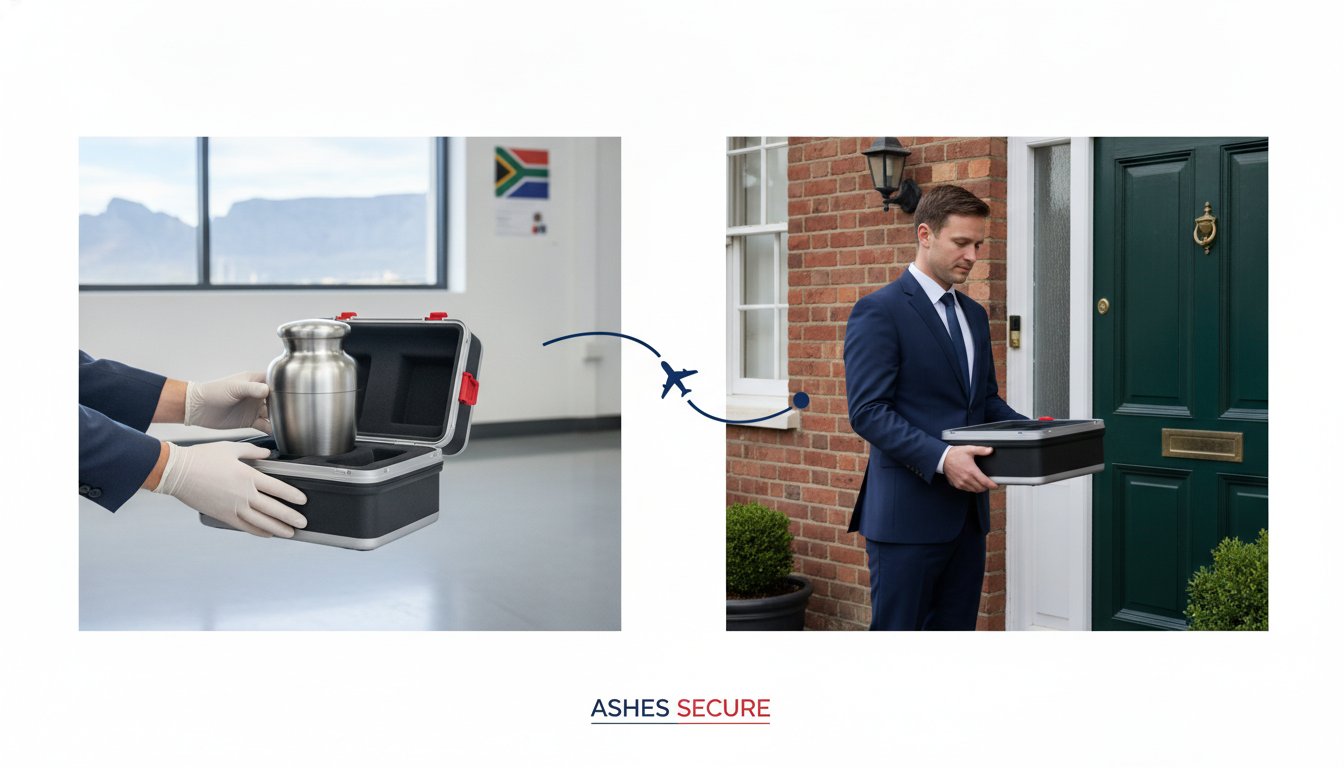
Would you trust a standard international courier to handle the most precious cargo you’ll ever send across the globe? You’re likely feeling a heavy weight of responsibility right now, compounded by the worry that your loved one’s remains could be mishandled or delayed by complex bureaucracy. It’s natural to feel overwhelmed by the thought of coordinating with South African authorities whilst managing your own grief. The process of repatriating ashes from South Africa to UK involves more than just transport; it requires a deep understanding of 2026 regulations and a commitment to dignity at every stage.
This guide provides the professional, empathetic clarity you need to navigate this journey with absolute certainty. We’ll explain the essential documentation required by South African and UK authorities, the specific requirements for airline-compliant urns, and how a dedicated door-to-door service ensures your loved one returns home safely. By understanding the logistical landscape, you can move forward with the peace of mind that your loved one is being treated with the respect they deserve.
Key Takeaways
- Understand the specific documentation required by the South African Department of Health, including necessary export permits and cremation certificates, to ensure a legal transition.
- Learn how a specialised courier manages the process of repatriating ashes from South Africa to UK through secure door-to-door transit rather than relying on standard commercial freight.
- Discover the professional packaging protocols and airline-compliant urn requirements that protect your loved one’s remains during long-haul international flights.
- Identify the benefits of choosing a dedicated bereavement logistics partner who handles the entire journey, from collection at the crematorium to final delivery at your UK residence.
Understanding the Journey: Repatriating Ashes from South Africa to UK
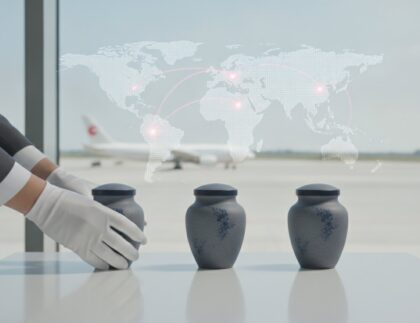
Repatriating ashes from South Africa to UK is a journey that spans nearly 6,000 miles, crossing hemispheres and multiple international jurisdictions. It isn’t merely a transport task; it’s a sacred trust. Unlike general cargo, cremated remains represent a life lived and a family’s desire for closure. This process requires a specialised logistics framework to ensure that every legal and ethical standard is met with precision. The repatriation and reburial of human remains is a sensitive global practice, and when moving between South Africa and the United Kingdom, specific protocols must be followed to avoid distressing delays.
Why Specialist Couriers are Essential
Standard commercial courier networks strictly prohibit the carriage of cremated remains. These networks are built for high-volume, automated sorting where packages are treated as interchangeable commodities. Specialist bereavement logistics providers ensure a continuous chain of custody. This means your loved one’s remains are never left unattended in a warehouse or mixed amongst general freight. Instead, they’re handled with specific care, providing:
- Secure transit: Remains are never treated as standard cargo or automated freight.
- Regulatory expertise: Ensuring all 2026 South African export requirements are satisfied before departure.
- Dignified custody: A dedicated process that respects the sensitive nature of the shipment.
The Dignified Homecoming Philosophy
There’s a profound difference between ‘freight’ and ‘repatriation’. While freight focuses on moving an object, repatriation focuses on bringing a person home. This people-first philosophy prioritises transparency and professional composure at every stage. By removing the logistical burden from grieving families, specialists provide a supportive bridge between South African authorities and the UK arrival. It’s about creating a seamless, expert-led experience where the focus remains on the dignity of the deceased and the peace of mind of those waiting at home.
Legal Requirements and South African Export Regulations in 2026
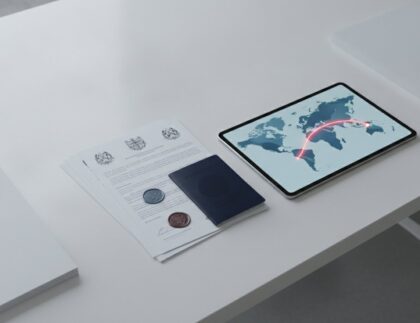
Moving beyond the emotional journey, the legal framework for repatriating ashes from South Africa to UK is rigorous. In 2026, the South African Department of Health remains the primary authority for issuing the Export Permit. This document serves as the essential legal gatekeeper. You’ll also need a ‘Non-Contagious Disease’ certificate. Even though cremation effectively sterilises remains, this certificate confirms the deceased didn’t pose a public health risk, which is a standard requirement for international transit.
A critical step often overlooked is obtaining clearance from the South African Police Service (SAPS). Officers must verify that the remains are indeed what they’re claimed to be before transit is authorised. This process aligns with IATA Transportation Regulations, which dictate how airlines handle sensitive cargo. Without these official stamps of approval, the ashes won’t clear South African customs or be accepted by reputable carriers.
Essential Documentation Checklist
Navigating South African Bureaucracy
Interacting with multiple government departments can be a source of significant stress during a time of grief. A specialist partner manages these local interactions, ensuring that names and dates match perfectly across every form. Discrepancies between a South African Cremation Certificate and a UK import declaration can cause distressing delays when repatriating ashes from South Africa to UK. If you’re feeling uncertain about these steps, you can speak with our specialist team for professional guidance on gathering the correct paperwork.
The Logistics of Secure Transit: From Collection to UK Delivery
The logistical process of repatriating ashes from South Africa to UK begins with the ‘first mile’. This involves the secure collection of remains from a crematorium or private residence. It’s a delicate transition that requires professional composure and a steady hand. Unlike standard freight, this isn’t about moving boxes; it’s about stewardship. Specialist couriers manage the transition through major South African international departure centres, ensuring all airline-specific IATA regulations are met with precision.
Professional Packaging and Safety Protocols
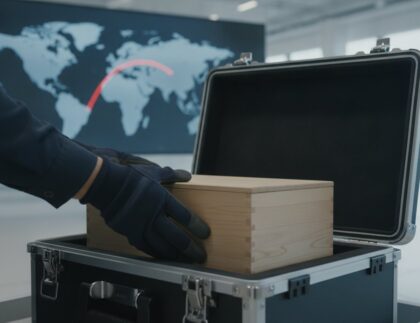
Packaging is a matter of both dignity and physical security. Containers must be robust and discreet, yet specifically engineered to withstand significant pressure changes during long-haul international flights. We utilise materials that are X-ray transparent, such as high-grade polymers or treated wood. This allows security personnel to verify the contents without the need to open the urn, preserving the sanctity of the remains whilst meeting strict aviation safety standards.
UK Arrival and Customs Clearance
In 2026, UK customs protocols for the non-commercial import of cremated remains have moved towards more stringent digital declarations. Meeting the UK Border Force requirements can be a daunting prospect for families repatriating ashes from South Africa to UK. Whilst there are no import duties on ashes, the remains must be correctly declared at the border to avoid distressing delays. A specialist courier acts as the authorised declarant, presenting the authenticated South African certificates to ensure a swift, respectful entry. This professional handling removes the anxiety of potential gate refusals or intrusive security screenings that families often face when attempting to carry remains in hand luggage. To ensure your loved one’s journey is handled with the highest level of care, contact our repatriation specialists today for a secure door-to-door solution.

Choosing a Partner for a Seamless Repatriation
Selecting the right partner is the final, most critical decision in the process of repatriating ashes from South Africa to UK. Whilst some providers offer ‘airport-to-airport’ freight, this often leaves families to navigate the complexities of cargo terminals and customs warehouses themselves. A true door-to-door service removes this burden entirely. It’s vital to choose a courier with specific experience in the South Africa to UK corridor, as they’ll understand the nuances of local South African authorities and UK Border Force protocols. For families with relatives in different countries, an ashes splitting service can provide a meaningful way to share a loved one’s remains across global borders.
Specialist Courier vs Carrying Ashes Personally
Many families consider carrying ashes in their hand luggage, but this often leads to unforeseen emotional strain. Security screenings can be invasive, and there’s a genuine risk of ‘denial of carriage’ if an airline’s specific policies aren’t met perfectly. Professional logistics provide a controlled, private experience. By using a specialist, you ensure that your loved one is never subjected to the public scrutiny of a busy airport security queue or the uncertainty of gate-side checks.
Completing the Homecoming
The journey doesn’t end when the aircraft touches down in the United Kingdom. Ensuring the final stage is handled with care requires a seamless transition to UK domestic ashes delivery services. Your loved one won’t be handed over to a standard parcel network. Instead, they’re hand-delivered to your chosen destination by a professional who understands the gravity of their task. This ensures the same level of dignity is maintained from the moment of collection in South Africa until they’re safely home in your care.
Ensuring a Dignified Return Home
Bringing a loved one home requires balancing complex 2026 regulations with the need for a respectful, quiet transition. You’ve learned that navigating the requirements of the South African Department of Health and SAPS is essential for a legal departure. We’ve also explored why specialist bereavement logistics are superior to standard freight, providing a continuous chain of custody that protects the remains from collection to final delivery. Repatriating ashes from South Africa to UK isn’t a journey you need to undertake alone. With the right expert partner, you can replace logistical anxiety with the certainty that every detail is being managed with professional composure and profound care.
Since 2003, our team has acted as a specialised bridge for families, offering full assistance with South African export permits and seamless UK customs clearance. We’re here to provide a dignified door-to-door service by air, ensuring your loved one is returned to you safely. Contact our specialists for a dignified South Africa to UK repatriation quote today. You can move forward with confidence, knowing your loved one is in the hands of those who truly understand the sacred nature of their task.
Frequently Asked Questions
Can I send ashes from South Africa to the UK through a standard courier like DHL?
No, standard couriers like DHL don’t accept cremated remains within their networks. Their automated sorting systems aren’t designed for such sensitive items; remains are strictly prohibited. Specialist bereavement logistics are necessary to ensure your loved one isn’t treated as standard cargo. Using a dedicated provider ensures a continuous chain of custody and full compliance with international aviation and health regulations during the journey.
What documents are required for South African ashes export in 2026?
In 2026, you must present the original Death Certificate and Cremation Certificate. You also require an Export Permit issued by the South African Department of Health and a ‘Non-Contagious Disease’ certificate. Finally, clearance from the South African Police Service (SAPS) is mandatory for international transit. It’s vital that all names and dates match perfectly across these documents to avoid distressing delays or complications at the UK border.
How long does the repatriation process take from South Africa to the UK?
The process of repatriating ashes from South Africa to UK generally takes between 10 and 21 days. This timeframe allows for the collection of necessary permits from local health departments and mandatory SAPS verification. Once the paperwork is authenticated, the international transit and UK customs clearance usually occur within a few days. We manage each stage methodically to ensure a steady, dignified homecoming for your loved one.
Is it legal to carry ashes on a plane from South Africa in my hand luggage?
It’s legally possible with some airlines, but we don’t recommend it due to the high risk of ‘denial of carriage’ at the gate. Security screenings can be intrusive, and airline policies regarding urn materials often change without notice. Professional logistics offer a far more private and secure alternative. This avoids the emotional burden of security checks and ensures your loved one travels in a controlled, dignified environment.
What is the cost of professional ashes repatriation from South Africa?
Professional repatriation costs depend on your specific requirements and the level of service you choose. Factors include the collection location within South Africa, the type of airline-compliant packaging needed, and the complexity of the local permit process. Since every situation is unique, we provide tailored quotes to reflect the exact logistics involved. This ensures transparency and allows us to maintain a people-first approach during a difficult period.

Article by
David McMillen
I started my career in logistics over 30 years ago which has spanned 2 continents and several different types of courier and logistics operations. I lost my dear Mum back in 2016 and it was in the aftermath of her passing that SpeedLink Repatriation was born. We have endeavoured to bring the same care and attention to all of our clients as my mum received and to date we have helped repatriate hundreds of individuals across the globe.
Disclaimer
International requirements for cremated remains vary by origin, destination, carrier and method of transport and may change without notice.
Content is provided as general guidance and should not be treated as legal advice.
Where necessary, current requirements should be confirmed with the relevant government authority, customs authority, embassy, consulate, postal operator, airline or carrier.
SpeedLink can advise on the requirements applicable to a specific shipment.