Choosing where to scatter a loved one’s ashes is one of the most personal decisions a family can make, yet the legal reality of scattering ashes on private land can feel surprisingly uncertain. Do you need written permission? Does it matter whose land it is? And what happens when the chosen location is hundreds, or even thousands, of miles away?
You’re right to want clarity before that day arrives. The last thing any family needs, whilst carrying out such a profoundly meaningful act, is the anxiety of not knowing whether they’re within their rights, or the worry that the ashes won’t arrive safely at the chosen location in the first place.
This guide gives you exactly that clarity. You’ll come away with a firm understanding of the permission process for private land in England and Wales, the key distinctions between truly private property and publicly accessible land managed by private organisations, how to transport cremated remains safely to the scattering site, and the environmental responsibilities that apply in 2026. From the legal groundwork to the final ceremony, every step is covered.
Key Takeaways
- Scattering ashes on private land after 2026 requires a clear understanding of who holds the freehold and whether third-party permission is legally necessary — the distinction matters more than most families realise.
- The 2026 Environment Agency guidelines introduce specific responsibilities around scattering near watercourses, boreholes, and lakes, meaning even a ceremony on your own land carries environmental obligations.
- Standard postal services are prohibited from carrying cremated remains, so transporting ashes to a private scattering site — particularly across international borders — demands a specialist courier solution.
- Splitting ashes professionally allows families to hold multiple private ceremonies across different locations, and doing so requires careful, respectful organisation to ensure equal distribution.
- Every logistical step, from the crematorium to the final ceremony, can be managed through a specialist bereavement logistics provider, removing uncertainty and allowing families to focus entirely on the moment itself.
Understanding the Legal Framework for Scattering Ashes on Private Land
The phrase “private land” sounds straightforward until you need to act on it. In practice, it encompasses an enormous range of land classifications in England and Wales, from a family’s back garden to a working farm, a historic estate, or woodland managed by a private trust. The legal position governing each of these differs, and conflating them is where many families run into difficulty.
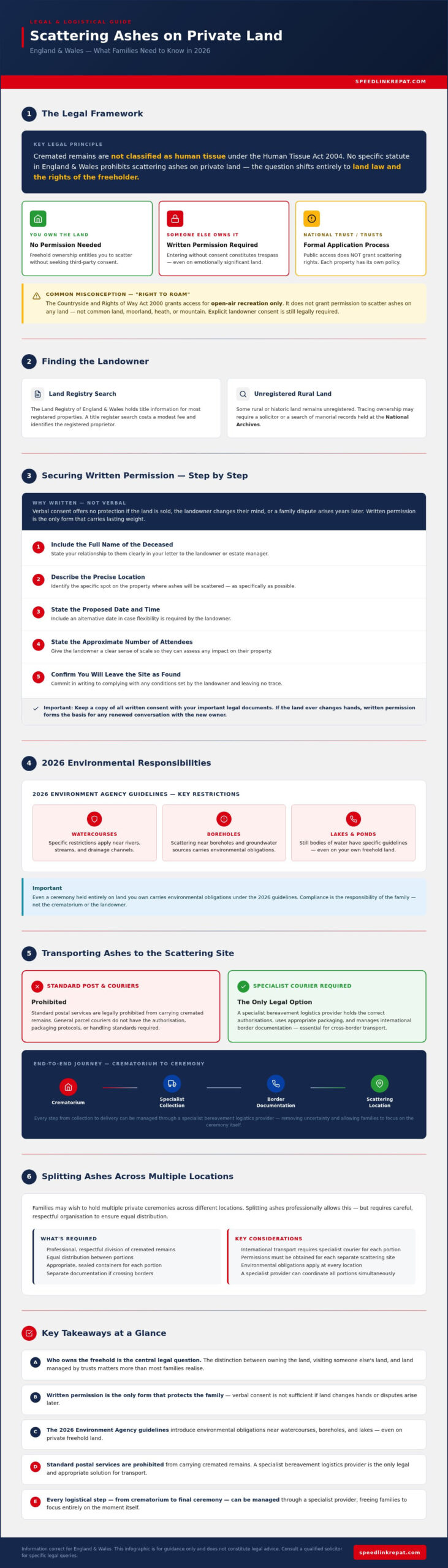
Under current property law, cremated remains are not classified as human tissue under the Human Tissue Act 2004, and no specific statute in England and Wales prohibits scattering ashes on private land. The Cremation (England and Wales) Regulations 2008 govern the cremation process itself but are silent on what happens to the remains afterwards. This means the legal question shifts almost entirely to land law and the rights of the freeholder.
Owning the freehold is the clearest position to be in. If the land is yours, you’re entitled to scatter ashes there without seeking permission from a third party. The complication arises when families wish to scatter at a location they don’t own, even somewhere as emotionally significant as a grandparent’s former farm or a private estate with family connections. In those cases, the landowner’s consent is not merely courteous; it’s a practical legal necessity, since entering private land without permission constitutes trespass.
Identifying who actually owns a piece of land is the first practical step, and it’s less complicated than it once was. The Land Registry of England and Wales holds title information for the majority of registered properties. A title register search costs a modest fee and will identify the registered proprietor. Some rural or historic land remains unregistered, in which case tracing ownership may require a solicitor or a search of manorial records held at the National Archives.
Securing Formal Permission: A Step-by-Step Approach
Verbal consent feels sufficient in the moment, but it offers no protection if circumstances change, the landowner sells the property, or a dispute arises within the family years later. Written permission is the only form that carries lasting weight. When approaching a landowner or estate manager, a respectful, clearly worded letter will almost always receive a more considered response than an informal call. The letter should include:
- The full name of the deceased and your relationship to them
- The precise location on the property where you intend to scatter the ashes, described as specifically as possible
- The proposed date and time of the ceremony, with an alternative if flexibility is needed
- The approximate number of people attending
- A confirmation that you will leave the site as found and comply with any conditions the landowner sets
Once written consent is received, keep a copy with your family’s important legal documents. Should the land change hands or a family member wish to return to the site in future, that written record provides a basis for a renewed conversation with any new owner. It also removes ambiguity for any family members not present on the day.
The “Right to Roam” and Private Property Nuances
The Countryside and Rights of Way Act 2000 grants a right of access to certain categories of open land in England and Wales, including registered common land, mountain, moor, heath, and down. This is commonly called the “right to roam.” However, the right of access it confers is for open-air recreation, not for scattering ashes on private land after any date, including 2026. The act does not grant permission to scatter cremated remains, and doing so without the landowner’s explicit consent would still constitute a breach of the landowner’s rights.
Land managed by organisations such as the National Trust or privately held charitable trusts sits in a distinct category. These organisations own the freehold of their land, even where the public enjoys regular access. Each has its own policy on ashes scattering, and those policies vary considerably. The National Trust, for example, has a formal application process managed at the local property level. Approaching the relevant property manager directly, in writing, is the correct route. Assuming that public footpaths or open visitor access confers any right to scatter ashes would be a significant and potentially distressing misunderstanding on the day of the ceremony.
Environmental Stewardship and Best Practices for Private Ceremonies
Caring for the land during a scattering ceremony is an act of respect, both for the place itself and for the memory being honoured there. A “Leave No Trace” philosophy isn’t a bureaucratic imposition; it’s a natural extension of the reverence most families already bring to the occasion. For garden and estate scatterings in particular, where the site will continue to be lived in and tended, the environmental impact of cremated remains deserves careful thought.
Cremated remains are primarily composed of calcium phosphate, with measurable concentrations of potassium and sodium. This alkaline composition can raise the pH of garden soil significantly in the immediate area of scattering, which in turn affects the ability of acid-loving plants, such as rhododendrons, heathers, and azaleas, to absorb nutrients. Scattering the ashes thinly across a wide area, rather than depositing them in a concentrated pile, distributes this chemical load and reduces the risk of localised soil damage. A gentle, sweeping motion across open ground, rather than a single pouring point, is both ecologically sounder and, in practice, more dignified.
Protecting Water Sources and Wildlife
Families scattering ashes on private land after 2026 should be aware that the Environment Agency’s current guidance recommends keeping cremated remains well away from any watercourse, borehole, or lake. The concern is nutrient overload: the phosphates present in ashes can contribute to algal blooms in still or slow-moving water, disrupting aquatic ecosystems. A minimum distance of 50 metres from any water source is the widely cited precautionary standard. This applies to ornamental garden ponds and estate lakes just as much as it does to rivers or streams. If the chosen site includes a cherished view of water, the ceremony can still take place nearby; the ashes simply shouldn’t enter or land within that buffer zone.
Discreet Memorialisation on Private Grounds
The question of how to mark the spot, if at all, deserves equal care. Permanent physical markers, whether engraved stones, plaques, or fixed structures, can create complications if the property is ever sold or transferred. A future owner has no obligation to preserve them, and their removal can cause additional distress for the family. Where a lasting tribute feels important, consider a native tree or shrub planted nearby, which adds to the land rather than altering it structurally, and which a sympathetic landowner is far more likely to welcome.
Floral tributes left at the site should be fully biodegradable. Cellophane wrapping, synthetic ribbons, and plastic water tubes are the most common sources of non-biodegradable waste at outdoor ceremonies, and they’re easily overlooked in the emotion of the moment. Brief the group beforehand, and designate someone to collect any materials before leaving.
Timing matters too. An early morning ceremony, before neighbouring properties are active, offers both privacy and a stillness that many families find deeply fitting. It also avoids the practical awkwardness of conducting an intimate ceremony whilst dog walkers or estate staff pass nearby.
If you’re coordinating the transport of cremated remains to a private estate or rural scattering site, the logistics deserve the same careful attention as the ceremony itself. Get in touch with our team to discuss how we can ensure the ashes reach the chosen location safely, respectfully, and without adding further burden to your family’s preparations.
Navigating Logistics: Bringing Ashes to the Scattering Site
Planning the ceremony itself is only half the task. Getting the ashes safely to the chosen location, whether that’s a family estate in rural Shropshire or a private hillside in the Scottish Borders, demands its own careful preparation. For families coordinating a private ceremony from abroad, the logistical challenges are considerably more complex than most guides acknowledge.
International Repatriation for Private Memorials
Standard postal services in the UK, the USA, and across Europe prohibit the carriage of cremated remains. Royal Mail, USPS, and most commercial parcel carriers either explicitly ban human remains or apply restrictions that make compliant shipment effectively impossible through standard channels. Attempting to use them risks the package being intercepted, returned, or destroyed, an outcome no family should face.
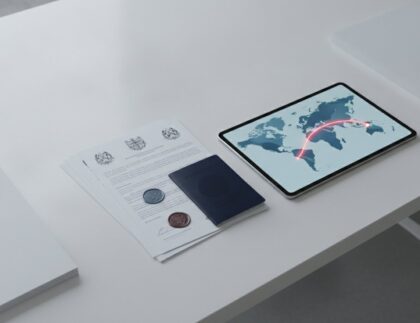
Bringing ashes into the UK from the United States requires a specific set of documents. These typically include the original cremation certificate, a certified death certificate, and a certificate of cremation issued by the originating crematorium. Border Force and HMRC both require accurate declaration of the contents, and any misclassification can cause delays at the port of entry. A specialist USA to UK cremated remains courier service manages this documentation on the family’s behalf, handling customs clearance and airline compliance so that nothing is left to chance.
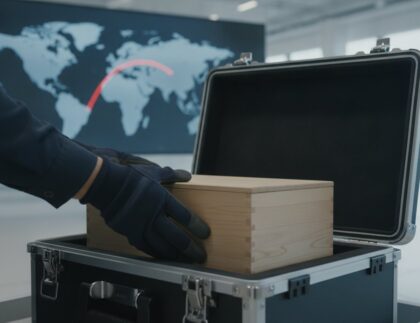
Professional packaging matters too. Cremated remains must be contained within a sealed, tamper-evident inner vessel and an outer protective case that meets IATA guidelines for air freight. This isn’t merely a regulatory formality; it’s the practical assurance that the remains arrive intact and with dignity, ready for scattering ashes on private land after the family has gathered.
Domestic Courier Solutions for Peace of Mind
Even within the UK, families often choose professional door-to-door delivery rather than transporting the ashes personally. Grief is exhausting. The cognitive load of a long drive, the anxiety of carrying something so precious in a vehicle, and the practical demands of coordinating a ceremony can make personal transport feel like one burden too many.
A specialist bereavement logistics provider applies the same security protocols domestically as it does internationally: tracked consignment, chain-of-custody documentation, and discreet, respectful handling at every stage. The ashes arrive at the private estate or rural location ready for the ceremony, without the family having carried that weight themselves.
If you’re coordinating transport to a private scattering site, whether from overseas or from a crematorium closer to home, speak to our team about arranging a fully managed courier solution that removes uncertainty from every step of the journey.
Splitting Ashes and Future-Proofing Your Private Memorial
Families are increasingly dispersed across continents, and the idea that a single scattering ceremony in one location can honour every relationship a person held is, for many, simply not the reality. The practice of splitting cremated remains to allow multiple ceremonies across different private locations is growing, and it’s a practical, legally sound approach that deserves far more attention than most guidance currently gives it.
There’s no legal prohibition in England and Wales on dividing cremated remains between family members or across locations. The decision is entirely the family’s to make. What matters is that the division is carried out with care, precision, and the same dignity afforded to every other step of the process.
The Professional Ashes Splitting Process
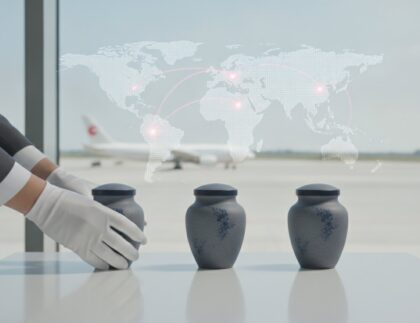
A specialist bereavement logistics provider handles the division of remains with documented accuracy, ensuring each portion is correctly weighed, sealed in an appropriate vessel, and accompanied by the necessary paperwork for onward transport. For families coordinating ceremonies across different countries, this is particularly important. A portion destined for scattering on private land in Italy, for example, requires its own cremation documentation and customs compliance quite separate from the portion remaining in the UK. SpeedLink Repatriation’s cremated remains courier service manages exactly this kind of coordinated, multi-destination arrangement, handling each consignment as a distinct and fully documented shipment.
What Happens if the Private Land is Sold?
This is the question that most guides acknowledge and then quietly sidestep. If ashes have been scattered on residential land and that property is later sold, the family has no legal right of access to return to the site. The new owner is under no obligation to grant entry, however sympathetically they might respond to a request.
Scattering only a portion of the ashes on residential land is a genuinely wise strategy. It preserves the emotional significance of that location whilst ensuring another portion can be scattered elsewhere, interred in a churchyard, or kept in a transportable memorial that moves with the family. When planning scattering ashes on private land after careful consideration of long-term property circumstances, this kind of distributed approach removes a source of future grief that’s entirely avoidable.
Creating a written or digital record of the scattering location also matters more than families tend to anticipate. A simple document noting the date, the precise location on the property, the names of those present, and any words spoken gives future generations something tangible. Stored alongside the original cremation certificate and any written landowner permissions, it becomes part of the family’s lasting memorial record, one that can be shared, revisited, and passed down regardless of what happens to the land itself.
If your family is considering splitting remains for ceremonies across multiple private locations, speak to our team about how we can coordinate the full process, from the initial division through to delivery at each destination.
Your Next Step Towards a Ceremony That Goes Exactly as Planned
Scattering ashes on private land after careful preparation is an act of love, not a logistical exercise. But the legal groundwork, environmental responsibilities, and transport arrangements that surround it deserve the same care as the ceremony itself. Securing written landowner permission, respecting the 2026 Environment Agency guidance near watercourses, and planning for the long-term significance of the chosen site are all steps that protect the family as much as they honour the occasion.
What this guide makes clear is that none of it needs to feel overwhelming. Every logistical element, from transporting cremated remains across international borders to splitting ashes for ceremonies across multiple private locations, can be handled by specialists who treat each journey with the same compassion your family brings to the ceremony.
SpeedLink Repatriation offers door-to-door courier solutions, professional customs management, and compassionate handling at every stage of the journey. You don’t have to carry this burden alone. Speak with our bereavement logistics experts about your scattering plans and take the next step with complete confidence.
Frequently Asked Questions About Scattering Ashes on Private Land
Do I need written permission to scatter ashes in my own garden?
If you hold the freehold of the property, you don’t need anyone’s permission to scatter ashes in your own garden. The decision is entirely yours. That said, if the property is leasehold rather than freehold, the situation changes. Your lease may contain clauses that restrict certain activities on the land, and checking the terms of your lease before the ceremony is a sensible precaution that takes very little time.
One practical consideration worth raising with your family beforehand is the long-term implications if you ever intend to sell. Future buyers aren’t legally entitled to know ashes have been scattered there, but some families find this weighs on them. Scattering only a portion in the garden, with the remainder going to another chosen location, is a thoughtful way to balance the personal significance of the site against future uncertainty.
Can I scatter ashes on farmland or a favourite private estate?
Yes, but only with the landowner’s explicit written consent. Farmland and private estates are privately owned, and entering them without permission constitutes trespass regardless of how meaningful the location is to your family. The emotional significance of the site doesn’t alter the legal position. A respectful written approach to the landowner or estate manager, outlining your intentions clearly, is the correct first step.
Scattering ashes on private land after securing written permission also protects you if circumstances change. If the estate is sold or the landowner retires, your written consent provides a documented basis for any future conversation with new ownership. Keep a copy alongside the cremation certificate and any other paperwork relating to the ceremony.
What are the environmental rules for scattering ashes near a river on private land?
Even on land you own, the Environment Agency’s guidance recommends maintaining a minimum distance of 50 metres from any watercourse, borehole, or lake when scattering cremated remains. The concern is phosphate content: cremated remains can contribute to nutrient overload in water, which in turn encourages algal blooms that damage aquatic ecosystems. This precautionary standard applies to ornamental ponds and estate lakes just as it does to rivers and streams.
If the river or water feature is central to why the location matters to your family, the ceremony itself can absolutely take place nearby. The ashes simply shouldn’t enter or land within that buffer zone. Scattering thinly across open ground upland of the water, rather than directing remains towards it, respects both the guidance and the natural environment you’re honouring.
Is it legal to bring ashes from the USA to scatter on private land in the UK?
It’s entirely legal, but the process requires the correct documentation and a compliant courier solution. Standard postal carriers and most commercial parcel services prohibit the carriage of cremated remains, so attempting to use them risks interception or return. Bringing ashes into the UK from the United States typically requires the original cremation certificate, a certified death certificate, and a certificate of cremation from the originating crematorium, all of which must be accurately declared to Border Force and HMRC on arrival.
A specialist cremated remains courier service manages this documentation and customs clearance on your family’s behalf, ensuring the ashes reach the private scattering site safely and without administrative delays. Professional packaging that meets IATA guidelines for air freight is also required, providing the practical assurance that the remains arrive intact and with dignity, ready for the ceremony.
What should I do if the landowner refuses permission for a scattering ceremony?
A refusal, however disappointing, is the landowner’s legal right and must be respected. There’s no mechanism to compel a private landowner to grant access, and attempting to scatter ashes without consent would constitute trespass. If an initial approach is declined, it’s worth asking whether there are alternative conditions under which permission might be granted, a different date, a smaller group, or a slightly different location on the property.
If the answer remains no, redirecting your plans to a location you can access with certainty is the most compassionate path forward. A woodland burial ground, a licensed memorial garden, or a stretch of open land covered by right-of-access provisions may hold its own quiet significance. Splitting the ashes also means one portion can go to a consented private location whilst another is scattered somewhere more accessible, allowing the ceremony to honour the person fully without the distress of an unresolved dispute.

Article by
David McMillen
I started my career in logistics over 30 years ago which has spanned 2 continents and several different types of courier and logistics operations. I lost my dear Mum back in 2016 and it was in the aftermath of her passing that SpeedLink Repatriation was born. We have endeavoured to bring the same care and attention to all of our clients as my mum received and to date we have helped repatriate hundreds of individuals across the globe.
Disclaimer
International requirements for cremated remains vary by origin, destination, carrier and method of transport and may change without notice.
Content is provided as general guidance and should not be treated as legal advice.
Where necessary, current requirements should be confirmed with the relevant government authority, customs authority, embassy, consulate, postal operator, airline or carrier.
SpeedLink can advise on the requirements applicable to a specific shipment.