Did you know that in Germany, it’s actually illegal to take a loved one’s ashes home or scatter them on private land? While you want nothing more than to bring them back to familiar soil, the repatriation of ashes from Europe often involves a maze of local civil laws that vary wildly from one border to the next. Whether you’re dealing with the prefect’s office in France or the strict interment laws of the German state, the fear of a logistical error or a delay at airport security can feel like an unbearable weight during an already difficult time.
We understand that you need a steady hand to guide you through these administrative hurdles. It’s completely natural to feel anxious about the safety of your loved one’s remains or confused by the specific documentation required by different EU member states. This guide provides a clear roadmap to help you manage the journey with dignity and professional composure. We’ll outline the essential documents you need, explain the safest methods for international transport, and detail the specific regulations for major European countries so you can find peace of mind throughout this process.
Key Takeaways
- Learn how the repatriation of ashes from Europe varies across different borders and how the EU customs union affects your transit timeline.
- Identify the core set of certified documents required to ensure your loved one’s journey meets all international legal and health standards.
- Compare the logistics of hand-carrying ashes with the security of a professional courier to find the transport method that offers you the most peace of mind.
- Master professional packaging protocols, including scannable urn selection and double-bagging, to ensure a dignified and secure transit through airport security.
- Discover how a dedicated bereavement logistics specialist can simplify the complex administrative process while maintaining a respectful, secure chain of custody.
Understanding the European Landscape for Ashes Repatriation
The repatriation of mortal remains in the form of cremated ashes is a specialized legal process. It involves the movement of remains across international borders while adhering to a complex web of civil, health, and aviation laws. While Europe may appear to be a unified territory, the repatriation of ashes from Europe requires an understanding that each nation maintains its own sovereign rules regarding the handling of the deceased. You aren’t simply moving a parcel; you’re fulfilling a legal requirement that demands precise documentation and a respectful chain of custody.
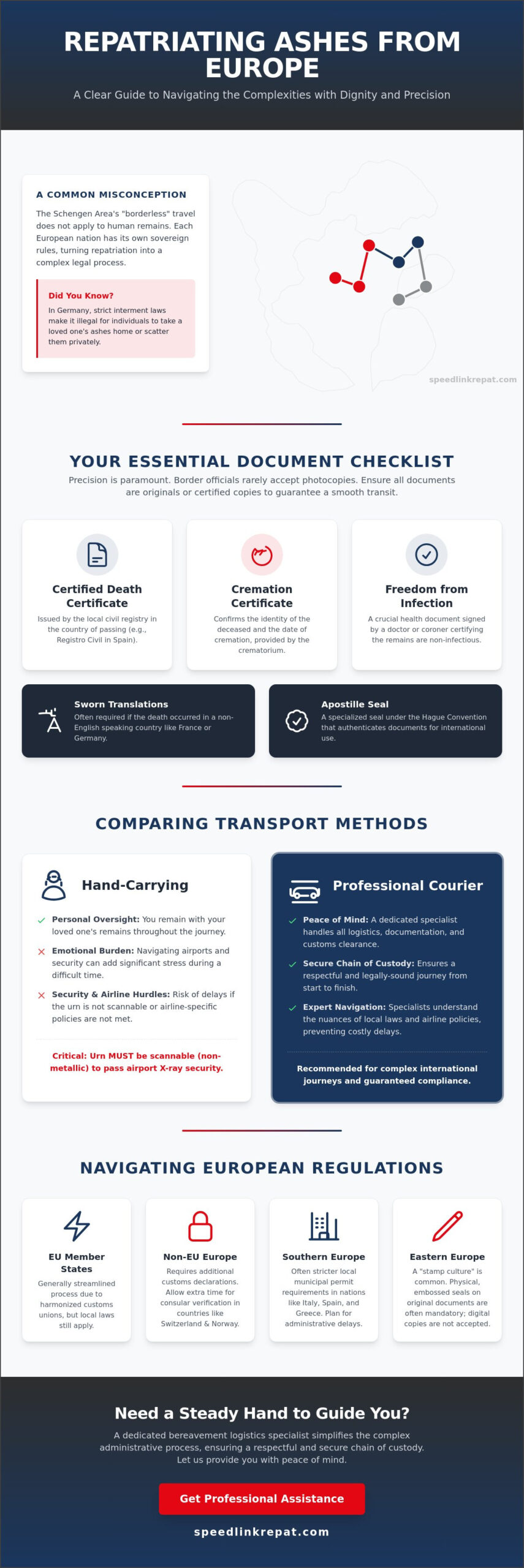
Many families assume that the Schengen Area’s “borderless” travel applies to cremated remains. This is a common misconception. While travelers move freely between member states, human remains are subject to specific regulations that the Schengen Agreement doesn’t override. In certain regions, local authorities play a heavy role. In Poland, for example, you must often secure permission from the local ‘Starosta’ (district governor) before the remains can leave the municipality. These local nuances are why a one-size-fits-all approach often leads to delays at the border.
EU Member States vs. Non-EU Europe
The paperwork is generally more streamlined within the European Union due to harmonized customs unions. However, the process changes when your journey involves non-EU territories. Countries like Switzerland, Norway, or Turkey require additional customs declarations that don’t apply to EU-to-EU transfers. These non-EU repatriations often require more lead time. Authorities in these nations may insist on verifying documents with their own consular offices before they grant an export permit. We recommend allowing extra time for these administrative checks to ensure the transition remains smooth and dignified.
Cultural and Religious Nuances in European Regions
Regional differences in Europe significantly impact your timeline. Southern European nations like Spain, Italy, and Greece often have stricter local municipal permit requirements. In Italy, for instance, you’ll likely need authorization from the specific municipality where the ashes will be interred before you can even book travel. This contrasts with the efficiency found in Northern Europe, where rules are strict but the digital processing is often faster.
Eastern Europe often maintains a “stamp culture” where physical, embossed seals on original documents are mandatory. Digital copies aren’t usually accepted. You should also be mindful of local bank holidays. A regional holiday in a specific German state or a religious festival in Italy can pause the entire administrative process for several days. Planning around these local calendars is essential to avoid unnecessary anxiety during the repatriation of ashes from Europe.
Step-by-Step Documentation: What You Need to Gather
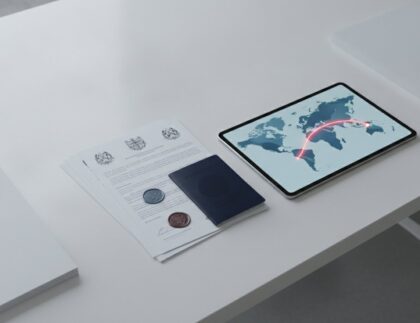
Gathering documents while grieving is a significant emotional burden. However, the repatriation of ashes from Europe requires a meticulous approach to paperwork to avoid delays. Every document in your portfolio must be either an original or a certified copy. Border officials and airline staff rarely accept photocopies or digital scans when handling human remains. This precision ensures that the chain of custody remains unbroken and legally sound from the moment the ashes leave the crematorium until they reach home.
If the death occurred in a country where English isn’t the primary language, such as France or Germany, you’ll likely need a sworn translation of all certificates. Some jurisdictions also mandate an Apostille. This is a specialized seal that authenticates a document for international use under the Hague Convention. It’s a vital step that confirms to foreign authorities that your documents are genuine and legally binding. Without these seals, you may find the process stalled at the point of departure. For a comprehensive overview of every paper you’ll need, our documents for shipping ashes overseas checklist covers every legal requirement in detail.
The Essential Document Checklist
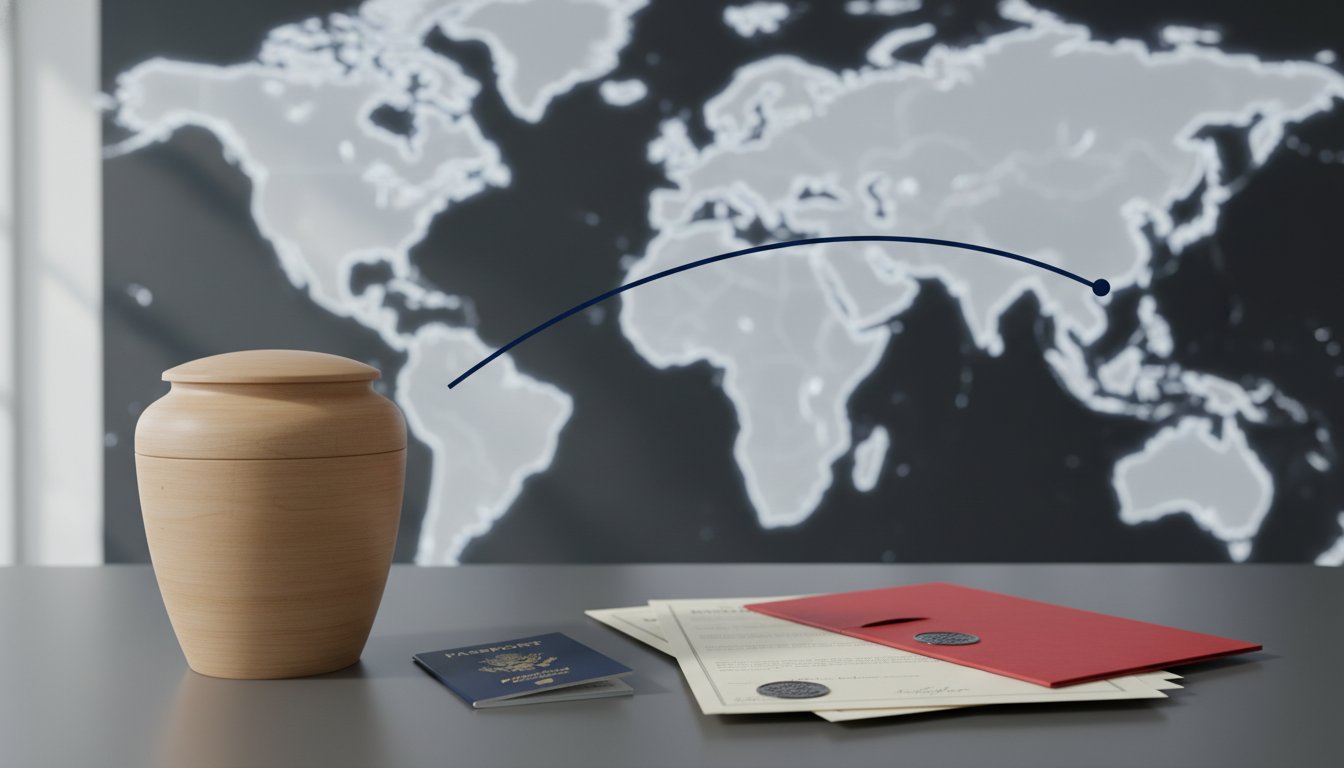
To begin the process, you’ll need to secure three foundational items. These form the core of your repatriation file:
- Certified Death Certificate: This is issued by the local civil registry in the country of passing, such as the Registro Civil in Spain.
- Cremation Certificate: Provided by the crematorium, this document confirms the identity of the deceased and the date the cremation took place.
- Non-Infectious Note: Also known as a ‘Freedom from Infection’ certificate, this must be signed by a doctor or coroner to certify that the remains pose no risk to public health.
Dealing with Embassies and Consulates
Embassies act as the diplomatic bridge between two nations. In many European jurisdictions, you’ll need to apply for a ‘Laissez-Passer’ for human remains. This document serves as a specialized passport for the deceased. Some consulates, particularly in countries like Italy, may even require a representative to inspect and seal the urn before it can be cleared for transport. It’s a formal process that reflects the dignity and respect the situation deserves.
Security protocols are equally rigorous. If you choose to hand-carry the remains, you must ensure the container complies with TSA guidelines for traveling with ashes. This means using a scannable material like wood or plastic, as security officers will not open the urn for any reason. If managing these diplomatic and regulatory channels feels overwhelming, our bereavement logistics experts can coordinate directly with local authorities to manage the paperwork on your behalf.
Comparing Transport Methods: Courier vs. Hand Luggage
Deciding how to physically transport a loved one’s remains is one of the most personal choices you’ll make during this journey. You essentially have two paths: carrying the urn yourself as hand luggage or appointing a professional to manage the repatriation of ashes from Europe through a dedicated courier service. Both methods require careful planning, but they offer very different experiences in terms of emotional labor and logistical security. It’s vital to choose the method that allows you to feel the most composed and in control.
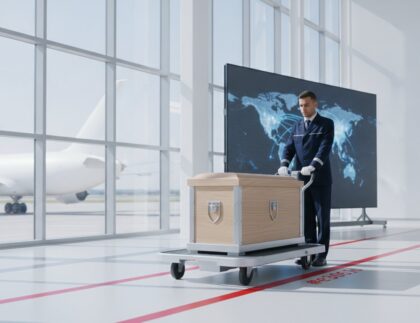
If you consider the “self-carry” approach, you must account for varying airline policies. Carriers like Ryanair and EasyJet generally permit the transport of ashes in cabin bagage, but they often have strict requirements regarding the sealing of the container and the notification of their ground staff. Lufthansa, while typically accommodating, may have different documentation checks at their European hubs. We don’t recommend using standard “cargo” or freight services. These environments are designed for commercial goods and lack the “people-first” stewardship required for such a sensitive task. A professional cremated remains transport service, however, maintains a dedicated chain of custody, ensuring the remains are never treated as mere inventory.
Taking Ashes on a Plane as Hand Luggage
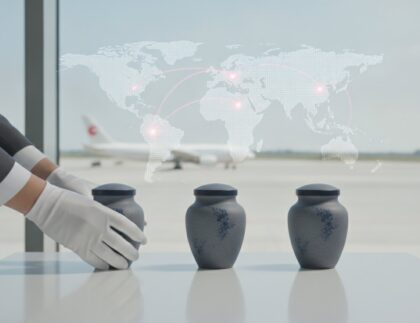
If you choose to carry the ashes personally, the material of the urn is your most important consideration. Security staff at European airports are trained to follow strict protocols. They’ll use X-ray technology to inspect the container. For this reason, you should select an urn made of “scan-friendly” materials such as wood, ceramic, or high-density plastic. Metal urns often appear opaque on scanners, which can lead to distressing delays.
The “Security Scan” rule is absolute. Security officers won’t open the urn under any circumstances, even at your request. If the scanner cannot see through the material, the remains may be refused entry to the cabin. Always keep the original death and cremation certificates on your person, as you’ll likely need to present them at both the security gate and the boarding door.
The Specialist Courier Advantage
Many families find that the physical act of carrying an urn through busy international terminals is an added layer of stress they’d prefer to avoid. A specialist courier provides a door-to-door service that removes this burden. By utilizing experts in bereavement logistics, you ensure that every stage of the journey is handled with professional composure and technical mastery.
Our dedicated network provides real-time tracking, giving you the transparency you need to feel secure. These specialists also manage the intricacies of customs clearance. While you focus on your family, the courier interacts with border authorities to ensure all local regulations are met. This methodical approach provides a sense of order and predictability, guaranteeing that the repatriation of ashes from Europe is completed with the highest level of integrity.
Packaging and Security: Ensuring a Dignified Journey
Ensuring the physical safety of your loved one’s remains is as vital as the legal paperwork. During the repatriation of ashes from Europe, the urn will move through various environments and handling stages. Proper packaging isn’t just a technical requirement; it’s an act of stewardship that maintains dignity throughout the journey. A methodical approach to security provides the peace of mind that the remains are protected from the moment they leave the European crematorium.
Choosing the Right Transit Container
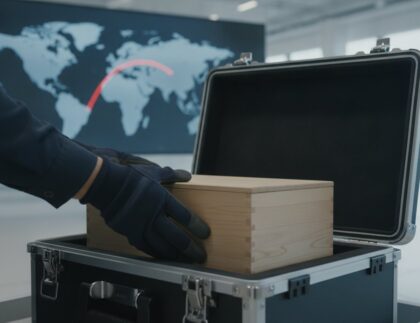
It’s best to distinguish between a display urn and a transit container. While you may have chosen a beautiful marble or ceramic vessel for the final resting place, these materials are often heavy and prone to cracking. We recommend shipping the ashes in a lightweight, durable poly-urn and sending the decorative vessel separately. This significantly reduces the risk of damage during the transit process.
Specific countries have unique container mandates that must be met before departure. In France, you must provide a certificate proving the ashes are sealed in an airtight urn. If you’re moving remains from Italy, local law requires the ashes to be placed in a solid hardwood casket featuring a plaque with the deceased’s details. These regional rules are strict, and failing to meet them can stall the entire process. Our Professional Packaging Service ensures your container meets these exact local specifications.
Professional Packaging Standards by SpeedLink Repatriation
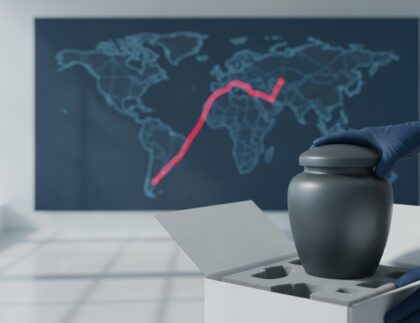
The “Double-Bagging” protocol is a core safety standard we follow for every journey. The remains are placed in a heavy-duty polyethylene bag, which is then sealed and placed inside a second, identical bag. This provides a redundant layer of protection against leakage. The outer shipping box should prioritize discretion and strength. You’ll want a sturdy, double-walled cardboard box that protects the contents without advertising them to the public.
While you must include mandatory customs labels and contact details, avoid using large, somber markings that could draw unnecessary attention. Internal cushioning, such as foam inserts, is essential to prevent movement within the box. Movement is the leading cause of transit damage in international logistics. SpeedLink Repatriation uses professional packaging services to ensure every shipment meets these rigorous international standards, providing a secure and respectful chain of custody.
Why Choose a Specialist for European Repatriation?
Choosing a partner for the repatriation of ashes from Europe is a decision rooted in trust. Unlike general couriers who handle commercial freight, SpeedLink Repatriation operates as a dedicated bereavement logistics expert. We understand that we’re not just moving a package; we’re providing a safe passage for a loved one. Our dedicated European network spans every EU member state and non-EU territories, ensuring that geographical borders never become barriers to a dignified return home.
We believe that professional care should be accessible to every family. To support this, SpeedLink Repatriation offers a 10% price guarantee, ensuring you receive the highest standard of service without unnecessary financial strain. This commitment to accessibility doesn’t compromise our technical mastery. Every step of our process is designed to provide you with a sense of calm and security, taking the logistical burden off your shoulders during a period of profound loss.
Unmatched Expertise in European Customs
The regulatory landscape in Europe is rarely uniform. SpeedLink Repatriation possesses deep experience navigating local nuances, such as securing the specific ‘Starosta’ permits required in Poland or managing the strict interment laws found in Germany. We provide both expedited and economy options, allowing you to choose a timeline and budget that best suits your family’s needs. If your family is spread across different countries, we also offer an Ashes Splitting Service to help you share the remains securely and legally.
The SpeedLink Repatriation Commitment to Dignity
Our “people-first” approach ensures that empathy is at the heart of every interaction. SpeedLink Repatriation doesn’t view this work as a series of transactions, but as a stewardship of your trust. This responsibility extends to the environment through our ‘Net Zero’ goal, where we strive to conduct repatriations with minimal carbon impact. For families seeking a broader global perspective, you can read our International Ashes Repatriation Guide.
When you’re ready to begin, the first step is a simple consultation. We’ll listen to your specific situation and provide a clear, methodical roadmap for the journey ahead. Let our steady hand guide you through the complexities of the repatriation of ashes from Europe so you can focus on what truly matters: honoring your loved one’s memory.
Bringing Your Loved One Home with Confidence
Bringing your loved one home is a journey that requires both precise planning and profound care. By ensuring you have a complete set of certified documents and utilizing scan-friendly, secure packaging, you’ve already laid the groundwork for a respectful transition. Whether you choose to carry the remains personally or appoint a dedicated courier, your focus remains on honoring a life well-lived while maintaining professional composure.
The repatriation of ashes from Europe doesn’t have to be a source of constant anxiety. Our specialized expedited and economy networks are designed to navigate the complexities of international customs on your behalf, providing a steady hand through every administrative hurdle. We include expert customs clearance assistance to ensure your documentation meets every local European requirement without the risk of delay or complication.
If you’re ready to take the next step, you can Request a Respectful Quote for European Ashes Repatriation today. With our 10% price guarantee on like-for-like quotes, you can be certain that you’re receiving dignified care that remains accessible. You don’t have to manage this process alone; we’re here to help you bring them back to familiar soil with the dignity they deserve.
Frequently Asked Questions
Can I send ashes through standard couriers like DHL or FedEx from Europe?
No, standard commercial couriers such as DHL, FedEx, or UPS typically do not accept human remains for transport. Their networks are designed for general cargo and lack the specialized chain of custody required for such a sensitive task. To ensure a legal and dignified journey, you must use a specialist cremated remains transport service authorized to handle cremated remains across international borders.
How long does it typically take to repatriate ashes from a European country?
The timeline generally ranges from 3 to 7 days once all necessary documentation is in place. While repatriations from Spain often fall within this window, the process can take longer in countries with more complex municipal requirements or during local bank holidays. We focus on a methodical pace that ensures every legal detail is verified before the journey begins.
Do I need to hire a funeral director in the European country to ship the ashes?
You aren’t strictly required to hire a local funeral director, but you must have a representative who can secure the necessary export permits from local authorities. Many families find that a specialist repatriation service is a more direct and cost-effective alternative. This approach manages the logistics and paperwork without the need for a full suite of funeral directing services abroad.
What happens if airport security in Europe wants to open the urn?
Security officers will not open the urn for any reason. If the container is made of a material that the X-ray scanner cannot penetrate, such as lead or certain metals, it will simply be refused entry to the aircraft. This is why we emphasize using scan-friendly containers. Officers rely on the X-ray image and your certified paperwork to clear the remains for flight.
Is it cheaper to fly the ashes home myself or use a courier?
Carrying the ashes as hand luggage is often the most affordable method, but it places a significant emotional and physical burden on the family. Using a specialist courier service provides a secure, door-to-door alternative that removes the stress of navigating security protocols. For many, the peace of mind provided by a professional chain of custody is a vital consideration during a difficult time.
What specific documents are needed for repatriation from Spain or France?
For the repatriation of ashes from Europe, specifically Spain, you’ll need the official death certificate and a cremation certificate. In France, the requirements are stricter, including a transit permit from the prefect’s office and a certificate confirming the urn is hermetically sealed. It’s essential that these documents are original, certified copies to meet the standards of border authorities. You can find a full breakdown of country-specific requirements in our guide to documents for shipping ashes overseas.
Can ashes be split before being repatriated to different family members?
Yes, ashes can be split into multiple smaller transit containers before they leave the country of origin. This allows families living in different regions to share the remains of their loved one. Our specialized Ashes Splitting Service ensures that each portion is respectfully handled and provided with the individual documentation required for its specific destination and method of transport.
What is the ‘Freedom from Infection’ certificate and why is it required?
This certificate is a formal document signed by a doctor or coroner to confirm the remains pose no risk to public health. While the cremation process itself ensures the ashes are sterile, international health regulations still mandate this verification for border clearance. It is a standard part of the document set that ensures the repatriation of ashes from Europe proceeds without legal interruption.

Article by
David McMillen
I started my career in logistics over 30 years ago which has spanned 2 continents and several different types of courier and logistics operations. I lost my dear Mum back in 2016 and it was in the aftermath of her passing that SpeedLink Repatriation was born. We have endeavoured to bring the same care and attention to all of our clients as my mum received and to date we have helped repatriate hundreds of individuals across the globe.
Disclaimer
International requirements for cremated remains vary by origin, destination, carrier and method of transport and may change without notice.
Content is provided as general guidance and should not be treated as legal advice.
Where necessary, current requirements should be confirmed with the relevant government authority, customs authority, embassy, consulate, postal operator, airline or carrier.
SpeedLink can advise on the requirements applicable to a specific shipment.