What if the final journey of a loved one was treated with the same reverence as their life, rather than being handled as mere cargo? It’s natural to feel a deep sense of anxiety when you’re tasked with shipping ashes from Australia to Europe, especially whilst worrying about whether they’ll be respected by customs officials or misplaced amongst standard freight. You want to ensure that every step of this transition is handled with the dignity it deserves, yet the conflicting information regarding Australian regulations and European customs inspections can feel overwhelming.
We understand that you’re looking for more than just a delivery; you’re seeking a secure stewardship of memory. This guide provides a clear and dignified roadmap to ensure the remains are transported safely, meeting every 2026 legal requirement with absolute precision. We’ll examine the simplified documentation needed for Australian export, the varied entry rules across individual European member states, and the best practices for choosing a specialist courier service that prioritises care and transparency. By the end of this article, you’ll have the confidence to manage these logistics with a sense of calm, security, and control.
Key Takeaways
- Understand the 2026 documentation protocols, focusing on the original certificates required to ensure a dignified departure from Australian territory.
- Master the “Double-Box” professional packaging standard to provide physical security and discreet protection whilst avoiding potential x-ray complications.
- Learn why specialist providers are critical for shipping ashes from Australia to Europe to maintain a secure chain of custody that general freight couriers cannot offer.
- Discover how to utilise specific commodity codes to secure duty-free customs clearance and manage memorial logistics across various European destinations.
Regulatory Best Practices: Navigating Australian Export Protocols
The journey for shipping ashes from Australia to Europe begins with a clear understanding of domestic logistics. Many families are surprised to learn that whilst Australia Post is a reliable service for internal movements, they cannot facilitate the final international leap. Instead, they are typically utilised only to reach a specialised Australia to Europe cremated remains courier hub, often located in Perth. From this point, the process shifts from standard mail to a highly regulated international repatriation of human remains protocol.
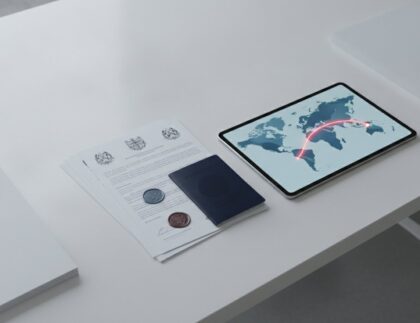
The ‘Golden Rule’ for 2026 is simple: digital scans are rarely sufficient. You must secure the original Death Certificate and Cremation Certificate. Additionally, a ‘Non-Infectious Note’ is a vital best practice. This letter, usually provided by the crematorium or a medical professional, confirms that the remains pose no health risk. It’s a small document that carries significant weight, preventing unnecessary delays during air transit security checks. Some European destinations, particularly in Southern Europe, may also require consular legalisation, which involves obtaining official embassy stamps before the transit begins.
The Essential 2026 Document Checklist
To ensure a dignified and uninterrupted journey, your documentation must be impeccable. We recommend preparing a folder containing:
- Certified Death Certificate: Ensure you have several copies; some may require official translations into the language of the destination country.
- Cremation Certificate: This must be the original issued by the Australian crematorium, detailing the deceased’s full name and date of cremation.
- Statement from the Crematorium: A formal letter confirming the urn contains only cremated remains and that the container is sealed.
Managing the Australian Public Health Unit
In certain Australian jurisdictions, you might need to engage with the local Public Health Unit to obtain an export clearance. Whilst the Australian Border Force confirmed in late 2024 that a formal export permit isn’t required, health-related declarations remain a standard requirement for many airlines. A specialist courier will manage these biosecurity steps, ensuring a smooth departure from Perth and providing you with peace of mind that every legal detail is handled with care.
Professional Packaging: Best Practices for Physical Security
Ensuring the physical integrity of remains is a primary concern for families shipping ashes from Australia to Europe. Professional packaging isn’t merely a box; it’s a multi-layered system specifically engineered to prevent leakage, absorb impact, and facilitate x-ray transparency. By following a structured approach, we ensure that your loved one is transported with the highest level of care and security.
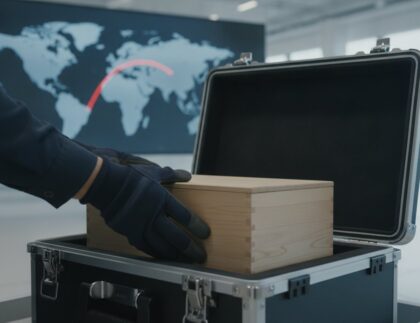
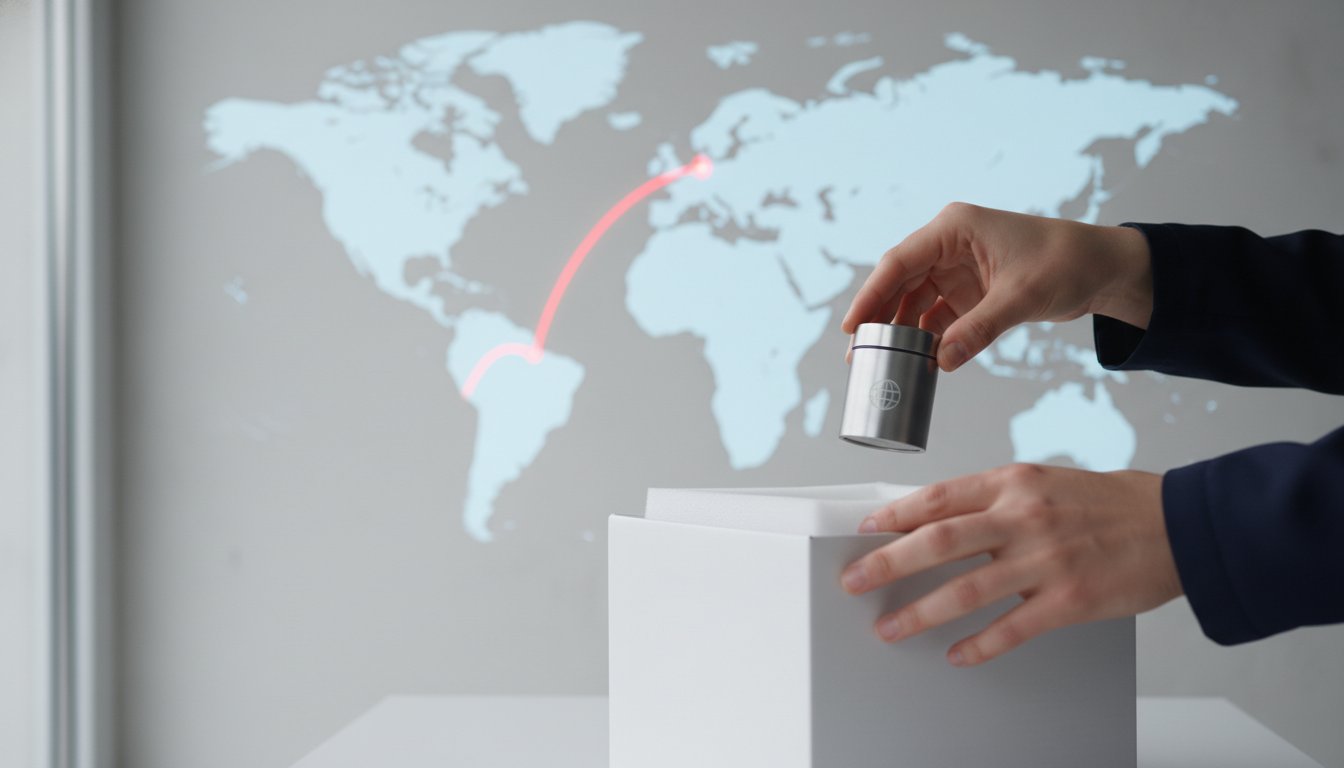
The ‘Double-Box’ method is our established standard for international transit. We place the primary urn inside a robust, discreet outer container, with the space between them filled with shock-absorbent materials. This creates a protective buffer against the rigours of international logistics. For internal containment, best practice involves placing the remains in a hermetically sealed poly-bag before they are settled into the transit urn, providing an extra layer of protection against environmental factors.
Choosing a Transit-Appropriate Urn
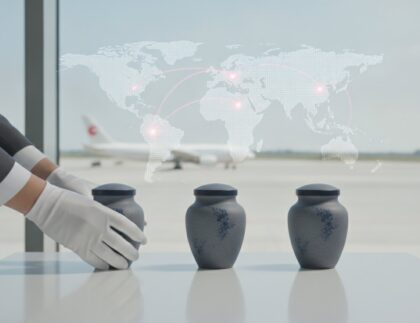
Whilst a heavy metal urn might feel like a permanent tribute, it often creates significant hurdles at airport security. Metal is opaque to x-rays, meaning security staff may be unable to verify the contents without further inspection. In 2026, we recommend using ‘scannable’ materials such as high-grade wood, biodegradable polymers, or reinforced cardboard for the journey. These temporary transit containers allow for clear imaging, ensuring the journey remains uninterrupted. Once the remains have arrived safely, they can be transferred to a permanent memorial urn at the final destination.
Discretion and Security Standards
Maintaining dignity means ensuring the package doesn’t draw unnecessary attention. We ensure the outer transit box is free from any identifying ‘funeral’ imagery or somber logos, allowing it to move securely and anonymously through the logistics network. Professional bereavement couriers utilise high-density foam inserts and vacuum-sealed internal layers to stabilise remains, ensuring they remain completely immobile during the significant gravitational shifts experienced on long-haul flights from Australia. If you have concerns about the specific requirements for your chosen destination, it’s often helpful to speak with a specialist who can advise on local customs expectations regarding labelling and privacy.
Labelling requires a delicate balance. Whilst ‘Fragile’ and ‘This Way Up’ stickers are essential for handling, we avoid using overly descriptive terms on the exterior of the package. This protects the family’s privacy and maintains the security of the remains amongst other cargo, ensuring they are treated with quiet respect throughout their journey to Europe.
Specialist Repatriation vs General Freight: Managing the Risks
Choosing the right partner for shipping ashes from Australia to Europe is a decision that extends far beyond cost. Many families fall into the ‘Prohibited Items’ trap, assuming that global couriers can handle the task through their standard networks. In reality, most major logistics firms list human remains as prohibited items within their terms of service. Attempting to bypass these rules risks the remains being impounded or returned. Using a cremated remains courier ensures that your loved one is never treated as standard commercial freight.
A specialist service maintains a strict chain of custody. Whilst general logistics companies rely on automated hub-sorting amongst thousands of commercial parcels, a dedicated provider offers point-to-point tracking. This level of oversight is vital for managing security nuances. Specialist couriers work closely with airport security to ensure remains are screened with dignity, utilising the scannable materials we discussed previously to avoid any requirement to open the urn.
Why Specialisation is Non-Negotiable
The risk of remains being ‘lost in transit’ is a genuine concern when using non-specialised firms. Specialist providers manage the human element of the journey, standing ready to address customs queries in Europe with professional composure. They act as an ethical guardian, ensuring that if a delay occurs, it’s managed with the sensitivity the situation requires rather than being processed as a transactional error.
Transatlantic and Global Transit Considerations
When shipping ashes from Australia to Ireland or the UK, specific regional protocols apply. By 2026, many airlines have tightened restrictions on carrying remains in the cabin, making professional courier services a more reliable alternative to accompanied luggage. This shift ensures that families aren’t faced with stressful boarding gate confrontations. If you’re unsure which transit method is most appropriate for your circumstances, we invite you to request a professional repatriation consultation to explore your options.
Ultimately, the value of a specialist lies in their emotional intelligence. The behaviour of a courier at the destination doorstep is as critical as the speed of delivery. A respectful handover provides the family with a sense of closure, confirming that the stewardship of their loved one’s memory was maintained until the very final moment.

Arrival in Europe: Customs Clearance and Memorial Logistics
The final stage of shipping ashes from Australia to Europe requires a precise understanding of the destination’s entry requirements. In 2026, the most critical technical detail is the application of the correct ‘Commodity Code’ on import documentation. This specific classification ensures that the remains are recognised as funerary items, which typically secures duty-free entry and exemption from Value-Added Tax (VAT). Using the correct codes prevents the remains from being held in commercial bonded warehouses, ensuring they move swiftly through customs to their final resting place.
For many global families, memorialisation isn’t confined to a single location. We’ve seen a significant rise in the ‘Ashes Splitting’ best practice, where remains are carefully divided before transit. This allows a loved one to be memorialised in multiple European centres, perhaps reflecting a childhood home in Italy whilst also allowing for a scattering ceremony in the Irish countryside. This approach acknowledges the complex, international lives many people lead and provides a sense of connection for family members across different continents.
We recommend starting the logistics process at least four weeks in advance. This lead time allows for the authentication of documents and the coordination of local delivery schedules without the stress of time-critical deadlines. Once the journey is complete, a formal ‘Delivery Confirmation’ serves as more than just a logistical update; it’s a respectful acknowledgement that the stewardship of your loved one’s memory has reached its destination with dignity.
Customs and Local Sensitivity
Navigating the ‘final mile’ requires an appreciation for local variations. In Germany, for instance, strict regulations often require ashes to be sent directly to a licensed funeral director for cemetery burial. Conversely, countries like France or Ireland may allow for more personal memorial options provided the cremation certificate is present. By managing VAT and import declarations accurately, we prevent intrusive inspections, ensuring the remains are treated with the utmost privacy upon arrival amongst European officials.
Next Steps for Your Loved One
If you’re ready to begin this journey, the first step is obtaining a factual, honest quote for Australia to Europe cremated remains courier services that includes all necessary customs paperwork. For a broader perspective on the process, you may find our pillar article, International Ashes Repatriation: A Dignified Guide to Transporting Cremated Remains in 2026, a helpful resource. When you’re prepared to move forward, please Contact SpeedLink Repatriation today to organise a secure repatriation handled with professional composure and profound empathy.
Honouring a Life with Professional Stewardship
The journey from Australia to a final resting place in Europe involves more than just logistics; it’s a profound act of stewardship. By prioritising the ‘Golden Rule’ of original documentation and utilising the ‘Double-Box’ packaging method, you ensure that every physical and legal requirement is met with precision. Choosing a specialist courier over general freight remains the most effective way to maintain a secure chain of custody whilst avoiding the ‘prohibited items’ traps common with standard carriers.
For over 20 years, SpeedLink Repatriation has served as a steady hand for families and funeral professionals alike. Established in 2003, our specialist division provides expert customs clearance in over 170 countries, ensuring that the complexities of shipping ashes from Australia to Europe are handled with both technical mastery and deep empathy. We’re here to take the burden of international regulations off your shoulders so you can focus on memorialising your loved one.
When you’re ready to begin this process, we invite you to Request a Dignified Repatriation Quote from SpeedLink Repatriation. You don’t have to manage these complexities alone; we’re ready to guide you through every step with care.
Frequently Asked Questions
Can I send human ashes from Australia through a standard courier like DHL?
Most standard couriers, including DHL and FedEx, explicitly prohibit the transport of human remains within their standard terms of service. Attempting to use these services risks the remains being impounded or returned as prohibited freight. Specialist providers are required because they operate within a dedicated bereavement logistics network, ensuring the remains are never treated as ordinary commercial cargo or subjected to automated hub-sorting.
What are the essential documents required for shipping ashes from Australia to Europe in 2026?
The essential documentation for shipping ashes from Australia to Europe includes the original Death Certificate and the Cremation Certificate issued by the crematorium. You’ll also need a ‘Non-Infectious Note’ to facilitate smooth air transit security. Depending on the destination, some European nations require these documents to be translated or legalised by their respective embassies before the journey begins to ensure full regulatory compliance.
How long does the international ashes repatriation process from Australia typically take?
The timeframe for international repatriation varies based on the destination country’s specific customs requirements and the speed of document authentication. Whilst the repatriation of a body can take between 7 and 21 days, transporting cremated remains is generally a more efficient process. Most families find that the journey is completed within two weeks, provided all paperwork is correctly prepared in advance to prevent administrative delays.
Is it legal to split ashes and send them to different countries in Europe?
It’s entirely legal and increasingly common for families to utilise a professional ashes splitting service to memorialise a loved one in multiple locations. This allows remains to be sent to different European countries to honour various family connections or personal wishes. Each portion must be accompanied by its own set of certified documents to ensure that every individual transit meets the specific import standards of the receiving nation.
What happens if my loved one’s ashes are held at customs in Europe?
If ashes are held at customs, it’s often due to missing documentation or the use of incorrect commodity codes on the import declaration. Specialist repatriation providers act as an ethical guardian in these situations, liaising directly with customs officials to resolve queries. They ensure the remains are treated with dignity whilst held, working to secure a swift release so the final journey can continue without intrusive inspections.

Article by
David McMillen
I started my career in logistics over 30 years ago which has spanned 2 continents and several different types of courier and logistics operations. I lost my dear Mum back in 2016 and it was in the aftermath of her passing that SpeedLink Repatriation was born. We have endeavoured to bring the same care and attention to all of our clients as my mum received and to date we have helped repatriate hundreds of individuals across the globe.
Disclaimer
International requirements for cremated remains vary by origin, destination, carrier and method of transport and may change without notice.
Content is provided as general guidance and should not be treated as legal advice.
Where necessary, current requirements should be confirmed with the relevant government authority, customs authority, embassy, consulate, postal operator, airline or carrier.
SpeedLink can advise on the requirements applicable to a specific shipment.