A final journey home shouldn't be defined by red tape, yet crossing a single international border can turn a sacred act into an overwhelming logistical challenge. You want to honor your loved one's wishes with the highest level of respect, but the fear of customs delays or disrespectful handling by standard couriers is a heavy burden to carry. Managing international ashes repatriation requires more than just a shipping label; it demands a deep understanding of global regulations and a commitment to ethical stewardship.
It's natural to feel confused by the conflicting requirements of different nations and airlines. This guide provides the clarity you need to move forward with confidence, ensuring every legal requirement is met while maintaining a secure, dignified chain of custody. We'll walk you through the updated 2026 documentation standards, including the mandatory use of official Priority Mail Express Cremated Remains containers and the latest TSA x-ray requirements for carry-on urns. By the end of this article, you'll understand how to navigate these complexities without the personal stress of managing the fine print alone.
Key Takeaways
- Understand the specific legal distinctions and regulatory frameworks that make international ashes repatriation a unique process compared to other forms of repatriation.
- Identify the essential "Golden Three" documents required by consulates and customs to ensure seamless, lawful transit across global borders.
- Evaluate the security risks and airline restrictions associated with carrying remains as hand luggage versus utilizing a professional courier.
- Learn the technical requirements for sift-proof packaging and X-ray friendly materials to prevent intrusive inspections and ensure respectful handling.
- Discover how specialized bereavement logistics can manage the entire door-to-door journey, providing a secure chain of custody and peace of mind.
Table of Contents
- What is International Ashes Repatriation?
- The Legal Framework and Essential Documentation
- Transport Methods: Professional Courier vs. DIY
- Preparing for Repatriation: Packaging and Bereavement Logistics
- SpeedLink Repatriation: Your Ethical Guardian for Global Transit
What is International Ashes Repatriation?
At its heart, international ashes repatriation is the dignified movement of cremated remains across national borders to fulfill a final wish. It is a specialized logistical process that bridges the gap between different legal jurisdictions, airline protocols, and customs requirements. While it may seem like a simple matter of transport, it is actually a highly regulated procedure. Before this journey begins, it is helpful to understand What is Cremation? and how it prepares the deceased for this transition into a stable, sterile form suitable for global travel.
In 2026, families are more geographically dispersed than ever before. A person might spend their youth in one country, their career in another, and their final years in a third. This global mobility has led to a rising need for services that can return a loved one to their ancestral roots or a chosen place of rest. Fulfilling this "final journey" carries immense emotional weight, providing closure for those left behind and ensuring the deceased’s legacy is honored exactly where they intended.
The Difference Between Ashes and Body Repatriation
Choosing to transport cremated remains is often a more manageable alternative to full-body repatriation. Moving a coffin involves significant complexity, including embalming requirements, heavy-duty zinc-lined crates, and immediate timelines to prevent decomposition. Conversely, ashes are sterile and do not pose the same health and safety risks. This allows for lower costs and much greater flexibility in timing. You don't have to rush the process; you can take the time to ensure every document is perfect before the journey begins.
Why Families Choose International Ashes Repatriation
There are many deeply personal reasons why families seek out international ashes repatriation. Often, it is about returning a loved one to their home country or a specific ancestral land to be near other family members. Other times, it's about fulfilling a specific scattering wish in a location that held great meaning during their life, such as a favorite coastline or mountain range. Modern families also use this service to:
- Consolidate family remains into a single global plot or columbarium.
- Divide remains so that different branches of a family across the globe can hold their own memorials.
- Ensure the deceased is laid to rest according to specific cultural or religious traditions that require a specific geographic location.
By handling the logistics with professional care, families can focus on the memorial itself rather than the stress of border crossings. It's about turning a complex administrative task into a seamless act of stewardship and respect.
The Legal Framework and Essential Documentation
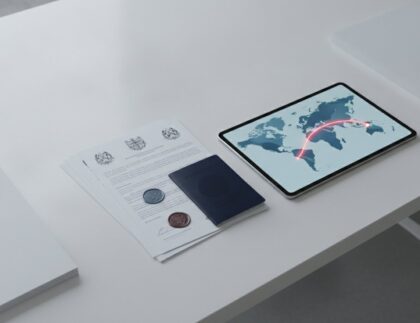
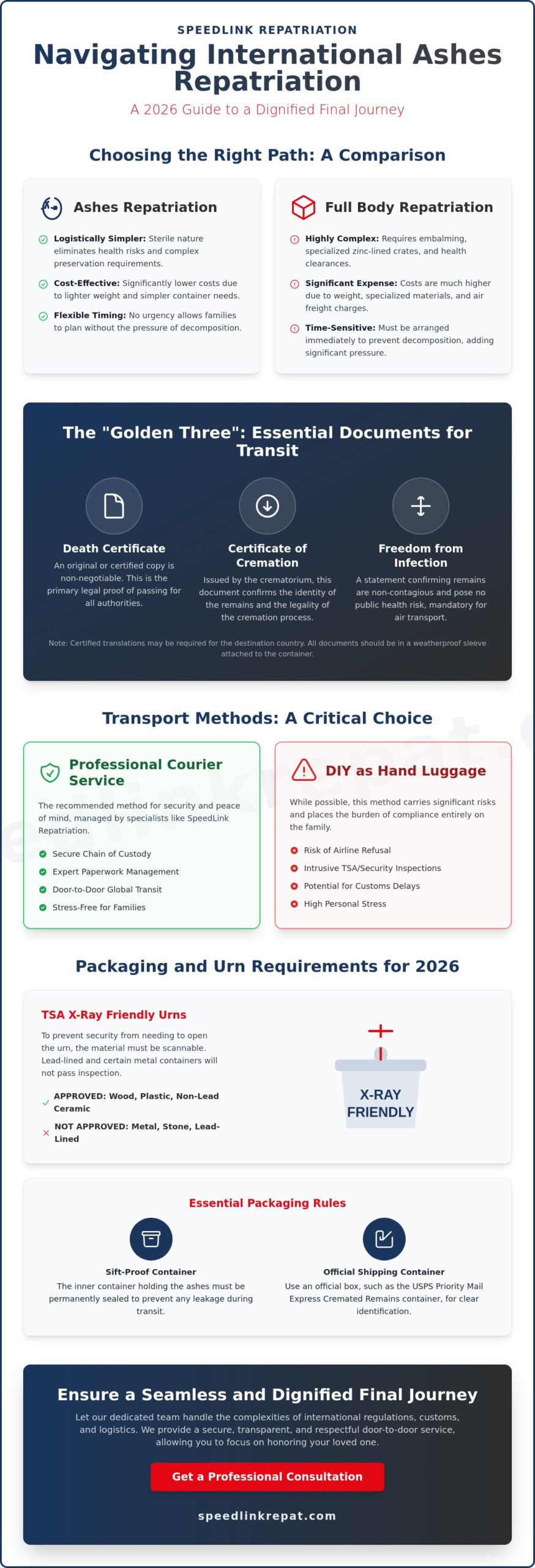
Securing the correct legal paperwork is the most critical step in ensuring your loved one's journey proceeds without interruption. While every nation maintains its own specific entry requirements, a set of "Golden Three" documents forms the foundation of almost every successful international ashes repatriation. These documents provide the legal proof of identity, cause of death, and the sterile nature of the remains, allowing customs officials to process the transit with the respect it deserves. Without these, you risk distressing delays or, in extreme cases, the refusal of entry at the border.
To maintain the highest ethical and safety levels during transit, we follow recognized funeral director shipping standards. These guidelines ensure that every document is not only present but also physically attached to the outer transport container in a weatherproof sleeve. This practice allows customs agents and airline staff to verify the contents without needing to disturb the sealed urn. If you're moving remains to a non-English speaking country, you'll likely need certified translations of every page to satisfy local municipal authorities.
Required Paperwork for 2026
The first essential is the Death Certificate, which must be an original or a certified copy from the issuing registrar. In some jurisdictions, such as Australia, registration fees for these certificates currently sit around AUD $64. The second is the Certificate of Cremation, issued by the crematorium to confirm the process was completed according to local law. Finally, you'll need a "Freedom from Infection" certificate or a non-contagious statement. This document, often provided by a doctor or the crematorium, confirms that the remains pose no risk to public health, which is a mandatory requirement for some international air transit routes.
Customs and Consular Clearances
Navigating the requirements of a Consulate or High Commission is where the process often becomes complex. For those managing a USA to UK route, you must secure a burial transit permit and an overseas certificate, specifically the Certificate of Entry of Cremation. Some nations also require a "Laissez-Passer" for human remains, a formal diplomatic document that acts as a passport for the deceased. A specialist courier who understands bereavement logistics can manage these consular declarations on your behalf, ensuring that every stamp and signature is in place before the journey begins. This professional oversight prevents the anxiety of having remains held in a customs warehouse due to a missing permit or an incorrectly filed declaration.
Transport Methods: Professional Courier vs. DIY
Choosing how to move your loved one's remains is a decision that balances personal preference with logistical reality. Many families initially consider carrying the ashes themselves as hand luggage, believing it's the most personal way to complete the journey. However, the landscape of international ashes repatriation has become increasingly complex. While some airlines allow this, others have moved toward stricter prohibitions or require extensive pre-clearance that can be difficult to manage while you are grieving. The process is rarely as simple as buying a ticket and boarding a plane.
It's a common misconception that standard global couriers like DHL, FedEx, or Royal Mail are suitable options for this task. In reality, most commercial parcel networks explicitly prohibit the shipment of human remains in their standard terms of service. They aren't designed to provide the specialized "Chain of Custody" required for such sensitive cargo. If a standard courier discovers remains in their system, they may halt the shipment indefinitely. This leads to a distressing situation where a loved one is stuck in a sorting facility. Using a specialized service ensures your loved one is never treated as a mere "parcel" in a high-volume network.
The Risks of DIY Transport
Attempting a DIY approach carries significant emotional and practical risks. TSA regulations in 2026 require that any urn carried through security must be made of materials that can be X-rayed, such as wood, cardboard, or plastic. Metal urns are highly problematic because they appear as opaque blocks on scanners. Since security agents are strictly prohibited from opening a sealed urn for inspection, a metal container can lead to a flat refusal at the checkpoint. The emotional toll of being stopped by security or denied boarding can be devastating. Some carriers have also updated their policies to only allow cremated remains in the cargo hold, which means you might be forced to check the remains as standard luggage at the gate without the necessary protective packaging.
The Specialist Courier Advantage
A professional courier provides a dedicated door-to-door service that removes the logistical weight from your shoulders. This isn't just about transport; it's about a secure, documented chain of custody from the moment the remains are collected until they reach their final destination. Specialized providers use tracking protocols designed for "invaluable" cargo, ensuring the location of the remains is known at every stage. This expertise is especially vital for the "last mile" of the journey. Whether the destination is a private residence or a funeral home, a professional courier manages the hand-off with the same level of dignity that began the journey. While DIY might seem cheaper on the surface, the peace of mind provided by professional international ashes repatriation services often proves far more valuable.
Preparing for Repatriation: Packaging and Bereavement Logistics
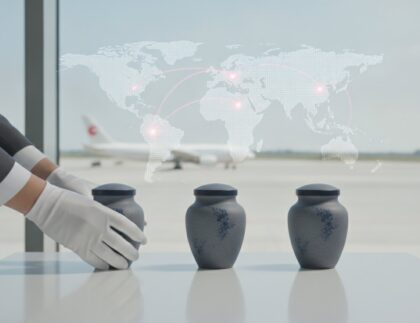
Preparing a loved one for transit requires a meticulous, multi-layered approach to packaging that ensures both legal compliance and physical protection. While earlier sections focused on the legalities, the physical preparation is what guarantees the remains arrive in a dignified condition. It starts with the urn itself. International security protocols, including those managed by the TSA, require that containers be made of materials that allow X-rays to pass through clearly. Wood, cardboard, plastic, and specific high-density polymers are the preferred choices. If a container is opaque to scanning equipment, it can lead to intrusive inspections that no family should have to endure.
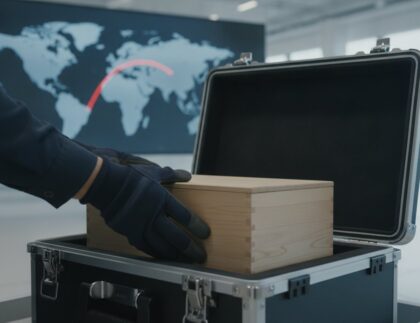
Beyond the urn, the "Outer-Casing" serves as the primary defense against the rigors of global transit. This secondary container must be both shock-resistant and "sift-proof." Sift-proof packaging is a technical requirement designed to prevent any accidental escape of remains due to vibration or pressure changes during flight. It's a standard that reflects our commitment to stewardship, ensuring that the remains are treated with the highest level of care from the moment they leave our hands until they reach their destination.
Professional Packaging Standards
A professional approach to international ashes repatriation involves several internal safeguards that go beyond a simple box. Internal "poly-bagging" is a vital step; placing the remains in a sealed, industrial-grade bag inside the urn provides an extra layer of security against leakage. The outer packaging should be discreet and respectful. We avoid using overly clinical or obvious markings that might draw unwanted attention, instead using specific, legally required "Cremated Remains" labels that are recognized by customs officials worldwide. This balance of transparency and privacy is essential for a peaceful journey.
Beyond Transport: Bereavement Logistics
Modern families often face the challenge of being spread across multiple continents, which is why bereavement logistics now include more than just movement. You might find that family members in different countries wish to hold their own local memorials. Our Ashes Splitting Service allows for the remains to be carefully divided and sent to separate global locations, fulfilling the needs of the entire family. We also coordinate with global scattering services if the final wish involves a memorial at sea or in a specific protected landscape. If the destination memorial is delayed, secure storage can be arranged to ensure the remains are held in a dignified, respectful environment until the family is ready to proceed. This comprehensive coordination between international funeral directors and our logistics team ensures that every detail, no matter how small, is handled with professional composure.
SpeedLink Repatriation: Your Ethical Guardian for Global Transit
SpeedLink operates with a singular focus on the transport of cremated remains. While many funeral directors offer repatriation as a secondary service, we approach international ashes repatriation as a dedicated logistical discipline. This specialization allows us to master the intricate details that generalists might overlook, ensuring every step of the journey is handled with professional composure and profound empathy. We act as an ethical guardian, taking the logistical burden off your shoulders so you can focus on honoring your loved one's memory without the distraction of administrative hurdles.
Our expertise is particularly deep within the USA to UK and Ireland corridor. We understand the specific nuances of transatlantic regulations, including the mandatory 2026 requirements for specialized packaging and the detailed clearances needed for entry into the United Kingdom. By maintaining a narrow focus on ashes rather than full-body repatriation, we provide a more agile and precise service. Your loved one's journey remains uninterrupted, moving through a secure chain of custody that prioritizes dignity and reliability above all else.
Why Choose a Logistics Specialist Over a Generalist?
A logistics specialist understands that cremated remains have unique technical and legal requirements compared to other forms of transit. We don't manage funeral directing or coffin transport; we focus entirely on the secure movement of urns and bereavement logistics. This focus allows us to offer real-time tracking and a dedicated point of contact who understands your specific situation. Our team stays current with the latest 2026 customs protocols and airline mandates, ensuring your paperwork is filed correctly the first time to avoid unnecessary delays at the border. We treat every shipment as invaluable cargo, providing a level of stewardship that general courier networks simply cannot match.
Starting the Process with Confidence
We believe in a people-first approach that begins with listening. Every repatriation story is different, and our initial consultation is designed to understand your specific needs before we begin the planning phase. We provide a transparent process, allowing you to move forward with a sense of calm and security. Our goal is to provide a steady hand during a difficult time, ensuring the legal and logistical aspects of the transit are executed with technical mastery. If you are ready to begin this final journey, you can Contact SpeedLink for a Dignified Repatriation Quote. Our team is here to guide you through every detail with the care and expertise your loved one deserves.
Honoring Your Loved One's Final Journey
Honoring the final wishes of a loved one is a sacred responsibility that deserves a seamless, respectful process. We've explored how navigating the 2026 legal landscape and securing the essential documentation are the first steps in preventing distressing border delays. Choosing a professional path over a DIY approach ensures that your loved one remains in a secure, dignified chain of custody, rather than being subjected to the risks of standard commercial parcel networks or intrusive security inspections.
As a specialized division of SpeedLink Transport Limited, established in 2003, we bring over two decades of logistical mastery to every case. Our dedicated door-to-door ashes courier service provides the steady hand needed to bridge the gap between continents. We specialize in the intricate details of USA to UK and Ireland bereavement logistics, ensuring that every regulatory requirement is met with precision and care. You don't have to manage the complexities of international ashes repatriation alone.
Our team is here to guide you through these practicalities with both technical expertise and profound empathy. When you're ready to take the next step, you can Request a Compassionate Consultation & Quote to discuss your specific needs. It's our privilege to help you bring your loved one home with the integrity and peace of mind you deserve.
Frequently Asked Questions
Can I ship cremated remains through standard couriers like DHL or UPS?
All commercial couriers like DHL, FedEx, or UPS explicitly prohibit the shipment of human remains in their standard terms of service. These global networks are designed for high-volume commercial cargo and don't provide the specialized chain of custody or dignified handling required for such a sensitive task. Attempting to use these services risks the remains being held or refused at sorting facilities. Using a specialist service ensures your loved one is treated with the appropriate level of stewardship and legal compliance throughout the journey.
What are the most important documents needed for international ashes repatriation?
The foundation of international ashes repatriation relies on the "Golden Three" documents: the original Death Certificate, the Certificate of Cremation, and a "Transit Permit" in some cases. Depending on the destination, you may also require consular clearances, a burial transit permit, or certified translations of all paperwork. Having these documents physically attached to the outer transport container in a weatherproof sleeve is a standard industry practice that facilitates smoother customs inspections and prevents unnecessary delays at the border.
Does the urn need to be made of a specific material for air travel?
Urns must be made of materials that allow X-rays to pass through clearly to satisfy airline and security protocols. TSA regulations in 2026 recommend wood, cardboard, plastic, or biodegradable polymers for this purpose. Metal urns aren't recommended because they appear opaque on scanners, and security agents are legally prohibited from opening a sealed urn to verify its contents. Choosing an X-ray friendly material prevents intrusive inspections and ensures the remains move through checkpoints without being disturbed.
How much does international ashes repatriation cost in 2026?
Costs for transporting remains across borders vary significantly based on the destination country, required consular fees, and airline-specific charges. While basic mailing fees from some countries are fixed, professional door-to-door international ashes repatriation is priced based on the complexity of the logistics and the level of security required for the specific route. It's best to check with a specialist for a transparent, no-obligation quote tailored to your specific requirements and the current international regulatory landscape.
Is it legal to split ashes and send them to different countries?
It's entirely legal to split ashes to fulfill the wishes of family members residing in different countries. This process requires a separate set of original or certified documents for each portion of the remains to satisfy the customs requirements of each destination nation. Our specialized splitting and packaging services ensure that each part of the journey is handled with the same level of legal precision and care as a single repatriation, allowing families to hold multiple memorials globally.
How long does the international repatriation process typically take?
The timeline for repatriation typically ranges from ten days to several weeks, depending on how quickly the necessary documents and consular stamps are procured. Securing a death certificate and obtaining clearances from a High Commission or Embassy is often the most time-consuming phase of the process. Once the legal framework is in place, the physical transit is relatively swift, often completed within a few days through a secure, dedicated courier network that avoids high-volume sorting hubs.
Can SpeedLink help with scattering the ashes in a foreign country?
Yes, we provide assistance with global ashes scattering as part of our comprehensive bereavement logistics. We coordinate with local partners and authorities in the destination country to ensure the scattering is performed according to local laws and your loved one's specific wishes. This service provides peace of mind for families who can't travel to the location themselves, knowing their loved one has been laid to rest with the highest level of dignity and respect.
What happens if the ashes are stopped at customs?
Customs delays usually occur due to incomplete documentation, incorrect declarations, or the use of non-compliant packaging materials. If remains are held, officials will require the missing permits or certified translations before allowing the journey to continue. A specialist courier acts as your advocate in these situations, using established expertise to resolve issues quickly. This professional oversight is vital for maintaining a secure chain of custody and preventing the remains from being held in a standard customs warehouse.