Entrusting a loved one’s final journey to a standard postal service is a risk that very few families are willing to take whilst they’re grieving. When you’re tasked with sending a loved one’s ashes overseas, the weight of responsibility can feel immense, especially when faced with the strict regulations of international carriers or the complex customs requirements of different nations. You’re likely worried about the prospect of precious remains being lost, delayed, or held at a border due to a minor paperwork error. It’s a deeply personal task that demands both technical precision and a gentle, respectful touch.
This guide provides clarity on the legal requirements, documentation, and specialist logistics needed to ensure a dignified and secure final journey for your loved one’s cremated remains. We’ll offer a clear roadmap through the maze of international laws, from essential certificates to the specific containers required for air travel. By the end, you’ll understand how a dedicated, door-to-door solution can manage the red tape and provide the total peace of mind you deserve during this difficult time.
Key Takeaways
- Understand why specialised logistics are essential, as standard courier networks often refuse to carry cremated remains due to strict internal risk policies.
- Discover the essential documentation required when sending a loved one’s ashes overseas, including the certified certificates needed to satisfy international customs regulations.
- Learn the technical packaging requirements for a secure journey, such as selecting X-ray friendly urn materials and utilising professional “box-within-a-box” protocols.
- Establish a clear roadmap for the repatriation process, from the initial expert assessment to final door-to-door delivery or global scattering arrangements.
Understanding the Process of Sending a Loved One’s Ashes Overseas
International ashes repatriation is the specialised, professional transfer of cremated remains between nations. It’s a discipline that sits at the intersection of complex global logistics and deeply personal bereavement care. When you’re sending a loved one’s ashes overseas, you aren’t merely posting a parcel; you’re overseeing a final, sacred journey. Unlike general freight, this process requires a “people-first” approach that ensures every border crossing is handled with the highest level of integrity.
Many families are surprised to learn that standard commercial couriers often refuse to carry human remains. Their internal policies are designed for high-volume, low-risk cargo, and the legal complexities of transporting remains often fall outside their operational scope. If a standard carrier discovers ashes within their network, the shipment may be halted or returned, adding unnecessary layers of stress to an already difficult time.
Why Specialist Handling is Essential
In most jurisdictions, cremated remains are legally classified as human remains. This status triggers specific regulatory requirements that vary significantly from one country to the next. Specialist bereavement logistics providers understand these nuances, preventing the risks associated with incorrect labelling or customs impoundment. Without expert oversight, remains can face lengthy delays whilst in transit, often held in impersonal warehouses that lack the dignity your loved one deserves.
The Emotional Weight of the Final Journey
Essential Documentation and Legal Requirements for International Repatriation
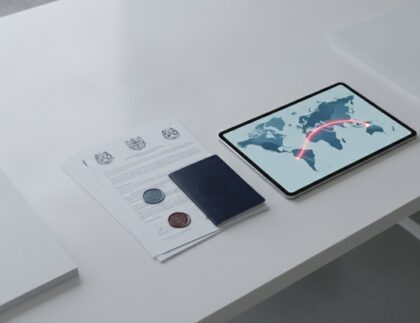
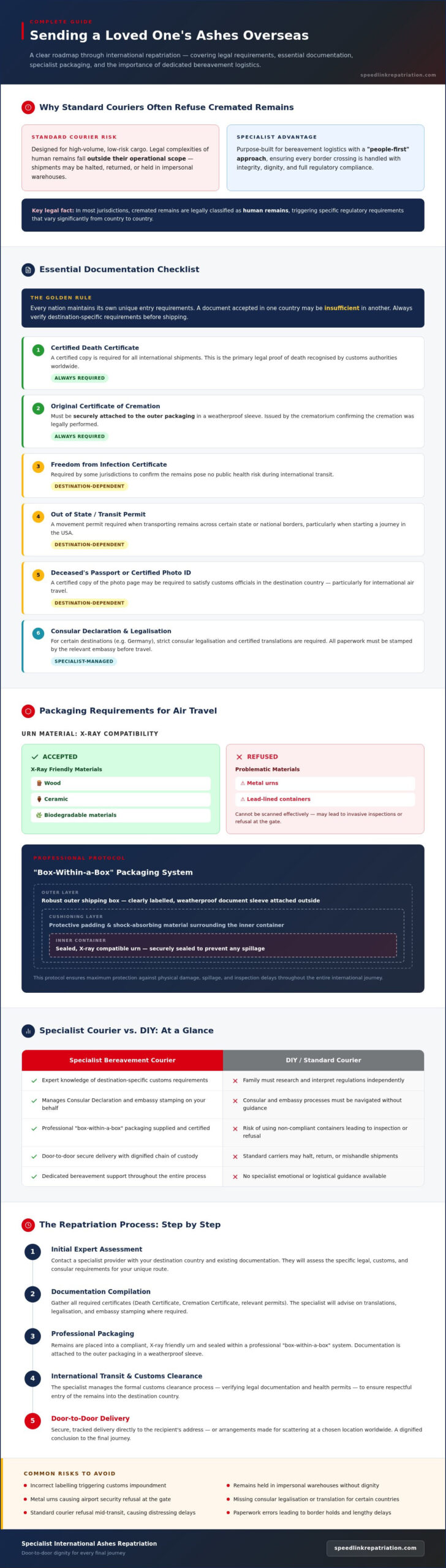
The ‘Golden Rule’ when sending a loved one’s ashes overseas is that every nation maintains its own unique entry requirements. Whilst the process might seem uniform, a document accepted in one country may be insufficient in another. You’ll always need the core document set: a certified copy of the Death Certificate and the original Certificate of Cremation. Some jurisdictions also require a ‘Freedom from Infection’ certificate or an ‘Out of State’ permit to ensure the remains don’t pose a public health risk during transit.
A Checklist of Required Paperwork
Specialist providers manage the complex ‘Consular Declaration’ on your behalf, ensuring all paperwork is stamped by the relevant embassy before travel. It’s vital to follow USPS regulations for shipping ashes if you’re starting your journey in America, as they’re the only legal postal carrier for remains there. Customs clearance for cremated remains is the formal process of verifying legal documentation and health permits to allow the respectful entry of human remains into a destination country. If the paperwork feels overwhelming, you can always speak with a specialist for guidance on your specific route.
Professional Packaging and Transport Options: Specialist Courier vs. DIY
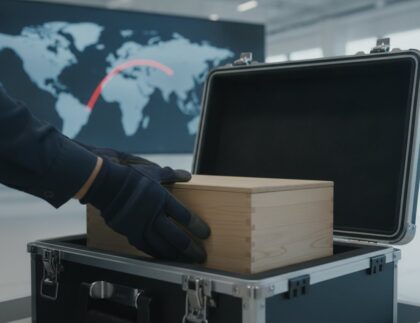
When you’re sending a loved one’s ashes overseas, the physical integrity of the container is just as vital as the legal paperwork. Many families assume any urn will suffice, but modern security protocols require specific materials. Non-metallic urns made of wood, ceramic, or biodegradable materials are essential for X-ray security. Metal or lead-lined containers often cannot be scanned effectively, which can lead to invasive inspections or remains being refused by airline staff at the gate.
Professional packaging follows a strict “box-within-a-box” protocol to ensure maximum security. The urn is placed inside a primary container with ample internal cushioning, which is then secured within a secondary, robust outer carton. This method protects against the rigours of international transit and ensures the remains are handled with the highest level of care throughout their journey.
IATA Standards for Shipping Cremated Remains
The International Air Transport Association (IATA) provides the global benchmark for secure air transit. These guidelines dictate that outer packaging must be discreet to maintain privacy, yet clearly identifiable to officials through specialised labelling. Adhering to these standards prevents the remains from being treated as standard freight, ensuring they receive the professional stewardship they require during every flight leg.
Why Door-to-Door Courier Services Win on Security
Arranging a Dignified Journey with Specialist Bereavement Logistics
Initiating the repatriation process begins with a detailed consultation and assessment. This first step allows you to discuss your specific requirements and receive a clear roadmap for the journey ahead. When you’re sending a loved one’s ashes overseas, the logistics provider acts as an ethical guardian. They take on the burden of regulatory compliance, ensuring the remains are treated with personal attention and stewardship rather than being processed as mere cargo.
Additional Services for Global Families
Families often reside across multiple continents, which can make deciding on a final resting place difficult. A professional ashes splitting service allows remains to be shared amongst relatives in different countries, ensuring everyone can find comfort. Additionally, global scattering arrangements can be organised in favourite locations abroad, providing a dignified farewell in a place that held special meaning for your loved one.
Choosing the Right Partner
When selecting a bereavement logistics provider, look for a balance of transparency, empathy, and technical expertise. You need a partner who understands the emotional weight of the task whilst possessing the global reach to handle complex customs borders with ease. Choosing a specialist ensures that the process remains human-centric from the first call to the final hand-over. To begin this journey with a steady hand, contact SpeedLink Repatriation for a compassionate consultation on international ashes transport.
Ensuring a Respectful Final Journey for Your Loved One
Managing the complexities of international repatriation doesn’t have to be a source of further stress during your time of grief. By understanding the specific documentation requirements and prioritising secure, IATA-compliant packaging, you protect the dignity of the remains throughout their transit. Choosing a dedicated specialist over the uncertainty of the postal system provides the reliability and transparency your family deserves. Sending a loved one’s ashes overseas is a significant responsibility, but you don’t have to navigate the red tape alone.
SpeedLink Repatriation has been a specialist international logistics provider since 2003, offering expert customs clearance management and a door-to-door secure chain of custody. You can request a dignified repatriation quote from SpeedLink Repatriation today to ensure every detail is handled with professional composure. We’re here to provide the steady hand and compassionate expertise required to bring your loved one home with the honour they merit.
Frequently Asked Questions
Can I send a loved one’s ashes through a standard courier like DHL or FedEx?
Standard couriers like DHL and FedEx typically refuse to carry human remains due to internal risk policies and insurance limitations. If remains are discovered within their network, they may be impounded or returned to the sender. Using a specialist bereavement logistics provider ensures a secure, legal alternative where your loved one is treated with dignity rather than being processed as standard commercial freight.
What are the specific rules for shipping cremated remains from the USA to the UK?
Shipping from the USA to the UK requires a certified death certificate and a certificate of cremation. You must ensure the remains are housed in an X-rayable container to satisfy security protocols. Whilst USPS is the only US postal option, a specialist courier provides a more comprehensive solution by managing the complex UK customs clearance process and providing a secure, door-to-door chain of custody.
Do I need a special urn for international ashes transport?
You must use a non-metallic urn made from materials such as wood, ceramic, or biodegradable composites. Metal or lead-lined containers are prohibited because they block X-ray scanners, which can lead to invasive inspections or refusal by airline staff. When sending a loved one’s ashes overseas, professional packaging also requires a robust secondary outer box with internal cushioning to protect the remains from international transit.
How long does the international ashes repatriation process typically take?
The process usually takes between 7 and 14 days from the initial assessment to the final hand-over. This duration accounts for gathering the necessary consular stamps, professional packaging, and the time required for international customs clearance. Specialist providers maintain a methodical rhythm to ensure every legal detail is perfect, which prevents the lengthy delays often associated with incorrect paperwork or standard postal services.
Is it cheaper to fly with ashes or use a specialist courier service?
Hand-carrying remains on a flight can sometimes appear less expensive, but it often involves significant emotional stress and the risk of being stopped at security. A specialist courier offers a more reliable and secure outcome for sending a loved one’s ashes overseas. This service includes expert documentation management and professional stewardship, providing a predictable, door-to-door solution that removes the logistical burden from the grieving family.

Article by
David McMillen
I started my career in logistics over 30 years ago which has spanned 2 continents and several different types of courier and logistics operations. I lost my dear Mum back in 2016 and it was in the aftermath of her passing that SpeedLink Repatriation was born. We have endeavoured to bring the same care and attention to all of our clients as my mum received and to date we have helped repatriate hundreds of individuals across the globe.
Disclaimer
International requirements for cremated remains vary by origin, destination, carrier and method of transport and may change without notice.
Content is provided as general guidance and should not be treated as legal advice.
Where necessary, current requirements should be confirmed with the relevant government authority, customs authority, embassy, consulate, postal operator, airline or carrier.
SpeedLink can advise on the requirements applicable to a specific shipment.