What if the most daunting part of saying goodbye wasn’t the final farewell, but the intricate web of international regulations required to bring your loved one home? When a death occurs overseas, the emotional weight is often compounded by a sudden, confusing list of logistical requirements. Understanding the total cost of repatriating ashes involves more than just looking at a courier fee; it requires a deep dive into airline policies, consular documentation, and the specialised security measures that keep remains safe. You likely feel that the process should be simpler, more transparent, and, above all, deeply respectful.
We understand that during such a sensitive time, you need clarity rather than corporate jargon. This guide promises to demystify the financial structure of international transit, highlighting the hidden fees and bureaucratic hurdles that often catch families off guard. We’ll explore how professional bereavement logistics provide a secure, door-to-door solution, ensuring you have the peace of mind that your loved one’s remains are being handled with the highest level of integrity and care.
Key Takeaways
- Identify the primary logistical drivers, including geographic corridors and transit urgency, that influence the overall cost of repatriating ashes.
- Gain clarity on the mandatory legal documentation and professional packaging standards required to navigate international customs without delay.
- Compare the hidden risks of self-managed transport against the security of a door-to-door courier service that handles all bureaucratic hurdles on your behalf.
- Learn how to streamline the process by combining transport with additional requirements such as secure storage or a professional ashes splitting service.
Factors that Influence the Financial Investment of Repatriating Ashes
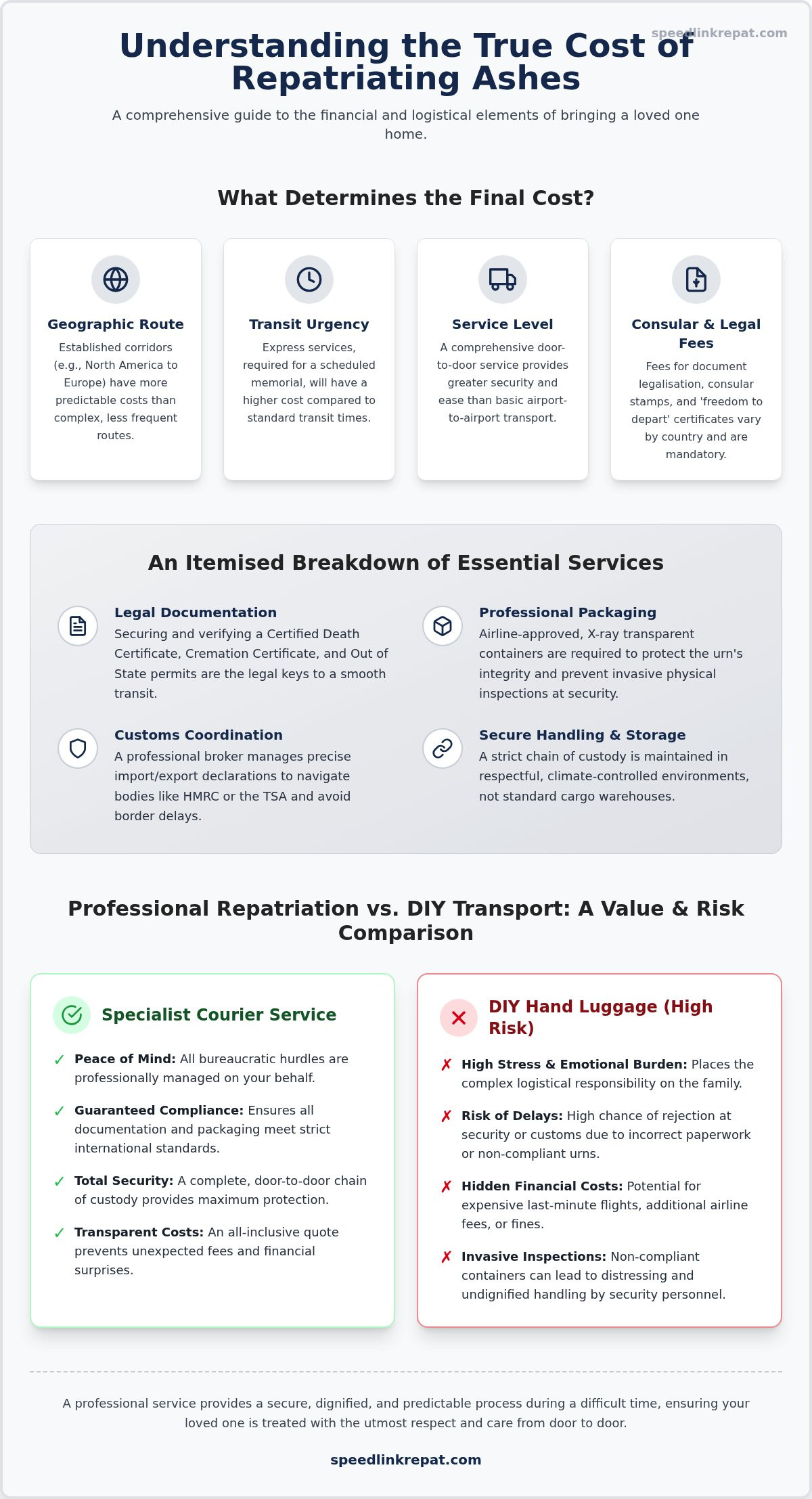
The financial aspect of returning a loved one’s remains is rarely determined by distance alone. It’s a complex interplay of legal compliance and logistical precision. When calculating the cost of repatriating ashes, you must consider how geographic routes and service levels influence the total investment. Established corridors, such as those from North America to Europe, often benefit from more predictable cost structures due to frequent transit and clear regulatory frameworks.
These global practices in repatriation vary significantly between nations. Whilst standard scheduling is an option, the need for express transit for a scheduled memorial service will naturally affect the final quote. Choosing a comprehensive door-to-door solution ensures every administrative detail is managed, providing a level of security and ease that basic airport-to-airport transport cannot match.
Destination Requirements and Consular Fees
Every country maintains specific protocols for the legalisation of documents. Some nations require “freedom to depart” certificates or consular stamps to verify the authenticity of a cremation certificate. These administrative steps often involve fees set by the embassy or consulate. Navigating these requirements is a significant part of the cost of repatriating ashes, as ensuring these documents are correct prevents distressing delays at customs and guarantees that the remains are treated with dignity.
Logistical Distance and Transport Modes
Domestic transport within the UK is relatively straightforward, but transcontinental routes involve intricate air freight logistics. Specialised air transport for cremated remains is priced differently from standard cargo because it requires high-security handling and adherence to strict airline safety rules. Utilising a dedicated USA to Ireland courier service, for example, bridges the gap between complex international regulations and a seamless, dignified return home.
Breaking Down the Essential Expenses: From Documentation to Secure Transit
Managing the financial side of a bereavement is often overwhelming. While many focus solely on transport, the cost of repatriating ashes includes vital administrative and protective measures. This reflects broader economic trends seen in the rising cost of dying, where specialised services ensure compliance and respect. Essential expenses begin with securing a certified Death Certificate, a Cremation Certificate, and, for many international routes, an Out of State permit. These documents aren’t merely paperwork; they are the legal keys to a smooth transit.
The Necessity of Professional Packaging
Security protocols in 2026 are stringent. Airlines and national security agencies require containers that are X-ray transparent. If an urn is made of metal or dense stone, it may be rejected at security checkpoints. Professional packaging services provide bespoke, airline-approved containers that protect the urn’s integrity whilst maintaining a discreet, dignified appearance. This investment ensures the remains aren’t mishandled or subjected to invasive physical inspections during transit.
Administrative and Customs Coordination
Navigating the specific requirements of HM Revenue & Customs in the UK or the TSA in the USA requires technical mastery. Customs clearance involves a professional broker managing precise import and export declarations to avoid lengthy delays at the border. In some instances, professional document translation is mandatory to satisfy local authorities. Beyond the border, secure storage and handling are critical. This involves maintaining a strict chain of custody within climate-controlled, respectful environments to ensure your loved one is never left in standard cargo warehouses. These factors all contribute to the total cost of repatriating ashes, ensuring a process that prioritises integrity over speed. If you’re feeling unsure about these requirements, you can speak with our team for guidance on your specific route.
Specialist Courier vs. Airline Hand Luggage: Evaluating Value and Risk
Choosing between a DIY approach and a professional service is a pivotal decision. Whilst carrying remains as hand luggage may appear to reduce the cost of repatriating ashes, this choice often masks significant “hidden” expenses. Last-minute travel for a family member, additional airline fees, and the risk of heavy fines for incorrect paperwork can quickly exceed the price of a specialist service. Beyond the financial aspect, the emotional toll of personally supervising remains through crowded terminals is a burden many find overwhelming.
There’s also the very real risk of seizure. If declarations aren’t precise, customs authorities may hold remains in a warehouse, incurring daily storage fees whilst the issue is resolved. Standard travel insurance typically fails to cover these unique logistical needs or the liability associated with remains. Following the National Funeral Directors Association guidance on shipping remains ensures you’re aware of the strict compliance required for international transit to avoid these pitfalls.
The Realities of Carrying Ashes on a Plane
A specialist cremated remains courier from the USA to Europe removes the need for you to travel personally. This often lowers the total bereavement expenditure by eliminating expensive airfare and accommodation costs for the family. You benefit from real-time tracking and a single point of contact who acts as an ethical guardian for your loved one. To discuss a tailored, secure solution for your situation, get in touch with our specialists today.
Organising a Dignified Return: How to Manage Your Budget and Expectations
Achieving a seamless return requires clear communication from the outset. To receive an accurate breakdown of the cost of repatriating ashes, providing exact collection and delivery locations is essential. This allows for the calculation of specific customs requirements and transit fees unique to your route. Whether you are arranging specialised transit from USA to Ireland or navigating the complexities of Australia to Europe, having these details ready ensures the logistical plan is robust and realistic.
Efficiency often lies in consolidation. Many families find it more practical to combine transport with additional requirements, such as secure storage or a professional ashes splitting service. This approach allows for the remains to be prepared for multiple memorials or divided amongst family members in different regions before they reach their final destination. Once the journey is complete, we coordinate delivery either directly to a family residence or to a local funeral director, depending on your preference for the final ceremony.
Planning for Bereavement Logistics
Integrating the cost of repatriating ashes into your broader memorial budget helps avoid financial surprises during a time of grief. Specialist logistics don’t just move remains; they support the emotional goals of the family, such as coordinating global scattering ceremonies. By delegating the bureaucracy to experts, you can focus on the personal aspects of the farewell whilst knowing the legalities are fully managed.
Securing a Transparent Quote with SpeedLink Repatriation
A “no hidden fees” philosophy is central to ethical bereavement services. When you contact us, having your documentation at hand allows for a prompt and detailed logistical plan. We prioritise transparency, ensuring you understand every factor that influences the quote. This methodical approach provides the control and predictability you need to plan a dignified and respectful return for your loved one.
Securing Your Loved One’s Journey Home
Bringing a loved one home shouldn’t be a source of additional distress. We’ve explored how the cost of repatriating ashes is defined by more than just distance; it reflects the meticulous legal documentation, specialised packaging, and secure chain of custody required for international transit. Whilst carrying remains personally might seem like a simpler path, the security of a professional courier eliminates the risk of customs delays and the emotional burden of navigating checkpoints alone.
Since 2003, SpeedLink Repatriation has served as a steady hand in bereavement logistics. We specialise in the complex USA to UK customs requirements, providing a compassionate door-to-door service that ensures your loved one is handled with the utmost dignity. You don’t have to face these bureaucratic hurdles without support.
Please request a dignified and transparent repatriation quote from our specialists to begin the process with confidence. We’re here to guide you every step of the way.
Frequently Asked Questions
Is it cheaper to ship cremated remains than to repatriate a body?
Shipping cremated remains is a logistically efficient and respectful way to bring a loved one home from overseas. This method is often preferred for its simplicity compared to other international transit options, which involve more invasive requirements. The cost of repatriating ashes covers secure courier handling and administrative compliance, allowing families to focus on their memorial plans whilst we manage the complex legalities of international movement.
What are the mandatory documents needed to ship ashes to the UK?
To import ashes into the UK, you must provide a certified copy of the Death Certificate and a Cremation Certificate from the crematorium. Depending on the origin country, you might also require a transit permit or a consular certificate. These documents ensure the remains are cleared by customs without delay. Specialist couriers manage this documentation process to ensure every legal requirement is met before the journey begins.
Do I need to pay customs duty or VAT on repatriated ashes?
Cremated remains are typically exempt from customs duty and VAT when being repatriated to the UK for burial or scattering. However, the urn or container itself must be correctly declared on customs forms to qualify for this relief. Using a professional bereavement logistics provider ensures that all import declarations are handled correctly, preventing unexpected charges or bureaucratic hurdles that might occur with an incorrect or incomplete customs filing.
Can I send ashes through standard international courier services like DHL or FedEx?
Most standard international couriers, including DHL, FedEx, and UPS, strictly prohibit the transport of human ashes within their networks. These remains require specialised handling and a secure chain of custody that general parcel services don’t provide. Attempting to use these services can lead to remains being seized or held indefinitely. A dedicated cost of repatriating ashes service provides the legal and ethical framework necessary for safe, compliant transit.
How long does the international ashes repatriation process usually take?
The timeline for international repatriation typically ranges from seven to fourteen days. This duration depends heavily on the speed at which local authorities issue the necessary death and cremation certificates. Once the documentation is in order, the physical transit usually takes between three and five business days. Providing exact locations and dates during your initial consultation helps us to create a more precise schedule for the journey home.

Article by
David McMillen
I started my career in logistics over 30 years ago which has spanned 2 continents and several different types of courier and logistics operations. I lost my dear Mum back in 2016 and it was in the aftermath of her passing that SpeedLink Repatriation was born. We have endeavoured to bring the same care and attention to all of our clients as my mum received and to date we have helped repatriate hundreds of individuals across the globe.
Disclaimer
International requirements for cremated remains vary by origin, destination, carrier and method of transport and may change without notice.
Content is provided as general guidance and should not be treated as legal advice.
Where necessary, current requirements should be confirmed with the relevant government authority, customs authority, embassy, consulate, postal operator, airline or carrier.
SpeedLink can advise on the requirements applicable to a specific shipment.