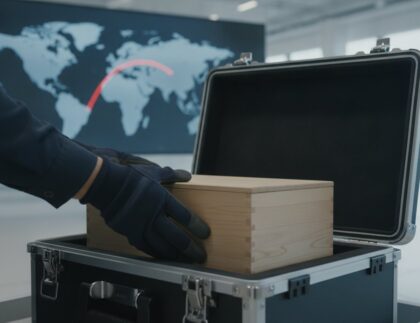
The elegant urn you’ve selected for your home might be legally prohibited from ever leaving the ground. Many families are surprised to learn that a vessel designed for a mantelpiece is rarely one of the approved containers for shipping ashes across state lines or international borders. Since the mandatory USPS packaging updates in early 2025, the margin for error has disappeared. If your container doesn’t meet specific sift-proof and scannable standards, you risk distressing delays or even rejection by carriers and customs officials.
It’s natural to feel anxious about the safety and dignity of your loved one’s remains during transit. You want a solution that guarantees security without the confusion of conflicting airline and postal rules. This expert guide provides the clarity you need to ensure 100 percent compliance for every journey. We’ll walk you through the mandatory box-within-a-box requirement, explain why certain materials are essential for TSA x-ray clearance, and help you secure a leak-proof seal for total peace of mind.
Key Takeaways
- Identify the technical standards-sift-proof, hermetically sealable, and impact-resistant-that define approved containers for shipping ashes under the latest 2026 regulations.
- Distinguish between USPS mandatory packaging rules and TSA scannability requirements to avoid unexpected rejections at the airport or post office.
- Evaluate the best materials for international transit, from high-density polyethylene liners to the structural integrity of biodegradable options for global journeys.
- Follow a professional step-by-step process for securing remains, including the specific liner thickness and sealing protocols necessary for total leak prevention.
- Learn how professional bereavement logistics can streamline complex USA-to-UK repatriation and ensure every legal requirement is met with care and precision.
What Defines an ‘Approved’ Container for Shipping Ashes?
The International Air Transport Association (IATA) sets the global benchmark for these standards. These regulations exist because the modern cremation process results in very fine, powdery remains that can escape through the smallest gap in a lid or seam. If a container fails at an international border, the legal consequences are more than just administrative. Customs officials may impound the shipment or refuse entry entirely, leading to significant emotional distress and additional costs for the family. Using a container that isn’t officially approved isn’t just a logistical risk; it’s a threat to the successful repatriation of your loved one.
The ‘Siftproof’ Requirement Explained
A container is only considered siftproof if no particles can escape during intense vibration, turbulence, or standard handling. Many families assume a standard screw-top lid is sufficient, but these often have microscopic gaps in the threading. To meet 2026 compliance standards, these lids usually require a secondary seal of specialized silicone or industrial-grade adhesive. We also recommend a “double-bagging” approach. By placing the remains in a sealed inner liner before they enter the primary urn, you create a redundant layer of protection that satisfies even the strictest airline inspectors.
Inner vs. Outer Container Standards
Security in transit relies on the “Box-within-a-Box” method. This industry standard requires two distinct layers of protection:
- The Inner Container: This is the urn itself or a high-density polyethylene bag. It must be durable enough to hold the weight of the remains without stretching or tearing.
- The Outer Container: This must be a rigid, corrugated box. Under current regulations, this outer shell should be rated to withstand at least 50 lbs of pressure.
For those shipping within or from the United States, the USPS now mandates the use of the official BOX-CRE packaging. This specialized outer box is designed specifically to be recognizable to postal workers, ensuring the package is treated with the necessary care while meeting all technical safety requirements for air and ground transport.
Postal vs. Airline vs. Courier: Which Approval Matters?
The definition of an approved container changes depending on who is handling the transport. A vessel that meets the technical requirements of the postal service might be rejected at an airport security gate. Understanding these distinctions is the first step in ensuring your loved one’s journey is uninterrupted. While the post office focuses on outer structural integrity, airlines prioritize what’s inside the box, specifically regarding security screening and safety in a pressurized cabin. Before deciding on your transport method, it’s worth reviewing a detailed breakdown of flying with ashes vs shipping ashes to understand the full range of risks and benefits each option presents in 2026.
The United States Postal Service (USPS) maintains strict criteria under Publication 139. As of March 1, 2025, all domestic shipments must use the official Priority Mail Express Cremated Remains Box (BOX-CRE). This mandatory packaging is designed to be easily identifiable by postal workers, ensuring the package receives the designated care. However, the USPS is a high-volume environment. For families seeking a more personal touch, a professional repatriation service offers specialized courier protocols that exceed standard postal rules, providing door-to-door security with significantly lower handling risks.
Airlines and the TSA operate under a different set of priorities. When you carry remains onto a plane, the primary concern is scannability. If a container cannot be cleared by X-ray, it simply won’t be allowed past the checkpoint. This is why choosing approved containers for shipping ashes that are made of the correct materials is vital for air travel. While a heavy lead-lined or thick stone urn might be secure, it’s often opaque to X-ray machines, leading to a refusal at the gate.
TSA and Security: The ‘Scannable’ Container
It’s a common misconception that you can simply open an urn for a TSA officer to verify the contents. Security officers are strictly prohibited from opening any container holding cremated remains, even if you provide consent. To ensure your container is scannable, you should opt for materials like wood, plastic, cardboard, or non-lead ceramics. You can find more details on these requirements through the official guide on TSA-approved containers. If the X-ray cannot see through the material, the remains cannot fly.
International Repatriation: Customs-Approved Sealing
Shipping across international borders introduces a third layer of approval: customs and consular regulations. Some nations require a “Consular Seal,” where a government official must witness the sealing of approved containers for shipping ashes to verify the contents. Certain European countries even mandate specific internal linings, such as zinc, to meet their public health laws. Managing the alignment between the physical container and the complex legal documentation is a core part of our bereavement logistics, ensuring that your loved one arrives at their destination without legal delay or administrative friction.
Material Selection: What is Safe for International Transit?
Selecting the physical material for a loved one’s journey requires a balance between sentiment and technical resilience. While many families prefer the weight of stone or the luster of polished brass, these choices often conflict with the requirements for approved containers for shipping ashes. High-Density Polyethylene (HDPE) has become the gold standard for inner liners. This material is flexible enough to withstand pressure changes in flight yet strong enough to prevent punctures. For international transit, we recommend a liner with a minimum thickness of 2-mil to ensure the remains stay secure within the primary vessel.
Biodegradable options have gained popularity for those planning a sea or earth burial abroad. However, you must consider if a salt-block or paper-based urn can survive a 5,000-mile journey through automated sorting systems. Often, these delicate vessels are best transported inside a rigid protective shell and only transferred to their final environment upon arrival. Similarly, ceramic and glass are generally discouraged. The risk of shattering during turbulence or handling is high, and a broken container can lead to the immediate impoundment of the shipment by health authorities.
The Problem with Metal and Lead-Crystals
Metal urns offer unmatched durability, but they present a significant hurdle for air security. Dense materials like brass, pewter, and lead-crystal create opaque “black spots” on X-ray scanners. Since security officers can’t see through the material to verify the contents, this often leads to “forced inspection” delays. In some cases, the container may be rejected entirely. If you have your heart set on a metal memorial, we suggest using a temporary scannable container for the flight and shipping the empty decorative urn separately. Detailed guidance on these material restrictions is available in USPS Publication 139, which remains a vital resource for legal compliance when selecting approved containers for shipping ashes.
Cushioning and Internal Stability
Even the strongest container can fail if it’s allowed to shift inside its packaging. Approved cushioning includes high-grade bubble wrap or custom foam inserts that contour to the urn’s shape. We advise against using loose-fill materials like biodegradable peanuts, as these can settle during transit and leave the container vulnerable. To verify your packaging, perform a “shake test.” There should be absolutely no sound or sensation of movement when the box is tilted. For maximum security, the industry standard involves a “drop test” from a height of three feet onto a hard surface. Ensuring the inner container doesn’t move even a fraction of an inch is the only way to guarantee a safe and dignified arrival.

Step-by-Step: How to Package Ashes for Approved Shipping
Preparing a loved one for their final journey requires meticulous attention to detail. This process isn’t just about meeting a shipping requirement; it’s about honoring a memory through careful stewardship. By following these structured steps, you ensure that approved containers for shipping ashes are prepared to withstand the complexities of global logistics while maintaining total security and dignity.
First, transfer the remains into a heavy-duty plastic liner with a minimum thickness of 2-mil. This specific thickness is vital because it resists punctures and provides the necessary flexibility during pressure changes in flight. Secure this liner with a strong zip-tie, ensuring you’ve removed excess air that could cause the bag to expand, and place it gently inside your primary urn. This creates the first essential layer of protection.
Next, you must address the lid of the urn. Even a tight-fitting screw top can benefit from a secondary seal. We recommend using a non-acidic, removable adhesive or specialized archival tape. This protects the finish of your memorial while creating the airtight barrier required for international transport. Once the urn is sealed, place it in the center of your outer shipping box. You must surround the urn with at least 2 inches of high-density padding on all sides to absorb any potential impact during transit.
Finally, the outer box must be clearly identified. Apply “Fragile” and “Cremated Remains” labels according to your carrier’s specific rules. For those using the USPS, these labels must be visible on all six sides of the package to ensure it’s recognized and handled with the appropriate level of care by every postal worker in the chain.
Labeling and Documentation Placement
Correct documentation placement is just as critical as the physical container. We advise using a clear, waterproof “Document Pouch” attached to the outside of the box to hold the Death Certificate and Cremation Certificate. This allows customs officials to verify the contents without compromising the seal. As a redundant safety measure, always include a duplicate set of these papers inside the box, placed securely between the padding and the outer wall. This ensures that even if the external pouch is damaged, the identity of the remains remains clear.
Sealing for Siftproof Security
A proper siftproof seal is the only barrier between dignity and disaster. To achieve this, use pressure-sensitive shipping tape to reinforce every seam of the outer box, not just the main opening. Before finishing, double-check the total weight to ensure your container meets the specific limits of your chosen carrier. If the technical requirements of this process feel overwhelming during this difficult time, our Professional Packaging Service can handle these details for you, providing the absolute certainty that every regulation has been met with precision. For a comprehensive overview of every mandatory packaging standard and the specific documents required by global consulates, our detailed resource on how to ship human ashes across international borders in 2026 provides step-by-step guidance for managing these requirements with confidence.
The SpeedLink Advantage: Professional Packaging & Repatriation
Managing the logistics of a loved one’s final journey is a significant responsibility that often arises during a time of intense grief. While the technical rules for approved containers for shipping ashes provide a framework for safety, they don’t account for the emotional weight of the task. Families often choose professional bereavement logistics to move beyond the limitations of standard postal services. By partnering with experts like SpeedLink Repatriation, you ensure that every regulatory detail is handled with precision, allowing you to focus on honoring your loved one’s memory rather than navigating complex shipping manuals.
At SpeedLink Repatriation, we operate as an ethical guardian throughout the entire process. Our philosophy is simple: we treat remains as a passenger, not a parcel. This means your loved one’s journey is managed with a level of personal attention that automated sorting facilities cannot provide. From the moment the remains are collected until they reach their final destination, they’re under the care of SpeedLink Repatriation’s professionals who understand the profound nature of their task. This human-centric approach provides a sense of security and dignity that standard couriers simply don’t offer.
Peace of mind is further reinforced through transparency and technical mastery. The SpeedLink Repatriation team manages every aspect of customs clearance, ensuring that all approved containers for shipping ashes are accompanied by the correct legal declarations. You won’t have to worry about administrative delays or bureaucratic hurdles at the border. We provide real-time tracking and regular updates, so you always know exactly where your loved one is and when they’ll arrive safely at their destination.
Bespoke Packaging Services
Standard shipping boxes often lack the discretion and security required for sensitive international transit. SpeedLink Repatriation provides high-security, bespoke outer packaging designed to protect the remains while maintaining a respectful, understated appearance. If your family is spread across different global locations, we also offer an ashes splitting service. This allows you to share the remains into multiple smaller, compliant vessels for transport to different destinations. Learn more about SpeedLink Repatriation’s Professional Packaging Service to see how we prioritize both safety and dignity.
Navigating the USA-UK Corridor
Moving remains from the United States to the United Kingdom involves specific container requirements and a deep understanding of both countries’ health and customs regulations. SpeedLink Repatriation specializes in this corridor, coordinating directly with funeral directors on both sides of the Atlantic to ensure a seamless transition. Whether SpeedLink Repatriation is collecting from a crematorium in the US or delivering to a family home in the UK, our USA to UK ashes courier service is designed to be a steady hand in a complex time. Contact our compassionate team at SpeedLink Repatriation for a bespoke repatriation quote and let us take the burden of logistics off your shoulders.
Ensuring a Secure and Dignified Final Journey
Selecting the right vessel for your loved one is a final act of stewardship that requires both heart and technical precision. The path to compliance involves more than just a sturdy box; it requires a deep understanding of sift-proof seals, material scannability, and the mandatory “box-within-a-box” protocols. By prioritizing approved containers for shipping ashes, you protect the remains from logistical delays and ensure they’re treated with the respect they deserve throughout their transit.
Navigating these international regulations doesn’t have to be a burden you carry alone. Our team of specialized USA to UK courier experts provides dignified door-to-door handling and full customs documentation support to ensure a seamless crossing. We take pride in our role as ethical guardians, managing every detail so you can focus on what matters most. Request a Dignified Repatriation Quote from SpeedLink to receive personalized guidance for this important transition. You can feel confident that your loved one is in steady, capable hands.
Frequently Asked Questions
Can I ship ashes in a standard cardboard box?
No, a standard household cardboard box does not meet the structural requirements for international transit. Under 2026 regulations, you must use a rigid, corrugated outer container that is specifically rated to withstand significant pressure. For domestic US shipping, the USPS mandates the use of their official BOX-CRE packaging. Using a non-standard box increases the risk of structural failure or rejection by the carrier during the sorting process.
What is the best material for an urn if I am flying with ashes?
The best materials for air travel are those that are transparent to X-ray machines, such as wood, high-density plastic, or lightweight ceramic. These are considered approved containers for shipping ashes because they allow security officers to verify the contents without opening the vessel. You should avoid heavy metals or lead-based crystals. These materials are opaque to scanners and will likely cause security delays or a refusal at the boarding gate.
Do I need a special permit to ship ashes internationally in 2026?
International transport in 2026 almost always requires specific documentation, including a burial transit permit and a certified cremation certificate. Some countries also require a consular seal, which is an official verification from the destination’s embassy. We handle these complex requirements as part of our bereavement logistics. This ensures your loved one’s journey is legally compliant and avoids administrative holds at international borders.
Is it legal to send cremated remains via DHL or FedEx?
It is not legal to ship cremated remains through private carriers like DHL or FedEx within or from the United States. The USPS is currently the only postal carrier authorized to knowingly transport ashes. For international journeys, specialized services like our USA to UK courier service provide a legal and secure alternative. These services follow strict aviation and customs protocols that standard private couriers do not support.
What does ‘siftproof’ actually mean for funeral containers?
A siftproof container is one designed so that no fine particles of the remains can escape during handling, vibration, or turbulence. This is achieved through a combination of threaded lids, secondary seals like silicone adhesives, and heavy-duty inner liners. Ensuring the container is siftproof is a non-negotiable requirement for all approved containers for shipping ashes to maintain hygiene and dignity throughout the entire trip.
Can I use a biodegradable urn for international shipping?
You can use a biodegradable urn, but it must be placed inside a rigid, protective outer container during the actual shipping process. Materials like salt, sand, or paper are too fragile to survive the mechanical sorting and pressure changes of international transit. Once the shipment arrives at its destination, you can safely remove the inner biodegradable vessel for the final ceremony or scattering according to your plans.
What happens if my container is rejected by customs?
If a container is rejected by customs, it may be impounded by health authorities or returned to the point of origin at the sender’s expense. This usually happens if the documentation is incomplete or if the container doesn’t meet the destination country’s specific health laws. Our team prevents this by managing all customs clearance and ensuring every package meets local requirements before it ever leaves the country.
Does SpeedLink provide the shipping containers for their courier service?
Yes, we provide high-security, discreet packaging as part of our Professional Packaging Service. We understand that finding the right materials can be stressful during a time of grief, so we supply the necessary inner liners and outer containers that meet all international shipping standards. This service ensures that your loved one is protected by the highest level of security and technical care from door to door. If you are still weighing your options, our comprehensive guide on flying with ashes vs shipping ashes in 2026 can help you make the most informed and confident decision for your loved one’s final journey.

Article by
David McMillen
I started my career in logistics over 30 years ago which has spanned 2 continents and several different types of courier and logistics operations. I lost my dear Mum back in 2016 and it was in the aftermath of her passing that SpeedLink Repatriation was born. We have endeavoured to bring the same care and attention to all of our clients as my mum received and to date we have helped repatriate hundreds of individuals across the globe.
Disclaimer
International requirements for cremated remains vary by origin, destination, carrier and method of transport and may change without notice.
Content is provided as general guidance and should not be treated as legal advice.
Where necessary, current requirements should be confirmed with the relevant government authority, customs authority, embassy, consulate, postal operator, airline or carrier.
SpeedLink can advise on the requirements applicable to a specific shipment.